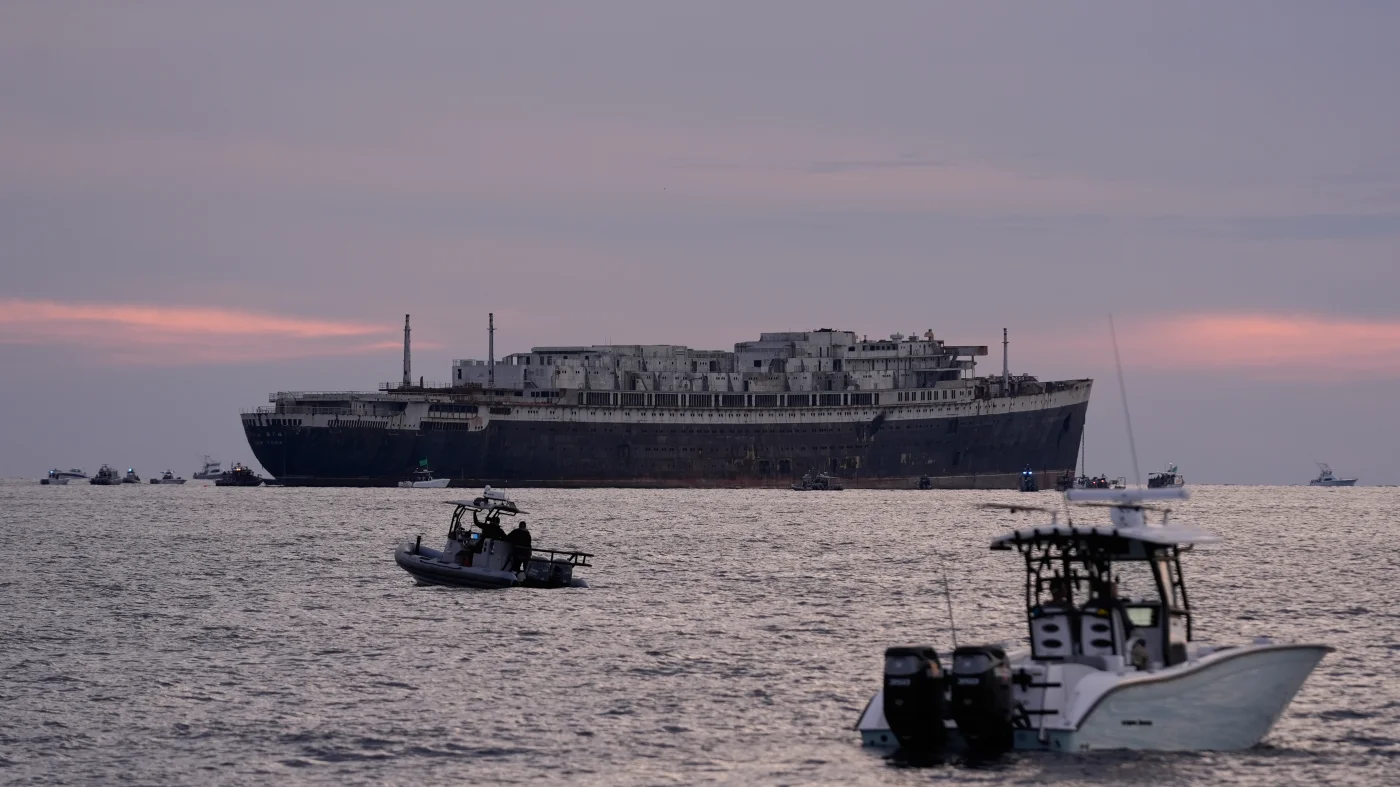
The SS United States, a record-breaking 1950s ocean liner, was intentionally sunk on Wednesday, November 11, 2026, off the coast of Okaloosa County, Florida. The vessel was scuttled to serve as a diving destination and a habitat for marine life, forming what is expected to be the world's largest artificial reef.
Launched in 1951, the SS United States was the fastest passenger liner in the world, once crossing the Atlantic Ocean in under four days. It transported four U.S. presidents and famous artwork like the Mona Lisa before being retired. In recent years, the ship sat moored in Philadelphia, where the SS United States Conservancy faced a pier eviction and the prospect of the ship being sold for scrap.
On Wednesday, crews removed plugs from the ship's hull to allow it to fill with water without the use of explosives. After several hours of delays, the nearly 1,000-foot vessel tilted onto its side and submerged in the Gulf of Mexico within five hours. The ship now rests just over 20 nautical miles from the beaches of Destin, Florida.
For local business owners and federal regulators, the scale of this project is significant as Florida has created more than 4,000 artificial reefs since 1940. This ship, which is longer than the RMS Titanic, will join the 888-foot USS Oriskany to make the region home to the world's two largest artificial reefs. According to the National Oceanic and Atmospheric Administration, diving tourism at just a few such reefs generated nearly $1 billion in annual benefits based on 2017 data. Divers will notice the change immediately as the ship's upper decks have been positioned within recreational diving limits.
While the county plans to sink five or six additional reefs in the future, University of Florida economist Andrew Ropicki noted that overinvestment could eventually lead to diminishing returns if visitor interests shift. The SS United States Conservancy, which sold the ship for $1 million in 2024, described the reefing as a more dignified solution than the scrapyard. Following the deployment, the site is now open to marine life and tourism, serving as the new centerpiece of Okaloosa County's underwater collection.