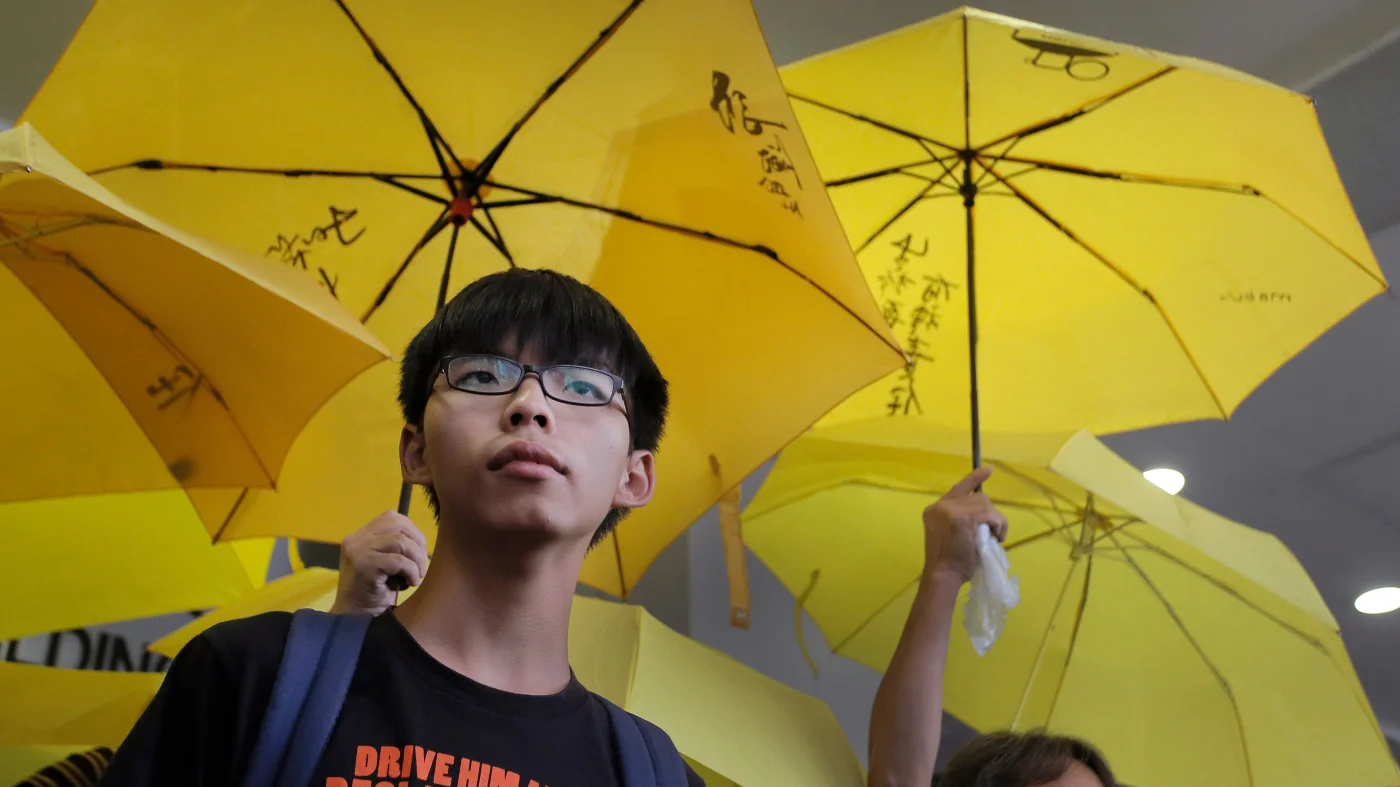
A Hong Kong court sentenced activist Joshua Wong to 10 years in prison on Thursday for his second conviction under the city's national security law. Wong had previously pleaded guilty to conspiracy to collude with foreign forces to endanger national security, a charge brought against him in 2025. The presiding judge, William Tam, ruled that Wong’s offenses were of a grave nature and rejected arguments that the activist’s role in the conspiracy was limited.
The case stems from allegations that Wong and fellow activist Nathan Law lobbied international figures to seek sanctions or other measures against the governments of Hong Kong and China. Prosecutors cited meetings with U.S. politicians, including Nancy Pelosi and Marco Rubio, as evidence of these efforts. While Law continued this work from abroad after the enactment of the national security law, the prosecution stated that Wong supported the campaign from within Hong Kong using social media and foreign news outlets.
This sentencing follows a period of political change in Hong Kong. After anti-government protests in 2019, Beijing imposed a national security law that authorities said was necessary to restore stability. Since then, dozens of civil society groups have dissolved, critical media outlets have closed, and many prominent activists have been arrested. Beijing characterizes Wong as an anti-China figure who supported Hong Kong independence, a position it describes as crossing a "red line."
The sentencing affects the pro-democracy activist Joshua Wong, who is 30 years old. Wong was already serving a prison term of four years and eight months for his involvement in an unofficial primary election case. Before this new sentence, he had been expected to be released in January 2027. Under the court's ruling, Wong will serve his two sentences concurrently; because he has approximately two months remaining on his first term, the new 10-year sentence significantly extends his total time in custody.
The national security law carries a maximum penalty of life imprisonment for certain offenses. In this case, Judge Tam initially considered a 13-year starting point for the sentence but reduced it to 10 years because Wong pleaded guilty. For Wong, this means he will likely spend his entire 30s in prison, a period his lawyer noted the activist had hoped to spend caring for his aging parents. Eric Lai of the Georgetown Center for Asian Law stated that the case demonstrates how such charges can be used to keep specific political figures incarcerated for extended periods.
For the broader Hong Kong public, the case marks the continued contraction of the city's protest and media landscape. The prosecution's use of past meetings with foreign officials as evidence of conspiracy indicates that international advocacy now carries severe legal risks for residents. While the Hong Kong government maintains that law enforcement actions are evidence-based and essential for order, supporters like resident ET Wong view the imprisonment as a loss for the city's human rights movement. Wong began serving the 10-year term immediately.