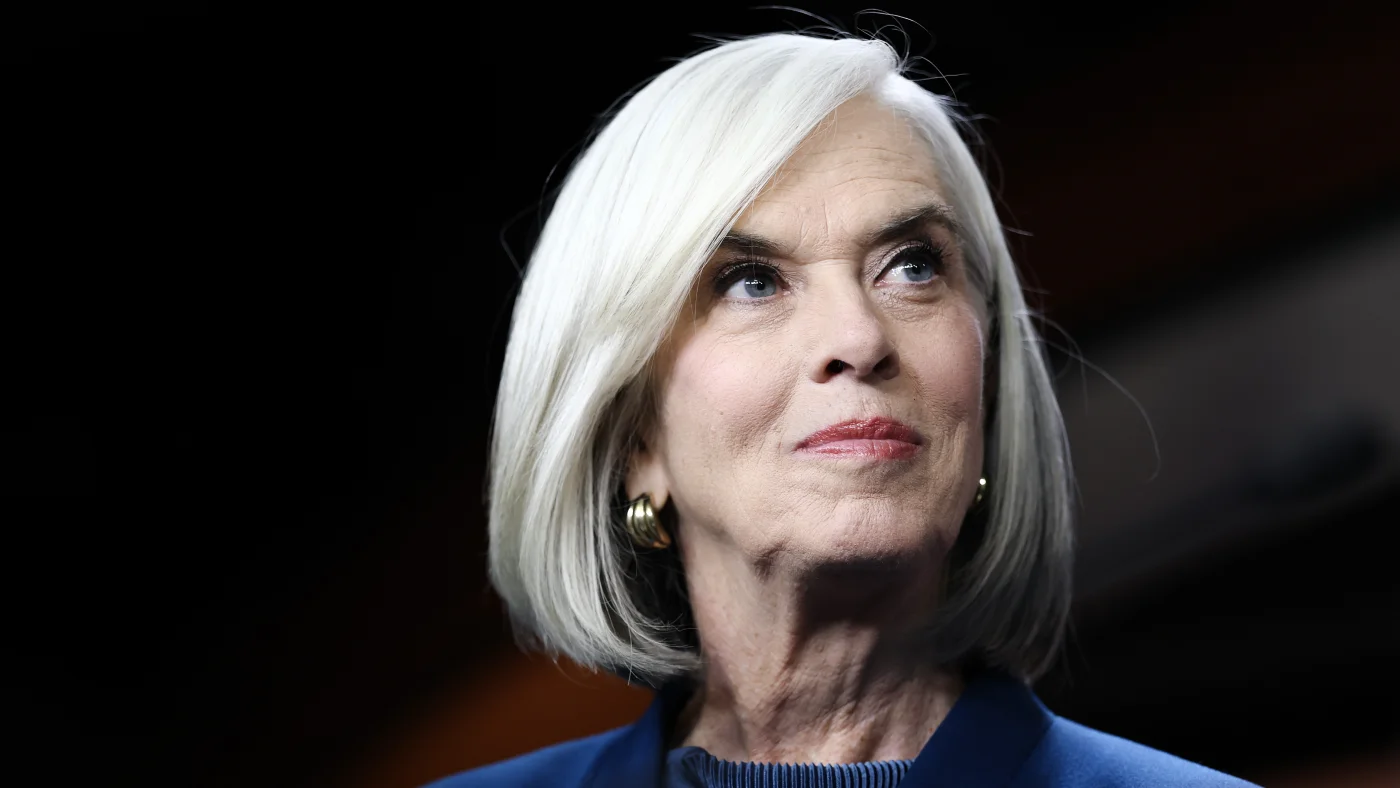
House Democrats nominated Representative Katherine Clark (D-MA) to serve as House Majority Leader on Wednesday, Nov. 18, 2026. The nomination, conducted via a unanimous voice vote, occurred as the party prepares to take control of the House of Representatives in the upcoming term.
The leadership elections followed a period in which Democrats served in the minority, with Clark currently holding the role of House Minority Whip. On Wednesday, the caucus also nominated Representative Hakeem Jeffries (D-NY) for Speaker of the House and Representative Pete Aguilar (D-CA) for Majority Whip.
In an interview on Thursday, Nov. 19, 2026, Clark stated that the incoming leadership plans to prioritize lowering living costs and conducting investigations into alleged corruption within the Trump administration. While Jeffries received the nomination for Speaker, 11 members of the caucus voted against him, compared to 251 votes in his favor.
Opposition to Jeffries came from incoming members, including Darializa Avila Chevalier (D-NY) and Adam Hamawy (D-NJ). These members have advocated for policies such as Medicare for All, reforms to immigration enforcement, and an end to the war in Gaza. Additionally, Clark and Jeffries have previously differed on foreign policy; in July, Clark voted for a Republican amendment to cut aid to Israel, a measure Jeffries opposed.
The 251-11 vote for Jeffries highlights a specific group within the caucus—incoming members—who are seeking to influence the party's direction on healthcare and foreign aid. For voters and advocacy groups, this internal tension determines which bills reach the floor. A person would notice the effects of this shift in their health care access or tax obligations only if the caucus can resolve these internal divisions to pass legislation. If the 11 dissenting members withhold support on narrow floor votes, it could slow the delivery of the party’s stated priorities.
The knock-on effects involve the relationship between the legislative and executive branches. President Trump’s description of himself as "Mr. Veto" indicates that even if House Democrats pass their agenda, legislation may face resistance at the White House. This dynamic sets the stage for a period of divided government where bipartisan cooperation, which Clark noted she hopes for regarding healthcare, will be necessary for bills to become law. The next steps include the formal floor vote for Speaker of the House and other leadership positions when the new Congress convenes in January.