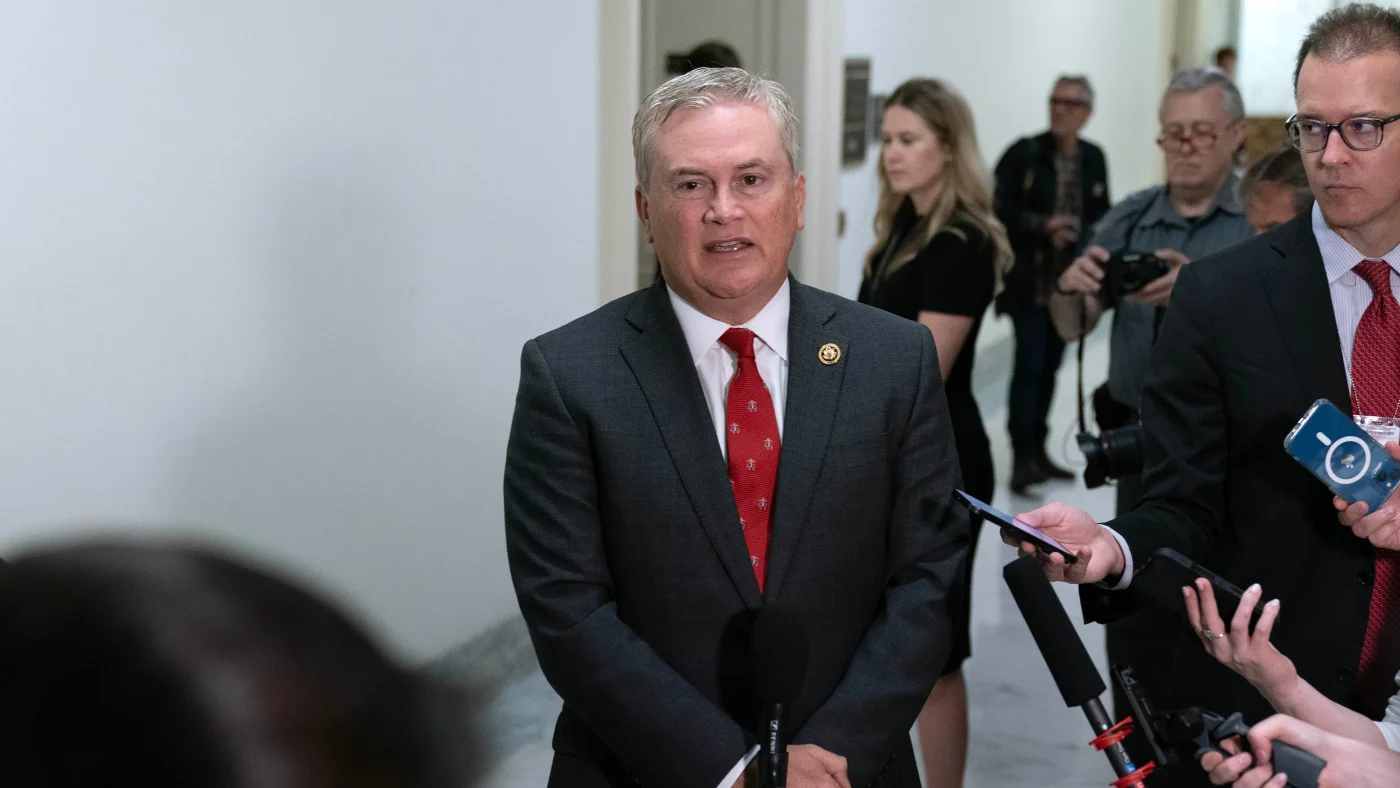
The Republican-controlled House Oversight Committee released a report on Tuesday following a 15-month investigation into Jeffrey Epstein and his associates. The document concludes that the federal government mishandled criminal investigations into the financier over several decades and failed to protect survivors. Committee Chair James Comer (R-KY) stated that Epstein was shielded by powerful connections and a justice system that repeatedly failed his victims.
The committee conducted interviews with 19 individuals, including former President Bill Clinton, former Secretary of State Hillary Clinton, Microsoft co-founder Bill Gates, and Commerce Secretary Howard Lutnick. According to the report, the facts gathered do not suggest that President Donald Trump was implicated in Epstein’s crimes. The report characterizes previous Democratic efforts to link Trump to the case as an "unfounded witch hunt."
The investigation found that if federal prosecutors in South Florida and Washington had acted differently, Epstein’s crimes after 2005 could have been prevented. It specifically highlighted a 2008 conviction for soliciting sex from minors, where Epstein served 13 months with daily 12-hour work releases, as a failure of accountability. The report also alleged that the Department of Justice (DOJ) under the Trump administration failed to protect survivors' personal information when releasing files under the 2025 Epstein Transparency Act, leading to the exposure of survivor identities.
Representative Robert Garcia (D-CA), who is expected to lead the committee when Democrats take control of the House in January, described the report as "partisan" and based on an incomplete investigation. Garcia stated that the committee intends to hold public hearings starting next year to question men associated with Epstein, including Donald Trump. White House spokeswoman Abigail Jackson stated that Trump has been "totally exonerated" regarding Epstein, noting the two had a falling out before Epstein's 2006 indictment.
For the public and survivors, the investigation highlights a significant breach of privacy. Under the 2025 Epstein Transparency Act, millions of pages were released, but the report notes that the identities of many survivors were exposed due to inadequate redaction and communication by the DOJ. The report also calls for the Treasury Department’s Financial Crimes Enforcement Network (FinCEN) to review whether financial institutions are meeting their reporting responsibilities, after finding that some banks failed to act on indicators of human trafficking and immigration fraud involving Epstein.
The next steps in the investigation involve a shift in leadership and strategy. When the new Congress convenes in January, the House Oversight Committee under Democratic leadership plans to move from closed-door interviews to public hearings. Additionally, the DOJ has stated it will continue following investigative leads, while legal challenges continue, such as billionaire Leon Black’s lawsuits against the committee and Representative Garcia following his contempt of Congress citation in September 2026.