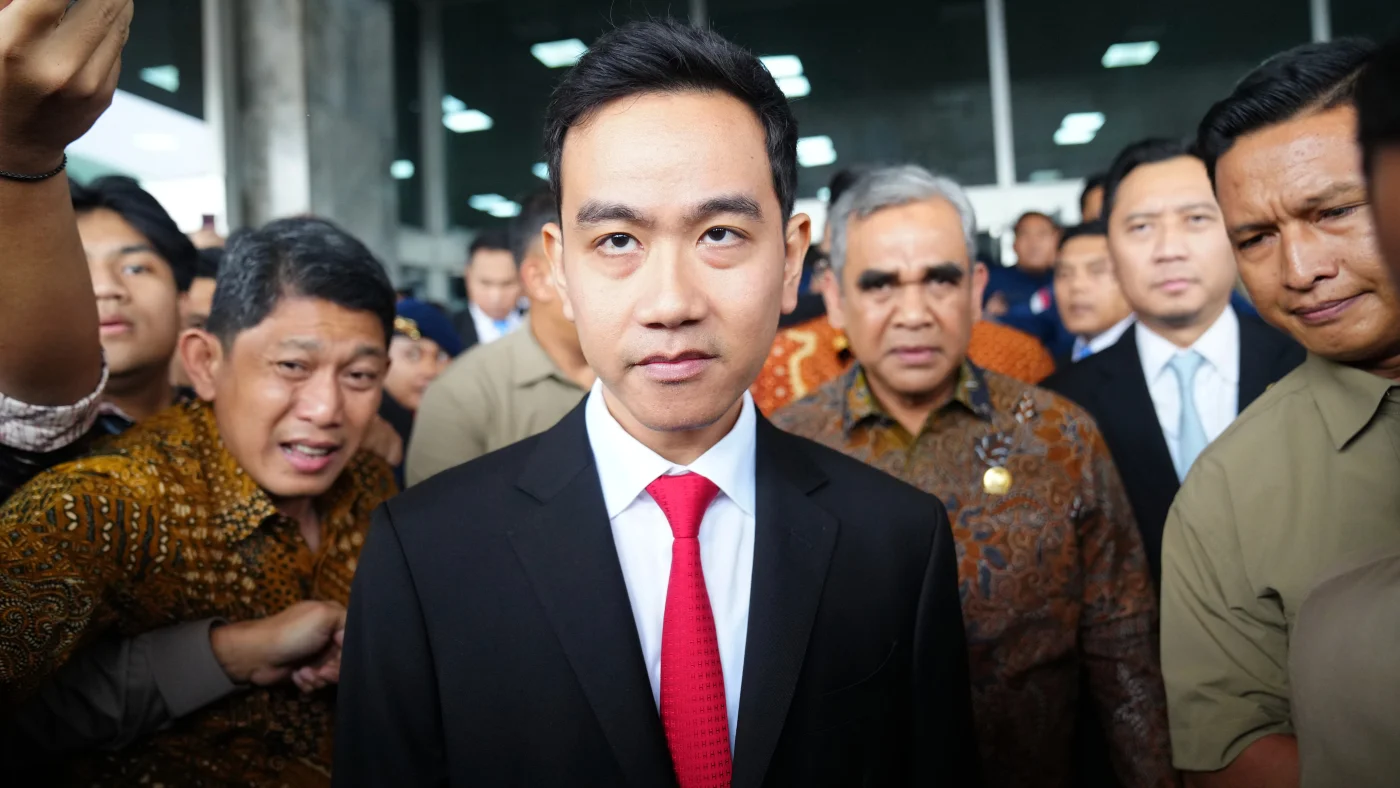
Indonesian Vice President Gibran Rakabuming Raka resigned on Thursday, Nov. 12, 2026, following court rulings that questioned his eligibility for the office. Raka, the 39-year-old son of former President Joko Widodo, submitted his resignation letter to the People’s Consultative Assembly in Jakarta. The resignation occurred after both the Constitutional Court and the Supreme Court ruled last month that Raka’s documents regarding his overseas education did not meet the nation's election requirements.
The controversy surrounding Raka’s candidacy dates back to October 2023, when the Constitutional Court issued a ruling that allowed individuals under the age of 40 to run for vice president if they had previously served as regional leaders. Critics characterized this ruling as evidence of dynastic privilege. Additionally, Indonesian law requires candidates to have completed an education equivalent to a high school diploma; Raka, who studied abroad, was required to prove his credentials met this standard.
On Tuesday, Nov. 10, Raka offered his resignation during a meeting with President Prabowo Subianto, stating he wished to avoid a prolonged political controversy. He delivered a formal letter to the president the following day. On Wednesday, Nov. 11, a group of 120 lawmakers from eight political parties submitted a petition to the House leadership to begin a parliamentary process that could have led to Raka's impeachment.
President Prabowo accepted the resignation on Thursday afternoon, stating he did so "with a heavy heart" and praising Raka for "courage, responsibility and statesmanship." Prabowo highlighted Raka’s work over the past two years, including visits to 35 provinces and inspections of 303 government projects. Raka’s father, former President Widodo, stated that he reminded his son that political positions are temporary and that his family would continue to support the current administration.
The scale of the political shift is defined by the 60-day window during which the office must be filled. Under the Indonesian Constitution, a new election is not held; instead, the president must nominate two candidates from which the Assembly will elect a successor. While the source does not provide a specific dollar amount or direct change to household taxes or bills, the transition may influence the implementation of government programs that Widodo said serve the "broader public." Citizens will notice a change in the executive lineup and potentially the pace of the 303 government projects Raka was previously inspecting.
The knock-on effects include the establishment of a new precedent for how the Indonesian government handles eligibility disputes and resignations at the highest levels of power. The resolution of the academic credential dispute avoids a potential impeachment trial, which 120 lawmakers had already signaled they were prepared to pursue. Next, parliamentary leaders, led by Speaker Ahmad Muzani, are scheduled to convene immediately to begin the selection process for a new vice president, with a final deadline for the appointment falling 60 days from the resignation date.