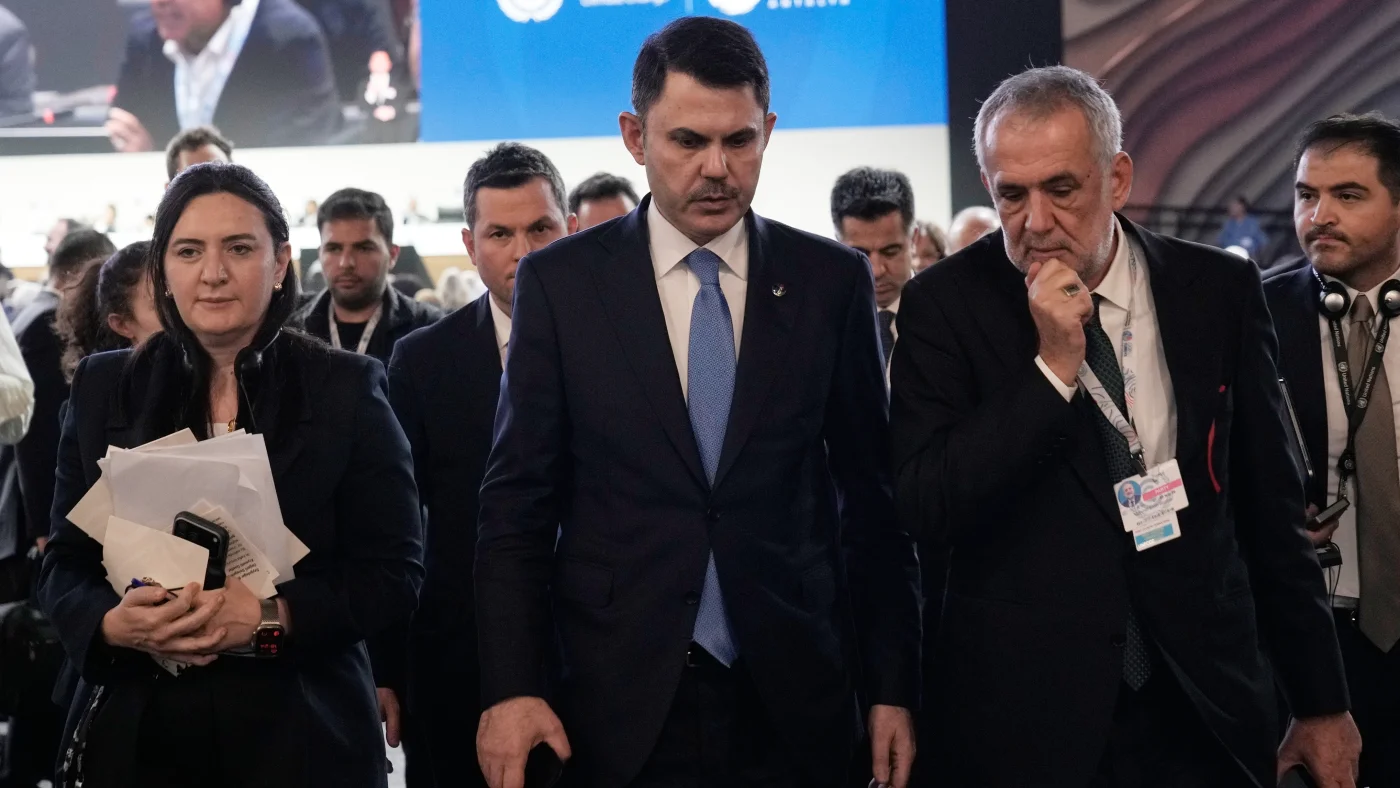
United Nations climate negotiations in Antalya, Turkey, concluded on Sunday, November 22, 2026, without a final agreement among the nearly 200 participating countries. The breakdown occurred during overtime sessions when delegates failed to reach a consensus on language regarding the transition away from fossil fuels.
The summit, known as COP31, followed a 2015 international agreement to limit global warming to 1.5 degrees Celsius (2.7 degrees Fahrenheit). However, this year's meeting was the first where scientific consensus indicated the world has essentially reached that limit. Discussions were led in part by Australian Climate and Energy Minister Chris Bowen, though the United States has withdrawn from international climate cooperation for the time being.
The negotiations reached an impasse when European Union (EU) representatives refused to sign a final document that did not explicitly mention moving away from coal, oil, and natural gas. Following a walkout by the EU bloc, other nations supporting a transition away from fossil fuels also exited the plenary session. European climate chief Wopke Hoekstra stated that the EU could not accept an agreement omitting fossil fuels while the planet faces a temperature overshoot.
The failure to reach an agreement occurred as the United Nations found that limiting warming to 1.7 or 1.8 degrees Celsius would require a 45% reduction in global emissions by 2035. Approximately 73% of global emissions are currently produced by burning fossil fuels. Mohamed Adow of the nonprofit Power Shift Africa stated that the rejected draft lacked sufficient protections for vulnerable populations who have contributed the least to emissions but suffer the most severe impacts.
While negotiations at the Antalya summit have officially closed, the underlying goal of reducing emissions remains. The United Nations has established a target for a 45% reduction in emissions by 2035 to avoid the outcomes of a 1.7 or 1.8-degree Celsius rise. Future meetings will be required to address the deadlock over fossil fuel language. For now, individual nations and blocs like the EU will continue to operate under existing independent climate frameworks.