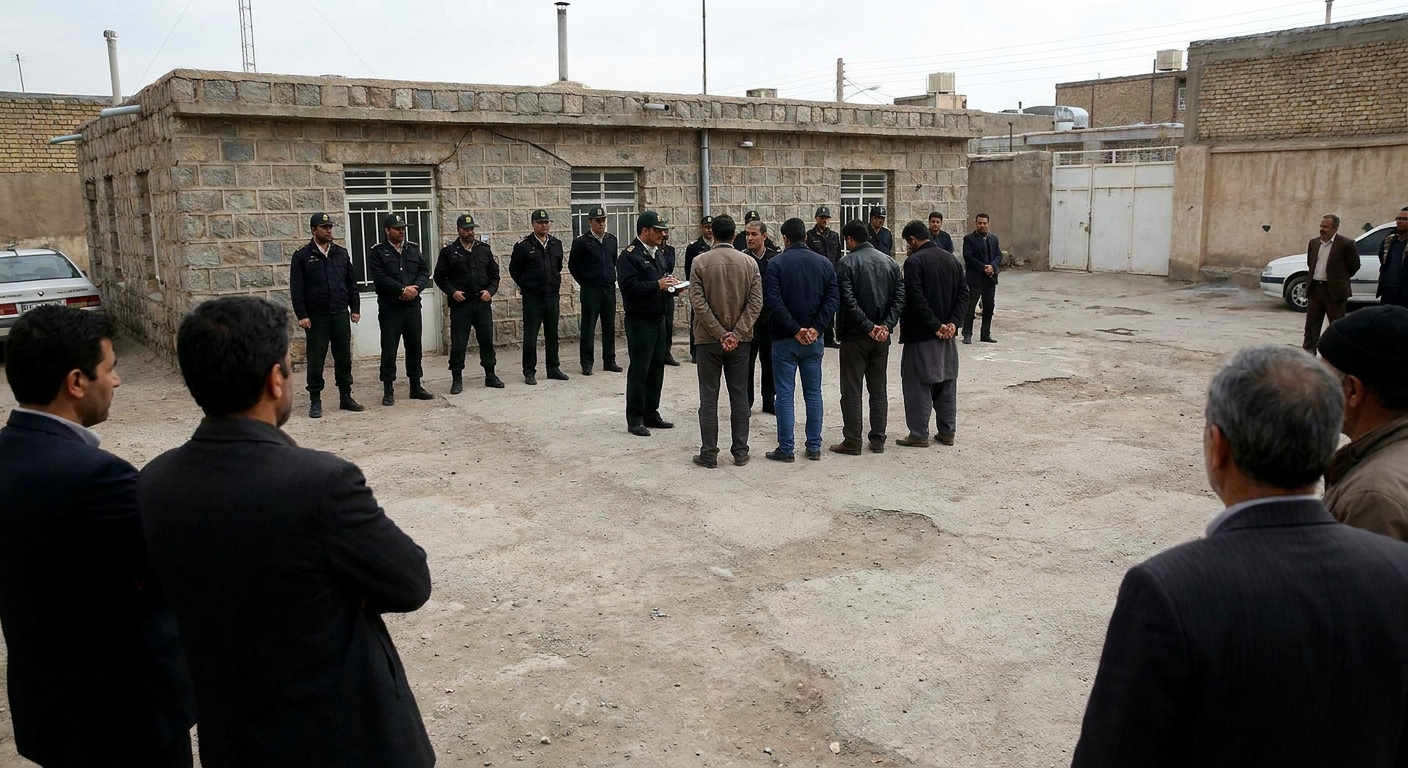
On Monday, November 23, 2026, an Iranian singer and four members of her production team were each flogged with 74 lashes in the city of Qom. The group had been sentenced for "offending public decency by producing and publishing obscene and immoral content online," according to reports from the Iranian news website Emtedad and the BBC.
The charges followed the December 2024 release of a YouTube video showing the singer, 29-year-old Parastoo Ahmadi, performing without a hijab alongside male musicians. The performance, which was livestreamed, took place in Qom, a city south of Tehran. Under Iranian law, women are required to wear headscarves and modest clothing in public, and public performances by women are generally prohibited.
A criminal court in Qom convicted Ahmadi and others in June 2026. In addition to the 74 lashes, the defendants received two-year bans on travel and artistic and musical activities. An appeals court in Qom confirmed the sentences at the end of September. Defense lawyer Mostafa Nili identified the four men flogged alongside Ahmadi as Soheil Faghih-Nasiri, Amin Taheri, Amirali Pirnia, and Mohsen Lashkari.
The enforcement affects five cultural workers—one female singer and four male production staff. Human rights groups and Western governments have classified flogging as a violation of international prohibitions against torture. The two-year bans on artistic work and travel restrict the individuals' movement and professional activities.
For residents in Iran, the execution of this sentence follows strict dress code enforcement despite public defiance since the 2022 death of Mahsa Amini. While the enforcement of hijab rules has been described as selective in some areas, this case indicates that producing digital content without a headscarf remains an activity that can result in corporal punishment and professional bans. Defense lawyers said they had tried to have the verdict overturned or the enforcement postponed, but the branch in Qom insisted on carrying it out immediately.
The action highlights the tension between Iranian judicial authorities and international human rights standards. While the Center for Human Rights in Iran (CHRI) described the act as a "suppression of women's freedoms," the Iranian government has historically rejected such criticism, stating that Western nations should focus on their own domestic human rights issues. The use of the death penalty has reportedly intensified recently, with at least 121 protesters currently at risk of execution according to Iran Human Rights. Following the execution of these sentences, the five individuals enter a two-year period of mandated artistic silence and travel restriction.