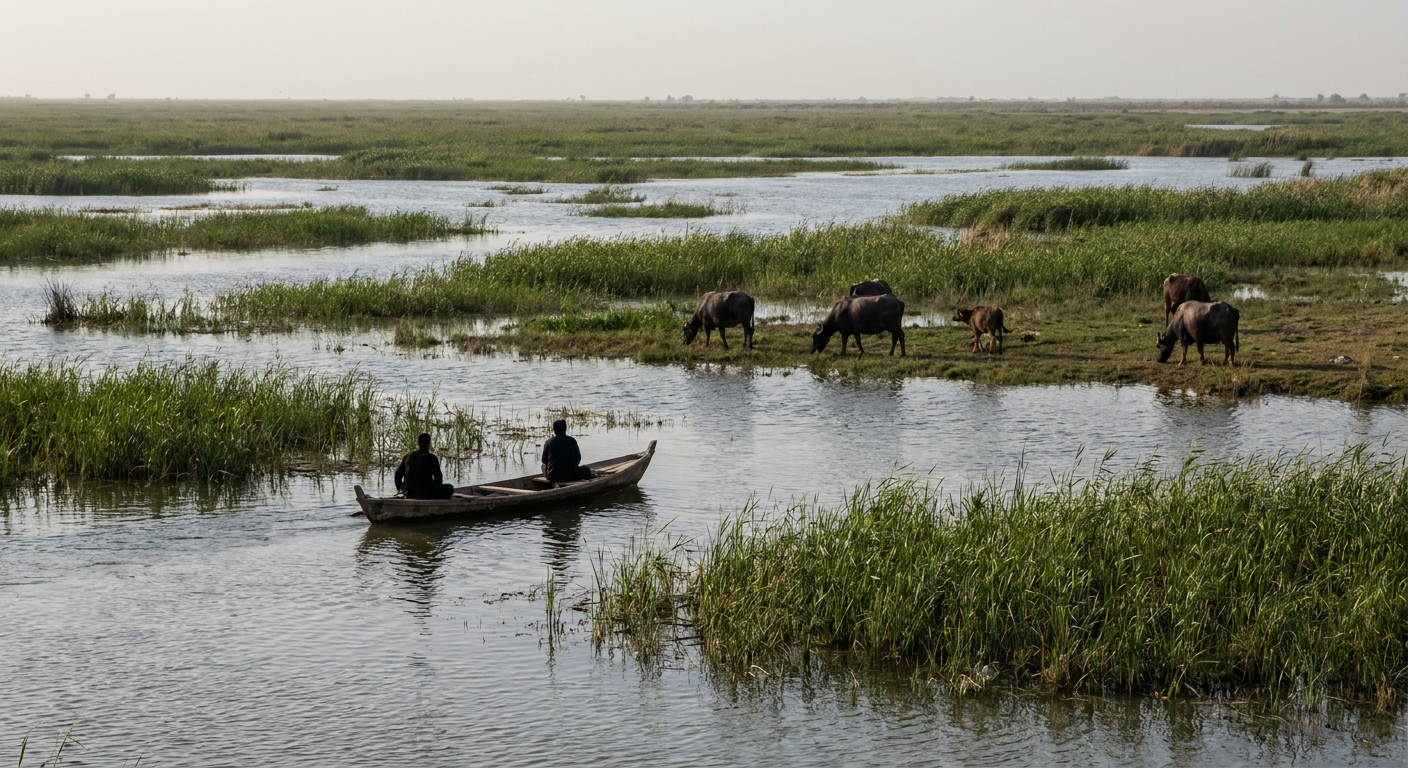
Marshlands in southern Iraq have begun to show signs of recovery following a five-year drought that significantly reduced local water buffalo populations. Rainfall over the last year has partially restored the environment, allowing some families who had previously abandoned the area to return with their livestock.
The marshes, located approximately 50 miles from the ancient site of Ur, were previously drained in the 1990s under the government of Saddam Hussein following an uprising. After the administration was toppled in 2003, environmentalists including Jassim Al-Asadi, co-founder of the organization Nature Iraq, worked to restore the water levels. The region remains a center for biodiversity, hosting migratory birds and wild boars.
Local herders reported a notable increase in production as water levels rose; one herder, Muammel Raad Waheed, stated he is now obtaining twice as much milk from his buffalo compared to the drought period. Despite the rainfall, challenges persist regarding water quality. Fishermen told Al-Asadi that the current fish population consists largely of sea fish that thrive in saline and polluted water, which are not preferred for local consumption.
The environmental organization Nature Iraq has implemented a floating pumping station that uses a pond of reeds to naturally remove toxins from water diverted from the Tigris River. This effort addresses the lack of water treatment plants in nearby towns, which currently discharge sewage directly into the marshlands. Residents also continue to build traditional reed guesthouses using methods similar to those depicted in ancient Sumerian stone carvings.
The scale of the recovery remains precarious, as the marshes' future is tied to the water policies of the Iraqi government and neighboring Turkey and Syria, which share the river systems. The lack of infrastructure means residents are currently living with high levels of salinity and untreated sewage in their primary water source. A herder’s daily reality involves managing livestock in shallow waters that are cleaner than during the drought, yet still contaminated by town waste.
What happens next depends on regional diplomacy and domestic infrastructure projects. Dates for new water treatment plants or official water-sharing agreements between Iraq, Turkey, and Syria were not reported. While some families have moved back to the marshes, the long-term viability of their return hinges on whether the recent rainfall is sustained and if pollution-mitigation projects, like Nature Iraq's reed-based filtration ponds, are expanded to a larger scale.