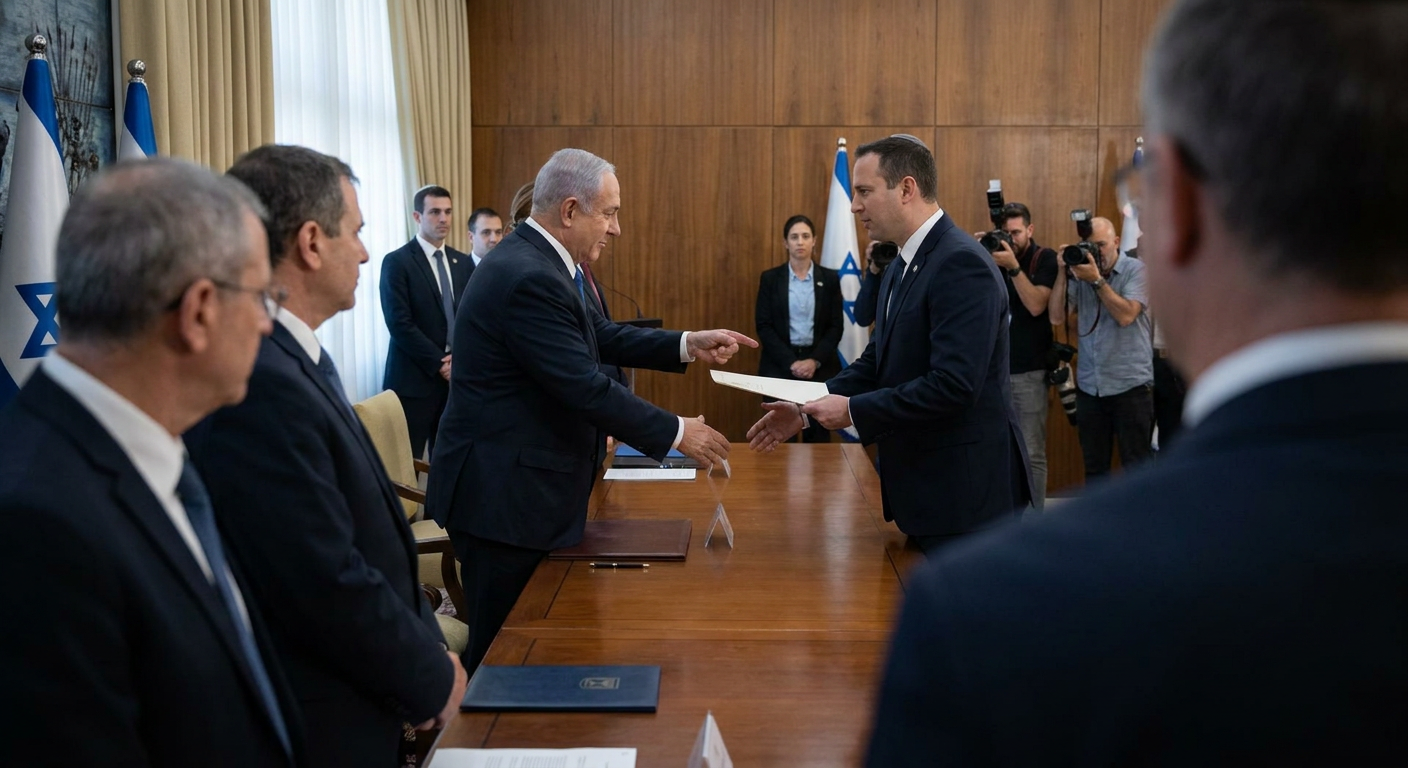
Israeli President Isaac Herzog has invited opposition leader Gadi Eisenkot to form a new government following last month's national elections. Neither Eisenkot nor current caretaker Prime Minister Benjamin Netanyahu secured a clear majority in the vote. However, parties representing a majority of the members of the Knesset, Israel's parliament, recommended that Eisenkot be given the first opportunity to build a governing coalition.
Eisenkot is a center-right politician and a former military chief whose son was an Israeli soldier killed in combat in Gaza. While he briefly served in Netanyahu’s cabinet following the October 7 Hamas attacks, the two men had a falling out, leading Eisenkot to form a new party to challenge the prime minister. Netanyahu remains the caretaker leader until a new government is sworn in.
The mandate to form a government officially begins following a ceremony held Sunday evening. Eisenkot now has a period of approximately six weeks to negotiate with other political parties to reach a majority. These potential partners range from ultra-Orthodox Jewish parties to Arab-led parties. Both Eisenkot and Netanyahu previously ruled out working with Arab-led parties, though Eisenkot faces public pressure to reconsider as those parties saw record voter turnout.
The outcome of these negotiations will determine the leadership for the country and impact its diplomatic standing during a period of regional conflict. If Eisenkot succeeds in forming a coalition, it would end the tenure of Benjamin Netanyahu, the nation's longest-serving prime minister. If he fails to secure a majority within the six-week deadline, the mandate could return to Netanyahu or lead to a repeat election, prolonging the period of caretaker governance.
The formation of a new government coincides with a reported shift in U.S.-Israel relations following U.S. midterm elections. The next prime minister will manage a relationship where public opinion of Israel has declined and where U.S. figures, including Donald Trump, have suggested changes to traditional support. Specifically, Trump stated on Election Day that he is cutting aid to Israel.
A person living in Israel would notice the results of these talks in their national leadership and potential shifts in policy regarding Gaza and Iran. If a coalition is not reached by the end of the six-week window, the president may tap another candidate or the country may schedule new elections. The immediate next step is the Sunday evening ceremony where the formal timeline for coalition building begins.