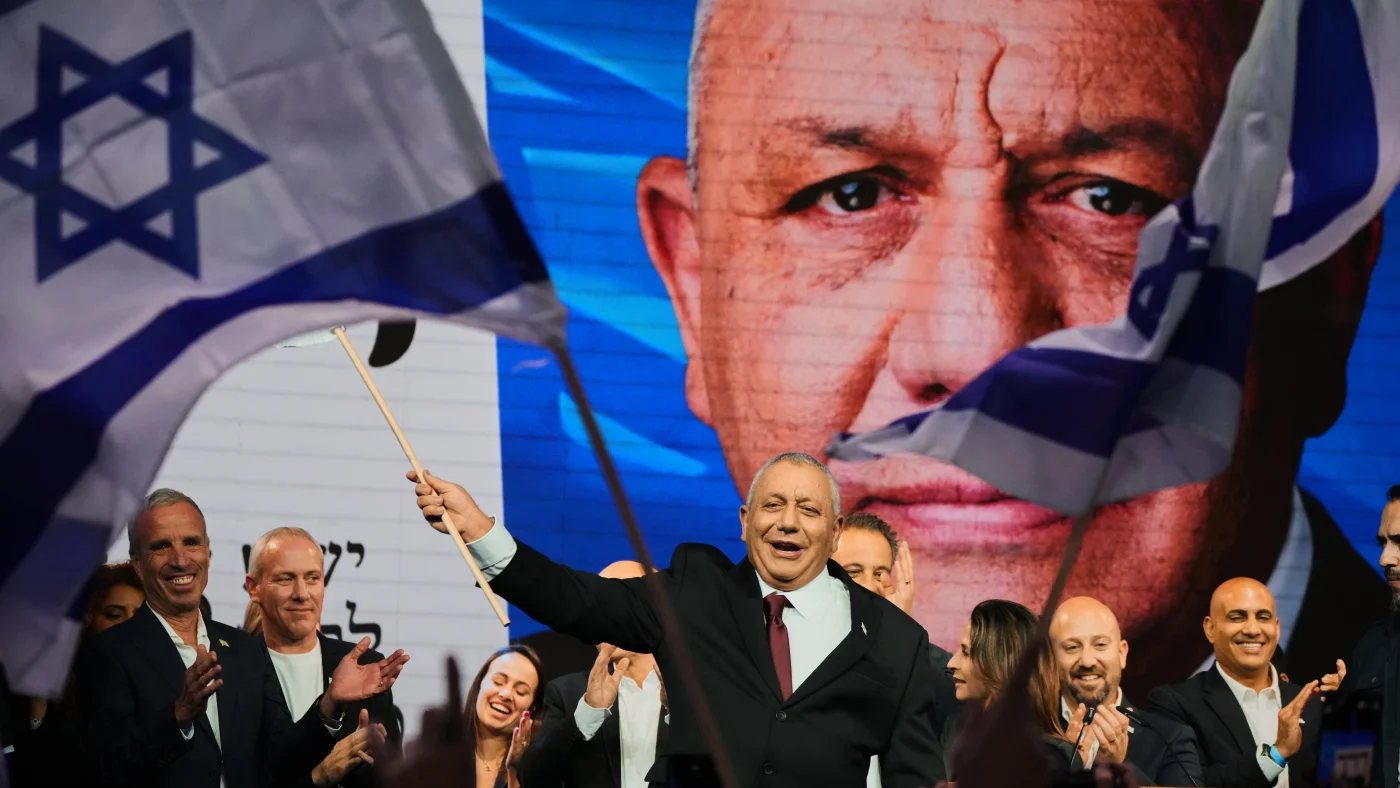
Israeli President Isaac Herzog has selected Gadi Eisenkot, the leader of the centrist Yashar party, to attempt to form a new government. The decision follows a general election where no single party or bloc secured a majority in the 120-seat Knesset, Israel's parliament. While Prime Minister Benjamin Netanyahu’s Likud party won the most individual seats, Herzog granted the mandate to Eisenkot after he was tapped to try to form the next government.
The move follows a period of political transition after last month's election results. Netanyahu’s Likud party secured 27 seats, while Eisenkot’s Yashar party won 21 seats. Despite Likud's plurality, Netanyahu was unable to gather enough support from other parties to reach the 61-seat threshold required to lead a government. Eisenkot, a former chief of staff of the Israel Defense Forces who served as top commander from 2015 to 2019, campaigned on a platform of government reform and anti-corruption.
Eisenkot previously served in Netanyahu’s emergency war cabinet following the October 7, 2023, Hamas attacks but left the following year. Upon leaving, he accused Netanyahu of failing to progress toward ending the war in Gaza or securing the release of hostages. Eisenkot’s personal connection to the conflict includes the loss of his son, Gal, a reservist killed in Gaza, and two nephews. Herzog is scheduled to formally grant Eisenkot the mandate at 5 p.m. local time on Sunday.
The outcome of these negotiations will dictate whether Israel establishes a new governing coalition or returns to the polls. If Eisenkot is successful, the Yashar party’s focus on government reform could lead to shifts in legal and administrative oversight. If he fails to secure 61 votes within the allotted six weeks, President Herzog may transfer the mandate to another lawmaker. A failure by subsequent candidates would trigger another national election, potentially prolonging the period of caretaker governance and political uncertainty.
The immediate next step is the formal ceremony on Sunday where Herzog will officially launch the 28-day window for coalition building. If Eisenkot requires more time, he must request the 14-day extension before his initial deadline expires. If a majority is reached, a new government will be presented to the Knesset for a confidence vote. If no leader can form a majority by the end of the legal timeframes, the Knesset will dissolve, and a date for a new general election will be set.