Israeli forces struck one of the largest hospitals in Gaza overnight, resulting in the deaths of at least six people, including a Palestinian surgeon. The Gaza health ministry reported that the operating ward sustained heavy damage during the attack, which occurred despite an active ceasefire. The Israeli military stated that the operation targeted a Hamas commander and alleged that the group used the hospital to store weapons and conduct interrogations. Hamas denied the allegations, characterizing the strike as an attempt to justify a war crime.
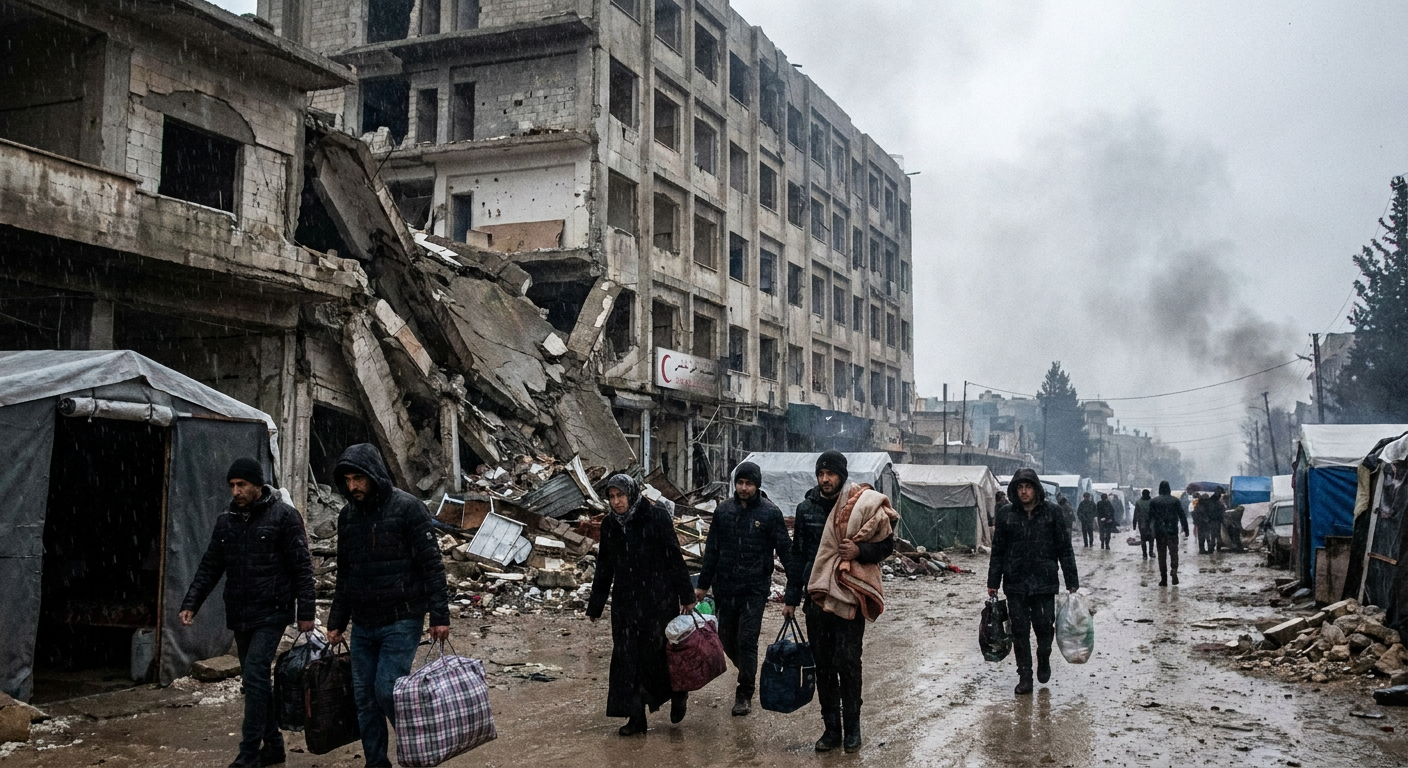
The strike coincides with a deepening humanitarian crisis caused by severe winter weather. Heavy rainfall has triggered flooding and landslides across the territory, where the United Nations reports that Israeli restrictions on supplies have left the population without adequate protection. According to Gaza authorities, more than 20,000 tents were flooded over a two-day period. Gaza's civil defense also warned that over 2,000 buildings damaged by previous airstrikes are at risk of collapse, though displaced families continue to seek shelter inside them.
In central Gaza, a landslide at a cliffside encampment killed multiple members of one family, including a pregnant woman and three children. Witnesses reported that displaced families had pitched tents in the unsafe area because Israeli forces now control more than 70% of Gaza's territory, forcing approximately 2 million people into increasingly small areas. A recent building collapse in the region killed 21 people among a group of 100 who were using the damaged structure for shelter.
Ahmad Nabhan, a resident who lost his wife and children in the recent landslide, and others in the encampments face a daily reality where environmental hazards like sand cliff collapses are as immediate a threat as military action. The lack of available land due to Israeli military control means that even when families recognize a location is dangerous, they may have no alternative site to pitch a tent. This displacement has led to overcrowding in areas that are not equipped for heavy winter rains, increasing the risk of waterborne illness and further infrastructure failure.
The ongoing restrictions on winter supplies and the destruction of health infrastructure, such as the recent damage to the hospital operating ward, limit the ability of local authorities to respond to both trauma injuries and weather-related emergencies. Humanitarian organizations are calling for the immediate allowance of shelters and drainage equipment to prevent further loss of life from landslides and flooding. The effectiveness of the current ceasefire remains under scrutiny following the hospital strike, and no specific date has been reported for the lifting of supply restrictions.