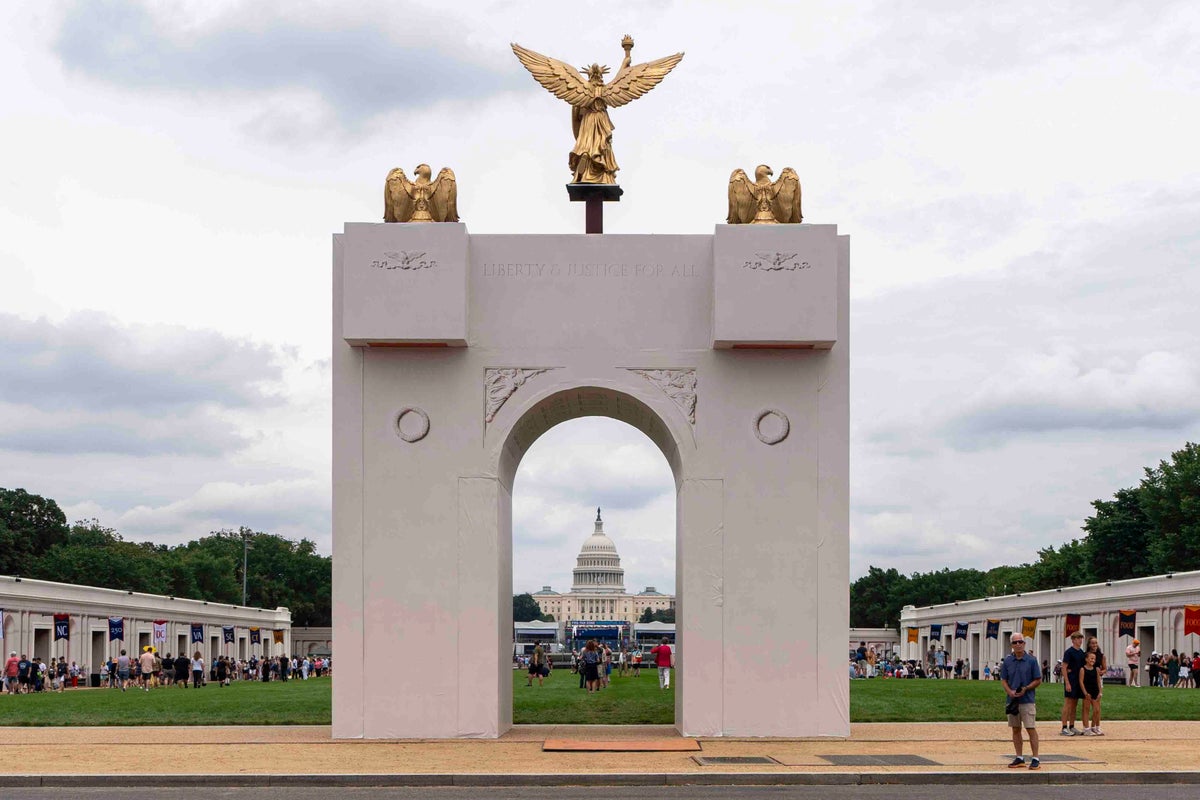
A federal commission on Thursday, November 5, 2026, granted final approval for a 250-foot memorial arch to be built in Washington, D.C. Late that night, U.S. District Judge Tanya Chutkan issued a 14-day temporary restraining order, blocking the administration from breaking ground on the project while legal challenges proceed.
The approval followed a 9.5-hour remote hearing that included testimony from more than 120 witnesses, many of whom opposed the project. The National Capital Planning Commission (NCPC) voted 8-4 in favor of the arch. The legal intervention comes the same week as national elections in which Democrats secured control of both the House of Representatives and the Senate.
The proposed arch would stand in Memorial Circle, across the bridge from the Lincoln Memorial, and would be 100 feet taller than the Statue of Liberty (excluding its pedestal). Critics during the hearing stated the monument would disrupt the environment of the nearby Arlington National Cemetery, while the commission's chairman praised the project. The arch is one of several physical changes proposed for the city, alongside a White House ballroom, a National Garden of American Heroes, and renovations to the Kennedy Center.
The transition to a Democratic-controlled Congress on January 3 will likely shift the oversight and funding of federal construction projects in the District. Rep. Jared Huffman (D-CA), the top Democrat on the Natural Resources Committee, stated that the new majority will use its investigative authority to review the administration’s projects. This shift affects how federal lands and national parks are managed, potentially altering the planned appearance of the National Mall and surrounding areas.
The scale of these projects involves hundreds of millions of taxpayer dollars. For example, a seawall for a golf course project is estimated to cost over $300 million, and Congress previously appropriated $257 million for Kennedy Center renovations. With 237 Democrats in the House and 54 in the Senate, the new majority will have the power to influence these costs through the appropriations process.
What happens next depends on both court rulings and the legislative calendar. Judge Chutkan's 14-day block expires in late November, during which time she will consider a motion from veterans and a historian to halt work until a full lawsuit is resolved. Additionally, U.S. District Judge Ana Reyes is conducting a formal inquiry into whether administration attorneys violated ethics rules during litigation over a golf course project. The new Congress will take office on January 3, marking a new phase of legislative oversight for the administration’s building plans.