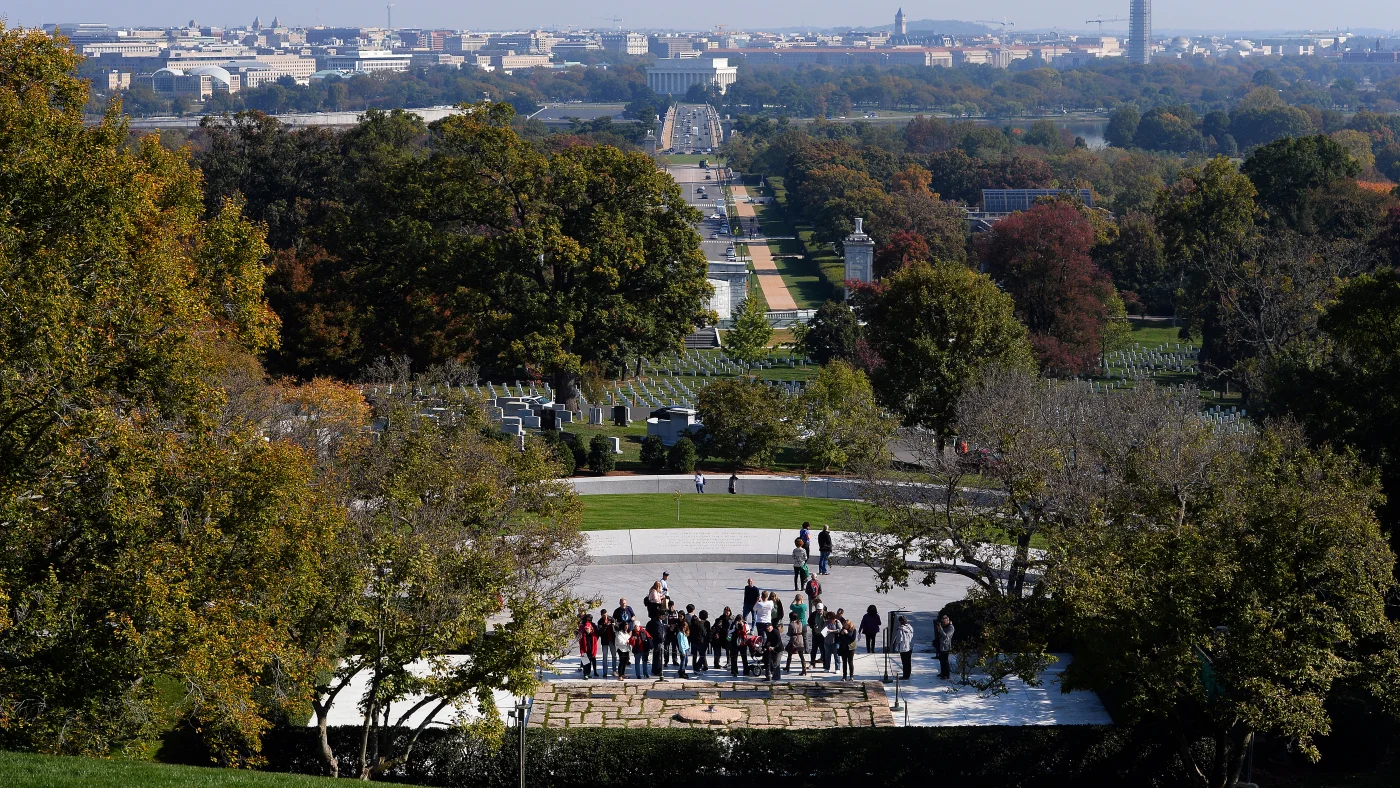
Nine members of the Kennedy family filed a lawsuit in federal court on Tuesday, November 10, to block the construction of a 250-foot arch proposed by the Trump administration in Washington, D.C. The plaintiffs, who include children of the late Senators Robert F. Kennedy and Edward M. Kennedy, argue the structure would obstruct views and cast shadows over family gravesites at Arlington National Cemetery. The lawsuit specifically cites concerns regarding the John F. Kennedy Eternal Flame, which the family says was positioned to maintain a clear line of sight between the Lincoln Memorial and Arlington House.
The proposed monument has been a subject of ongoing litigation involving veterans' groups, architectural historians, and the governments of the District of Columbia and Virginia. The Trump administration maintains the arch is a tribute to military heritage intended to enhance the visitor experience at the cemetery. On Thursday, November 5, the National Capital Planning Commission provided final approval for the project. However, District Court Judge Tanya Chutkan issued a two-week stay on construction late that night to evaluate legal challenges, including claims that the administration bypassed required congressional approval.
In their 27-page filing, the Kennedy family members alleged the arch would constitute a "permanent denigration" of the final resting place of their parents and grandparents. A forensic analysis by the Washington Post, cited in the complaint, stated the structure would cast shadows over the Kennedy memorial on 50 days of the year and briefly block light from the eternal flame on nearly half of those occasions. White House spokesperson Davis Ingle said in a statement that the administration remains confident it will be vindicated, expressing regret that family members joined the litigation against a project "intended to honor our heroes."
The scale of the project's impact extends to regional governance and national security protocols. The District of Columbia and Virginia have joined the suit, citing financial and logistical harms. Furthermore, a declaration from retired U.S. Army Brig. Gen. Steven Anderson alleged that the administration's late-stage reclassification of the arch as a military structure—potentially involving drone launches and ammunition storage—could pose hazards to the National Capital Region's security and civilian air traffic. These concerns place the project at the center of a debate over the limits of executive authority to build monuments on federal land without specific legislative consent.
The next steps for the project depend on the expiration of Judge Chutkan's two-week stay, which was issued on November 5 and is set to expire in mid-November. While Democrats in the incoming Congress have vowed to investigate the project and restrict funding, legal experts suggest the case's ultimate resolution may rest with the U.S. Supreme Court. The administration has previously argued that a century-old authorization for columns at the site justifies the arch, while the plaintiffs seek a permanent injunction to prevent any groundbreaking at Memorial Circle. If the stay is lifted, the administration has indicated it is prepared to begin construction immediately.