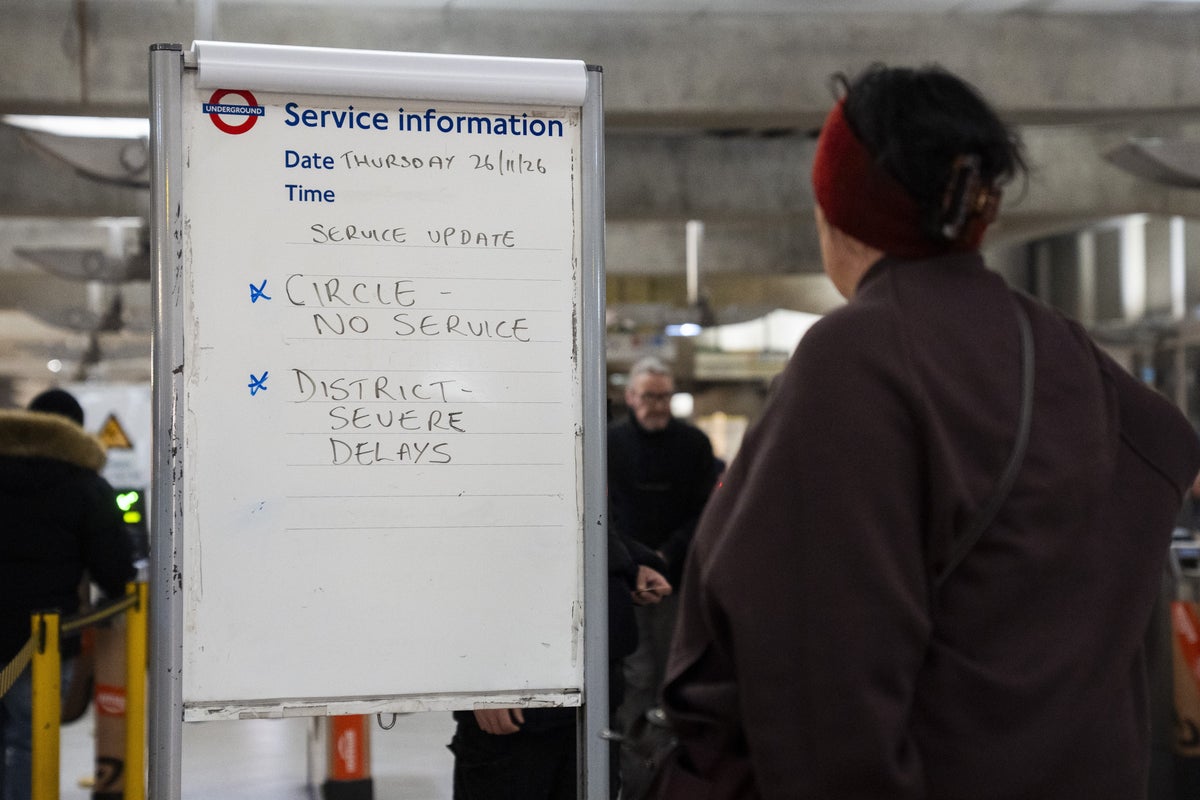
Members of the Rail, Maritime and Transport (RMT) union began a 24-hour strike on the London Underground at noon on Thursday, November 26, 2026. The labor action followed a breakdown in negotiations between the union and Transport for London (TfL) regarding proposals for a voluntary four-day workweek.
The dispute centers on a TfL plan to move to a 34-hour week, which would grant drivers 35 additional days off per year in exchange for changes to working conditions and a shift to electronic booking systems. While Aslef, another union representing Tube drivers, has supported the proposal, the RMT has opposed it. TfL stated it revised the offer to ensure the four-day week remains optional, allowing drivers to stay on a five-day schedule at their current depots.
RMT General Secretary Eddie Dempsey stated the changes are intended to "squeeze more work out of fewer drivers" and provide management with greater flexibility at the expense of members. Conversely, Nick Dent, director of customer operations for London Underground (LU), argued the proposals would improve work-life balance and service reliability. Mr. Dent noted that more drivers reported for work on Thursday than anticipated, allowing some services to run on the Piccadilly line despite initial expectations of no service.
The strike affects commuters, tourists, and staff who rely on the London Underground network. Ruth Duston, chief executive of London Heritage Quarter, noted that her organization represents 7,000 businesses in areas like Victoria, Westminster, and Whitehall that depend on the Tube to transport hundreds of thousands of people daily. During the strike period, passengers face significantly reduced services, with no service expected on the Circle or Piccadilly lines throughout the day or on the Waterloo & City line after midday, though some Piccadilly line services were later able to run. The disruption extends through Friday, November 27, as services are expected to remain affected until Friday afternoon.
For the individual driver, the proposed policy would change a standard week into a 34-hour, four-day schedule. While this offers more days off, the RMT expressed concerns regarding increased fatigue and changes to daily driving requirements. A spokesperson for Mayor Sadiq Khan urged the RMT and TfL to keep talking to resolve the matter and avoid disruption. Following this initial walkout, additional 24-hour strikes are scheduled to take place on December 17 and 19; January 4 and 6; and February 17, 23, and 25.