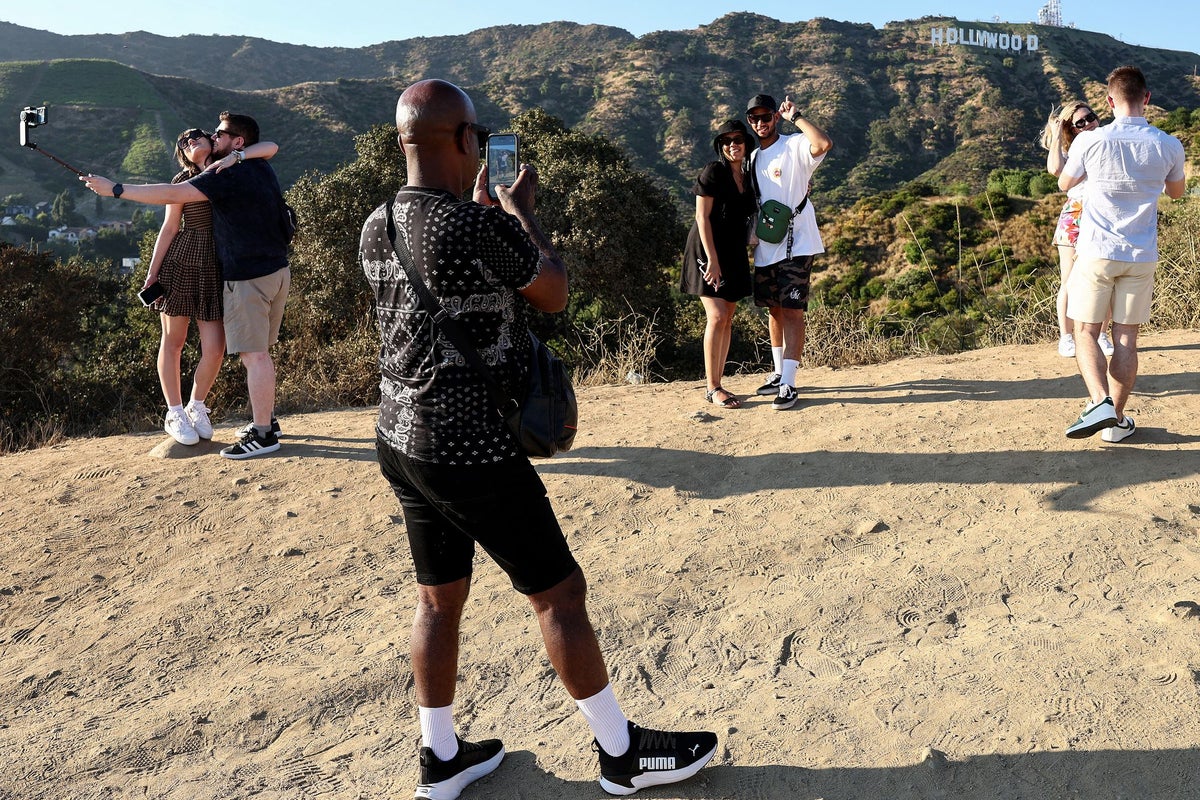
Approximately 100 homeowners living near the Hollywood sign filed a lawsuit against the City of Los Angeles on October 26, alleging that officials have not managed tourist activity in their neighborhood. The lawsuit names Los Angeles Mayor Karen Bass and Councilmember Nithya Raman as defendants and seeks a court order to compel the city to address traffic, trespassing, and safety concerns. The residents do not seek monetary damages in the filing.
The conflict centers on the residential streets below the landmark, which was originally built in 1923 as a real estate advertisement. Residents reported that the volume of visitors has increased due to the presence of a 15-year-old viewing platform, social media, and mapping applications. According to traffic camera data cited by CBS News, more than 48,200 vehicles passed through the area during a 13-day period this summer, representing a 15% increase compared to the same timeframe in 2025.
Homeowners stated that tourists frequently block driveways, leave trash and human waste on private property, and ignore no-smoking signs. Residents expressed concern that discarded cigarette butts could ignite wildfires in the hillside area. Rose Ware, a resident of 32 years, told The Times that emergency vehicles, including ambulances and fire engines, have struggled to navigate the narrow roads due to bumper-to-bumper traffic.
In response, Councilmember Raman's office stated that it has worked to increase Los Angeles Police Department and Department of Transportation staffing to manage traffic and parking enforcement. Officials reported that the deployment from July Fourth through Labor Day 2026 was the largest investment in such efforts to date. The city has also identified funding for a pilot Hollywood Sign Traffic Management Plan to test new staffing and traffic control measures on peak days and holidays.
Ilan Wurman, the attorney representing the homeowners, argued that the city is legally obligated to implement crowd controls similar to those used at international landmarks like the Eiffel Tower. Proposed measures include ticketing, access restrictions, and the creation of alternative viewing spots. Mayor Bass's office stated it is working with public safety partners on a neighborhood traffic plan to address the reported gridlock.
The scale of the issue involves tens of thousands of vehicles monthly; during a two-week period this summer, nearly 50,000 cars entered the neighborhood, averaging more than 3,700 vehicles per day on narrow residential streets. Residents have specifically cited delays in emergency response times, meaning the legal resolution could impact how quickly fire and medical services reach households in high-risk wildfire zones.
What happens next depends on the court's response to the October 26 filing and the city's implementation of its pilot Traffic Management Plan. City officials stated they intend to have a permanent plan in place before the 2028 Olympics to handle the expected surge in international visitors. Future steps will include a study of long-term solutions for access and congestion, though specific dates for court hearings or the completion of the traffic study were not reported.