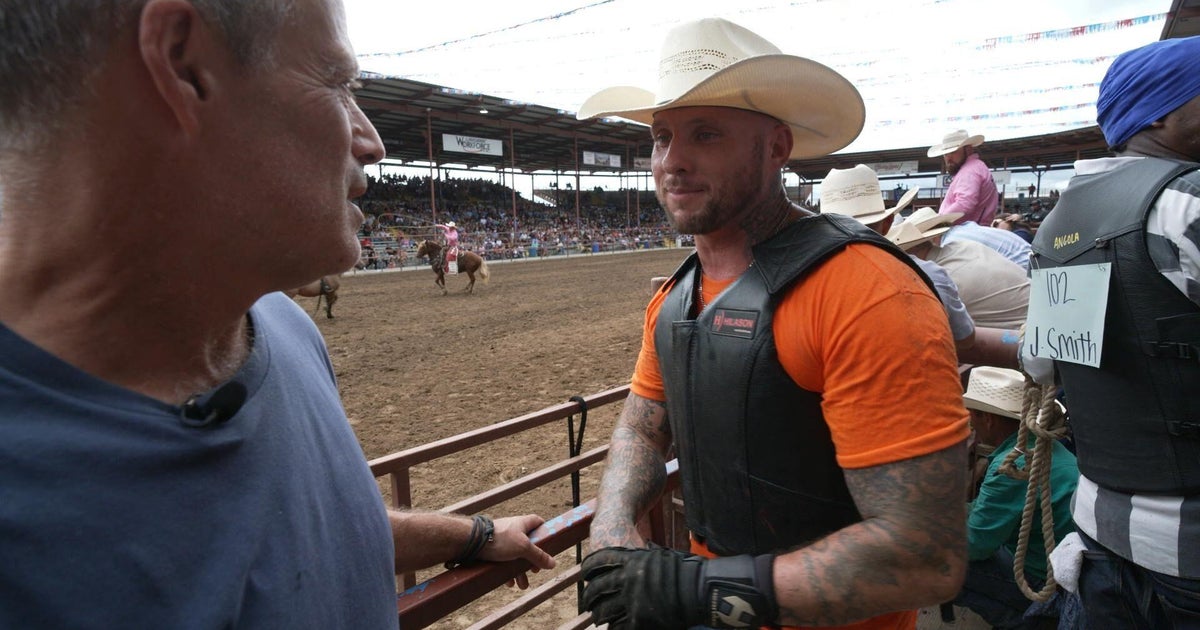
The Louisiana State Penitentiary, the largest maximum-security prison in the United States, held its 60th anniversary rodeo featuring incarcerated men competing as self-taught cowboys. The event, held one weekend in April and on Sundays in October, allows approximately 1,000 inmates with records of good behavior to participate in activities ranging from bull riding to selling handmade crafts.
The prison, commonly known as Angola, was originally a slave plantation and earned the nickname "the bloodiest prison in America" due to a history of violence and poor conditions. Warden Darrel Vannoy, who has worked at the facility for more than five decades, stated that the rodeo began in the mid-1960s with spectators watching from cars parked around a fence. Today, the event draws thousands of visitors who pay $25 for admission to watch inmates compete for prize money and sell goods.
Participating inmates, such as bareback riding champion Travis "Buckethead" Johnson and Kevin "Country" Gildhouse, are often serving life sentences without the possibility of parole. Participants reported that the event provides a temporary sense of freedom and a way to occupy their minds. While some critics outside the prison have compared the event to Roman gladiator spectacles and raised concerns about exploitation, inmates like Johnson noted that the competition offers a constructive alternative to their past actions.
The scale of the event is significant for the local economy and the prison's operational culture, as roughly 1,400 employees live and work on-site in a civilian section called the B-Line. For the families of inmates, the rodeo serves as a critical visitation window where they can sit with incarcerated relatives for eight to 12 hours. This interaction can lead to long-term social changes; inmate Kenny "300" Palmer reported that some inmates have even met their future spouses during these public events.
The concrete day-to-day impact for participating inmates includes access to vocational training, such as horse breaking, tractor operation, and artisanal trades like woodworking and jewelry making. These skills are utilized year-round in preparation for the October and April events. While the specific total revenue generated by the 60th anniversary event was not reported, individual inmates reported daily sales ranging from zero to $87. The next scheduled sessions for the public will occur on Sundays in October.