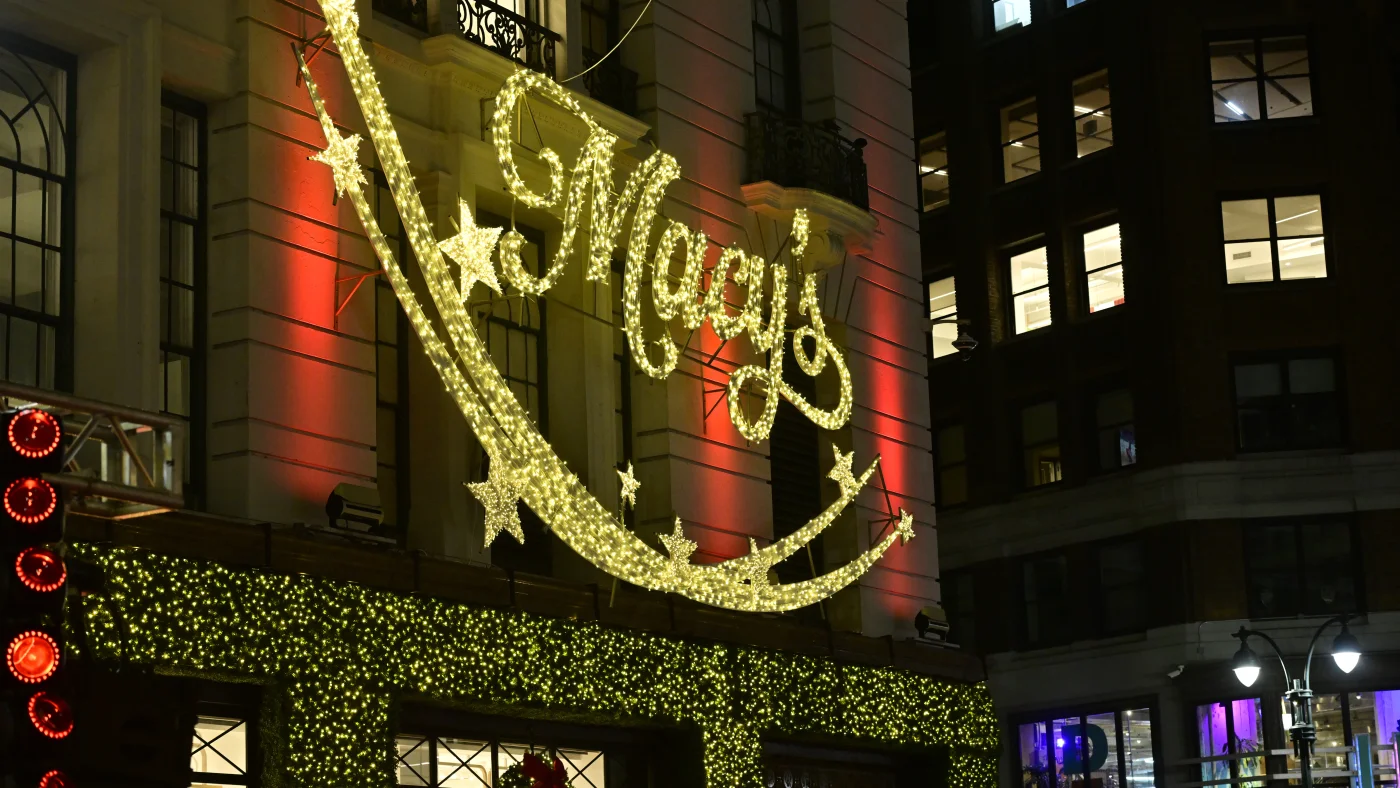
Macy’s is shifting its business model toward higher-end brands as the company seeks to stabilize its finances following years of declining sales. The retailer, which operates alongside its subsidiaries Bloomingdale’s and Bluemercury, is attempting to attract wealthier customers while maintaining its traditional shopper base. This transition involves updating store layouts, reducing floor clutter, and introducing premium materials such as real leather in place of synthetic alternatives.
The strategy follows a period of financial difficulty for the department store chain. Before the pandemic, the company faced challenges from online competition, direct-to-consumer brand sales, and a shrinking middle class. During the pandemic, Macy’s projected $1.1 billion in losses and was removed from the S&P 500 index. In 2023, sales at the retailer dropped nearly 7%, as consumers shifted toward either discount retailers like Walmart and Target or higher-end specialty stores.
In 2024, the former head of Bloomingdale’s assumed leadership of the parent company and introduced a turnaround plan titled "A Bold New Chapter." The plan includes the closure of 150 stores and the renovation of more than 300 others. According to Julie Walsh, senior vice president for women’s accessories and beauty, the company is focusing on removing "redundancy" and "duplication" on the sales floor to better showcase products. Executives reported in September that these changes contributed to a 9% increase in the average selling price during the most recent quarter.
This transition affects thousands of retail employees and millions of U.S. shoppers who rely on Macy's. The "A Bold New Chapter" plan impacts workers at the 150 locations slated for closure, though the source does not report the exact number of job losses. For the shoppers at the remaining 300 upgraded stores, the change is visible in the physical environment and pricing. The reported 9% increase in the average selling price indicates that customers are paying more per item than in previous years, reflecting the shift toward brands like Ralph Lauren and Coach.
The strategy attempts to address a broader trend in the U.S. retail market where mid-tier department stores have struggled to compete with both discount chains and luxury boutiques. By moving toward a higher-end model, Macy's is betting that it can capture the spending of wealthier households.
The company's next steps involve the continued execution of its store-closure and renovation schedule. In March, Macy's reported a year of growing sales, though the Bloomingdale’s brand continues to drive much of the company's overall growth. The retailer maintains that it is not abandoning its middle-class roots but is adding "elevated product" to its existing categories. Progress on the 300 store upgrades and the final round of the 150 store closures will continue under the current turnaround timeline, though specific completion dates for every location were not reported.