U.S. Secret Service officers arrested a man blocks from the White House on a Thursday night after he allegedly stated he intended to assassinate President Trump. The suspect, identified by the U.S. Department of Homeland Security (DHS) as Ronny Yordrix Guanipa Chrinos of Venezuela, was taken into custody near the Ellipse on Constitution Avenue.
The arrest occurred after officers observed the suspect acting suspiciously in a vehicle parked in the 1600 block of Constitution Avenue NW. According to DHS, the suspect told officers he heard voices in his head directing him to travel to Washington, D.C., to kill the president. Officers determined the vehicle was reported stolen, and the suspect reportedly admitted there were weapons inside.
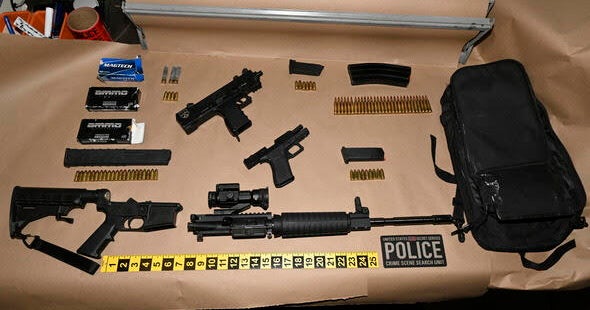
During a search of the vehicle, officers recovered three firearms, including a rifle, along with dozens of rounds of ammunition. Guanipa Chrinos faces multiple charges, including unlawful transportation of a firearm, carrying unregistered firearms and ammunition, possession of dangerous weapons, carrying a pistol without a license, and theft. DHS reported that the suspect entered the U.S. through Texas in March 2024, where he was arrested by Border Patrol and subsequently released.
Secret Service Director Sean Curran stated the incident demonstrated the agency's ability to "deescalate a volatile situation." DHS Secretary Markwayne Mullin also issued a statement confirming the suspect's immigration status and the presence of weapons in the vehicle. The arrest follows other security incidents involving the president, including a shooting at a July 2024 campaign rally in Pennsylvania.
For the general public, particularly residents and visitors in Washington, D.C., such incidents can lead to sudden, unannounced street closures and increased law enforcement presence in the National Mall area. The case also intersects with federal immigration and law enforcement policy, as the suspect was previously processed and released by Border Patrol in March 2024.
The legal proceedings for Guanipa Chrinos will establish a record of how federal courts handle threats against the presidency involving unregistered firearms and stolen property. The incident adds to a series of security breaches and attempts. The next steps in the legal process include the suspect's initial court appearance and the appointment of legal counsel, though specific dates for these proceedings were not reported by DHS.