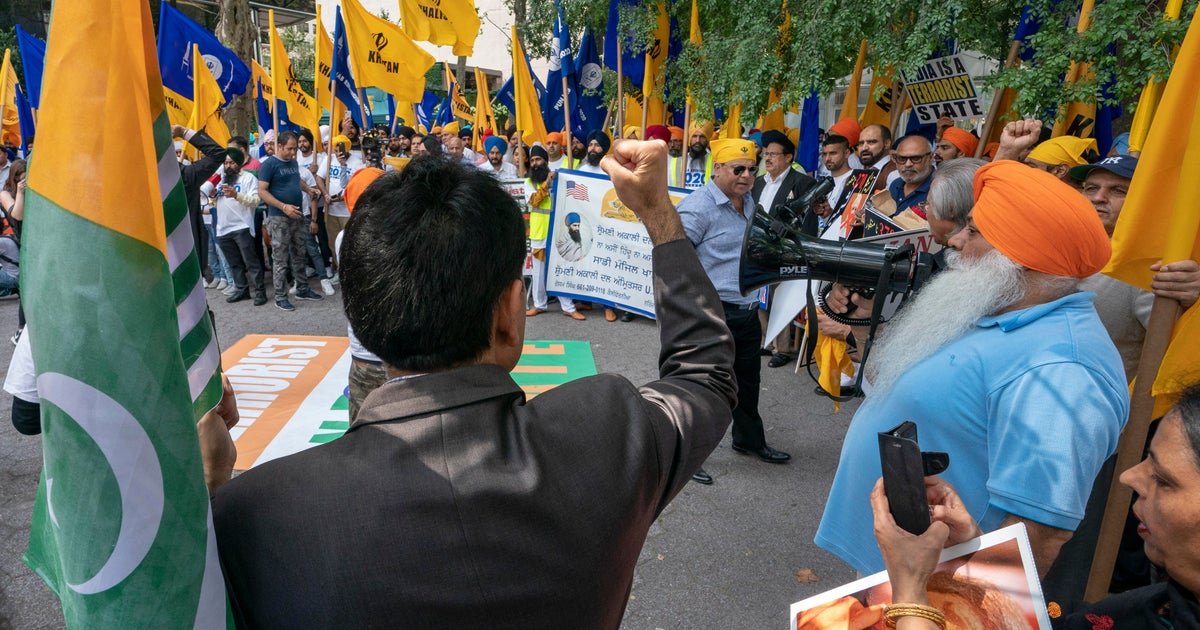
An Indian national, Nikhil Gupta, was sentenced on Friday to 19 and a half years in prison for his role in a plot to assassinate a Sikh political dissident in New York City. The U.S. Department of Justice stated that Gupta previously pleaded guilty to murder-for-hire, conspiracy to commit murder-for-hire, and conspiracy to commit money laundering. Federal officials alleged the plot was directed by an Indian government intelligence official.
The investigation began in 2023 when Gupta was allegedly recruited by Vikash Yadav, a former Indian intelligence official, to kill Gurpatwant Singh Pannun. Pannun is a dual U.S.-Canadian citizen and the founder of Sikhs for Justice, a group advocating for an independent Sikh state called Khalistan. The Drug Enforcement Administration (DEA) reported that the plot was foiled after Gupta unknowingly contacted a confidential DEA source to arrange the killing.
Vikash Yadav also faces criminal charges in the case but currently remains in India. The Indian government has denied involvement in the assassination plot. This case developed alongside separate allegations from Canadian officials in September 2023, which linked the June 2023 killing of another Sikh separatist, Hardeep Singh Nijjar, to Indian government agents. India has labeled both Pannun and Nijjar as terrorists, though Pannun describes these charges as retaliation for his political activism.
The scale of the impact includes the diplomatic strain between the U.S., Canada, and India. While the specific dollar amount of the murder-for-hire plot was not reported, Pannun noted that he now bears the cost of an "expensive and extended security plan" to protect himself and those around him. This legal precedent reinforces the U.S. government's use of the DEA and Justice Department to monitor and prosecute foreign-led operations targeting individuals within U.S. borders.
The knock-on effects involve ongoing tensions regarding the Khalistan movement, which India views as a threat to its sovereignty following a violent insurgency in the 1980s and 1990s. The sentencing of Gupta does not resolve the charges against Yadav, who remains abroad. Future developments will depend on whether the U.S. pursues further extradition efforts or if additional evidence emerges regarding the Indian government's alleged role. No specific future court dates for Yadav were reported.