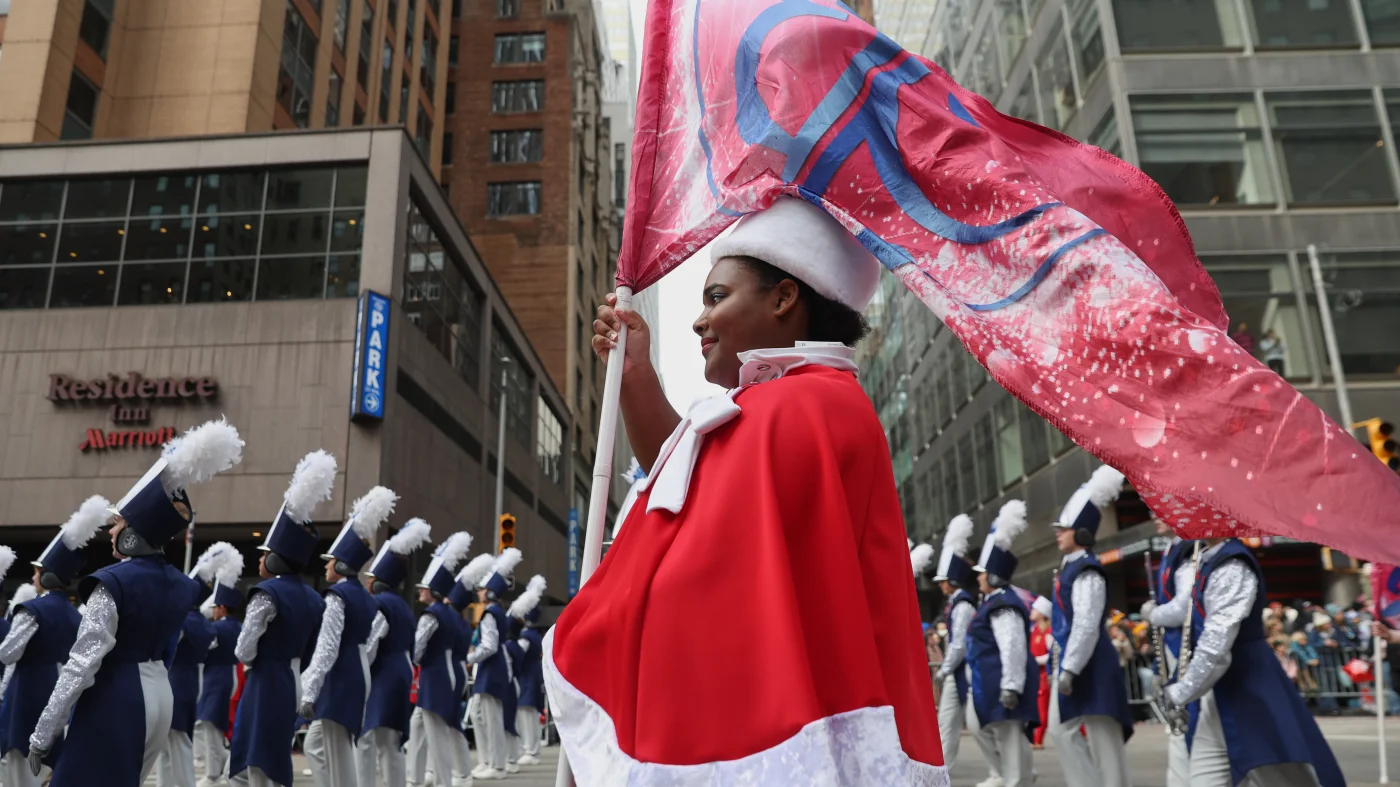
New York City officials postponed the 100th Macy's Thanksgiving Day Parade for the first time in its history after a powerful storm hit the region on Thursday, Nov. 26, 2026. The event was rescheduled for Saturday, Nov. 28, prompting several participating marching bands to launch emergency fundraising campaigns to cover the unplanned costs of staying in the city.
The New York Police Department, city officials, and Macy’s cited safety concerns during a Nor’easter as the reason for the delay. The storm caused power outages for hundreds of thousands of households across the Northeast on Thursday. While most bands attempted to stay, seven groups, including the University of Alabama’s Million Dollar Band, were forced to withdraw due to the schedule change.
Bands that remained in New York reported a financial burden for extra lodging, meals, and transportation. The Marching Illini from the University of Illinois requested $175,000 to keep 410 students in the city but reported receiving more than $350,000 by Friday. The Pearland High School band from Texas raised approximately $350,000 for its roughly 500 members. According to the New York Post, four bands—Pearland High, the Hawaii All-State Marching Band, Dobyns-Bennett High School, and the James F. Byrnes Rebel Regiment—collectively raised $1.2 million.
Corporate and community support also assisted the student musicians. Bradford Yamamoto, executive director of the Nā Koa Aliʻi Hawaiʻi All-State Marching Band, stated that the group met its goals through grassroots donations averaging $65, alongside support from the Macy’s Foundation and American Savings Bank. Hawaiian Airlines and Alaska Airlines added a Saturday evening Alaska Airlines flight from New York to Seattle to help transport over 200 members and supporters back to Hawaii.
The postponement affected student performers from states including Texas, Illinois, Hawaii, Tennessee, and South Carolina. For these groups, an unplanned two-day extension in New York City required funding. On a per-student basis, the University of Illinois' initial $175,000 need translates to roughly $426 per performer for the additional time.
Individual students and their families faced the choice of either securing funding or missing a performance they had spent months preparing for. While donors provided over $1.2 million to cover costs for four specific bands, the schedule change resulted in the withdrawal of seven bands who could not accommodate the Saturday date. For those who stayed, the shift required logistical changes to travel itineraries.
The successful performance on Saturday, Nov. 28, featured a record 100 inflatables and seven remaining marching bands. With the parade concluded, the focus for these organizations shifted to the return of students to their home states via adjusted flight schedules, such as the special Saturday evening flight arranged for the Hawaii-based performers.