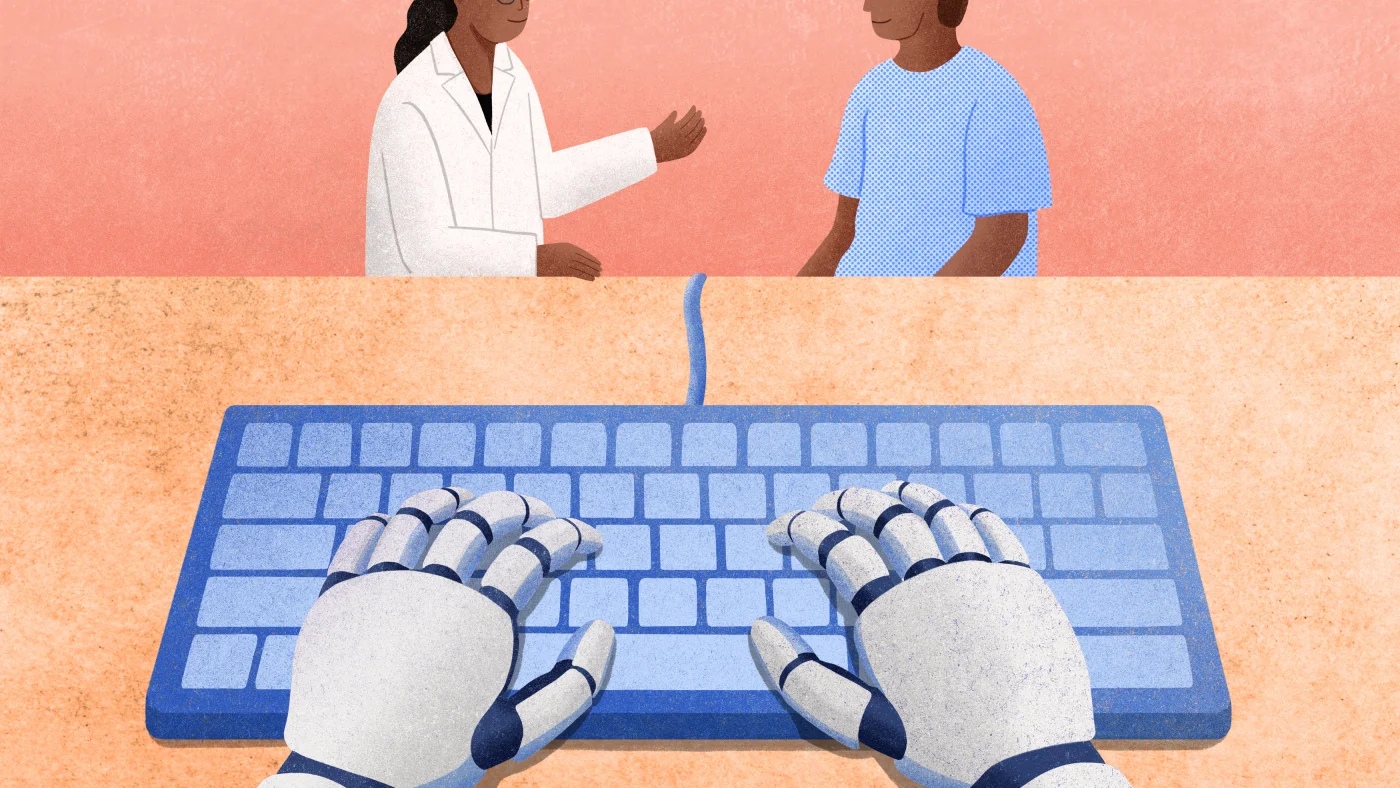
Physicians are increasingly adopting artificial intelligence (AI) scribes to record and summarize patient visits. These tools utilize automatic speech recognition to distinguish between voices and large language models to convert transcripts into formatted medical notes. While proponents state the technology allows doctors to focus on patients rather than computer screens, the shift has raised questions regarding data privacy and the accuracy of medical records.
Medical AI scribes are typically used via smartphone apps or software embedded in electronic medical records. Dr. Mara Gordon, a family physician in Camden, N.J., reported that the software records the encounter, uploads the audio to a cloud-based server for transcription, and generates a clinical note. Most systems are designed to be compliant with the Health Insurance Portability and Accountability Act (HIPAA), a federal law that requires companies to encrypt data and maintain strict access controls to protect patient privacy.
The technology is not without technical and clinical limitations. Dr. Gordon noted that AI scribes may struggle with nuanced conversations, such as when a patient denies a diagnosis or when multiple family members are speaking. In one instance, a scribe incorrectly stated a patient had been misdiagnosed when the patient was actually in denial of a cancer diagnosis. Dr. Eileen Kim, an assistant professor at the University of California San Diego, stated that if doctors do not adequately review these notes, errors—such as mistaking a patient’s age, gender, or "I do" vs "I do not" statements—can propagate through the health record.
The scale of potential record errors remains a concern for medical professionals. Because most AI scribe user agreements state that the physician is ultimately liable for the medical record's content, doctors must spend time editing AI-generated notes to ensure factual accuracy and clear clinical decision-making. There are also concerns from health equity advocates that since many scribes currently operate only in English, the potential benefits and risks of the technology are not being distributed equally across different patient populations. Furthermore, some researchers view the resulting transcripts as "digital gold" that could eventually be used to study physician-patient communication if patients are enrolled in research studies.
What happens next: For now, patients are typically asked for verbal consent before an AI scribe is activated during a visit. If a patient opts out, physicians return to manual data entry on a computer. Most AI scribe companies currently delete recordings after a set period to protect privacy and mitigate legal risks, as there is concern that transcripts could be used in medical malpractice lawsuits. As the technology evolves, the healthcare industry continues to monitor whether corporate health systems will use the time saved by AI to increase patient volume, potentially impacting the duration of individual appointments.