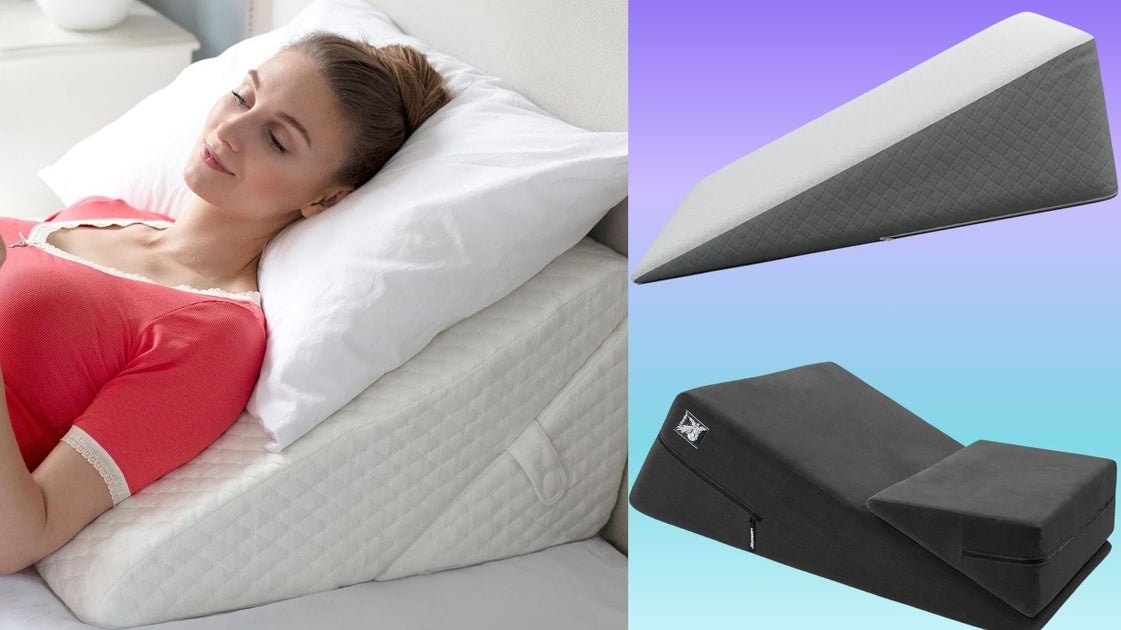
Medical professionals and sleep organizations have identified wedge pillows as a tool for managing several physical conditions, including acid reflux, back pain, and sleep apnea. Dr. Kristle Lynch, a gastroenterologist, stated that acid reflux and gastroesophageal reflux disease (GERD) often occur when stomach contents flow backward into the esophagus while a person lies flat. According to Lynch, a wedge pillow uses gravity to keep the stomach and esophagus at an angle that encourages the forward movement of stomach contents during sleep.
The Sleep Foundation reports that these pillows can also assist with spinal alignment by relieving pressure on the neck, shoulders, and back. Additionally, research suggests that sleeping at an incline may reduce snoring, obstructive sleep apnea, and nasal congestion. While some wedge pillows are marketed for orthopedic support, others are designed for sexual activities or to fill gaps between a mattress and headboard.
Wedge pillows are typically constructed from high-density foam or memory foam and often feature removable, machine-washable covers. Dr. Lynch recommends a height of six to eight inches, noting that taller options, such as 12-inch pillows, may cause users to slide down due to the steepness of the incline. Users may also place a standard pillow on top of a wedge for additional neck comfort.
The cost of these pillows varies by style and material, such as memory foam or gel-topped versions, which impacts consumers seeking non-pharmaceutical interventions for sleep health. A person using these pillows would notice a change in their sleep posture and, according to a manufacturer, a reduction in leg or foot swelling when using leg-specific wedges. These products are available in multiple sizes corresponding to standard bed dimensions, from headboard wedges to larger ramp-and-wedge combinations.
The availability of these products provides options for home-based management of mild to moderate sleep and digestive issues. While medical experts like Dr. Lynch provide guidance on height and usage, they do not endorse the specific brands listed in the source. Products in this market include the integration of materials like breathable bamboo covers and adjustable multi-component sets. Consumers can purchase these items through various online retailers and specialty manufacturers.