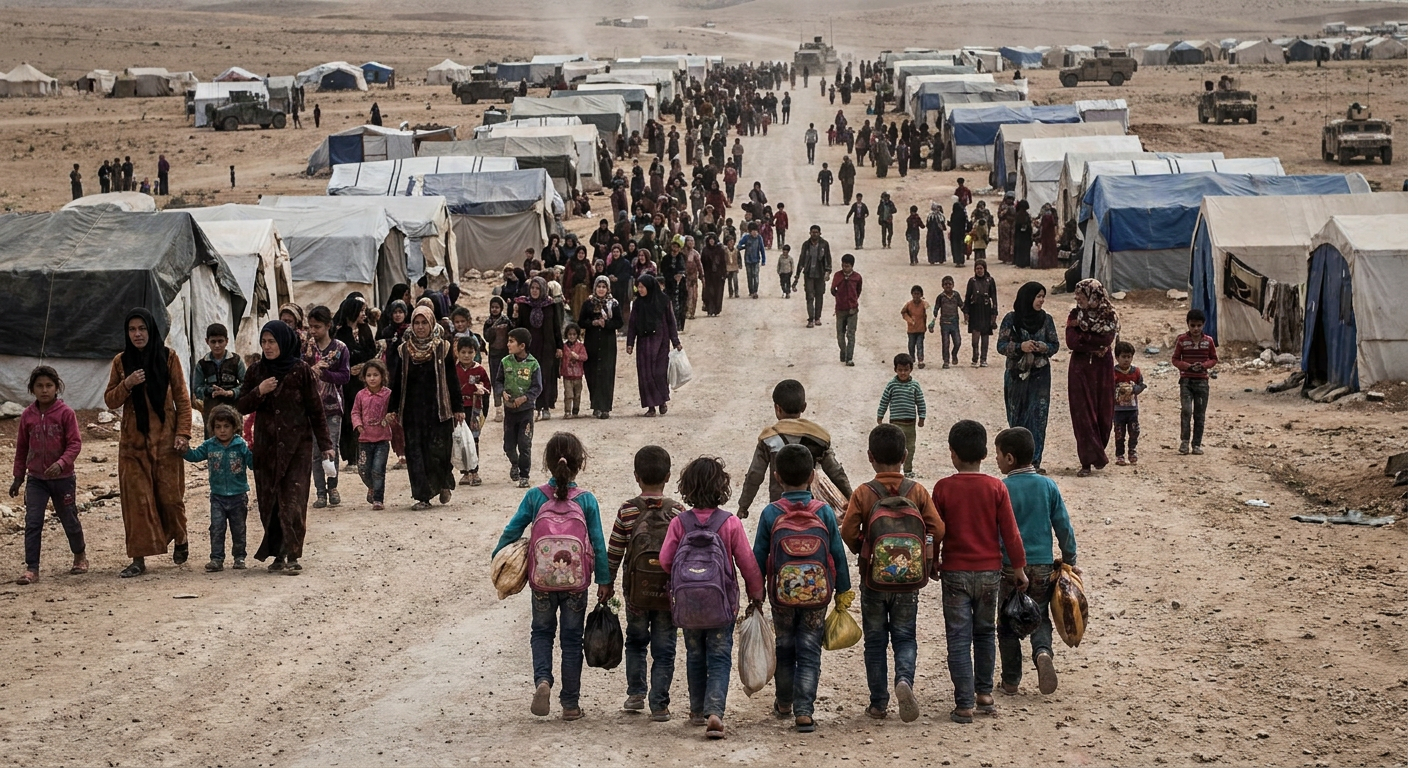
A conflict in Sudan has left millions of children displaced and out of school as the country enters its third year of civil war. According to United Nations reports and humanitarian organizations, the ongoing fighting between the Sudanese Armed Forces and the paramilitary Rapid Support Forces (RSF) has created a humanitarian crisis involving widespread displacement, food shortages, and reports of atrocities.
The war began in April 2023 when fighting broke out between government troops and the RSF. Since then, the conflict has spread across the country, particularly affecting the Darfur region. Dr. Sam Nutt, head of the non-governmental organization War Child, described the capital of Khartoum as "post-apocalyptic" following a recent visit, noting that many children have witnessed the injury or death of family members.
Human rights groups report that the lack of access to education is contributing to the ongoing cycle of violence. Laura Mills of Amnesty International stated that some children see joining the combat as their only available option because schools have been closed for years. Additionally, both sides of the conflict face accusations of atrocities, with the RSF specifically accused of genocide in western Darfur. While the United Arab Emirates has been accused of backing the RSF, the country has denied those charges.
For the individual resident, the war has resulted in the destruction of local infrastructure and the loss of parental support for many minors. Children in conflict zones face the direct threat of drone strikes and the risk of forced marriage. Beyond the immediate physical danger, the lack of schooling for several consecutive years has left a generation of students without formal instruction, which humanitarian groups state increases the likelihood of child recruitment into armed groups.
The conflict also involves several international actors and interests, including Russia, Iran, and the United Arab Emirates. Analysts from War Child and Amnesty International indicate that the instability in mineral-rich Sudan has the potential to affect global markets and neighboring countries. While U.N. agencies continue to monitor the humanitarian situation and the impact of the super El Niño on food supplies, no specific date for a ceasefire or the reopening of national schools has been reported.