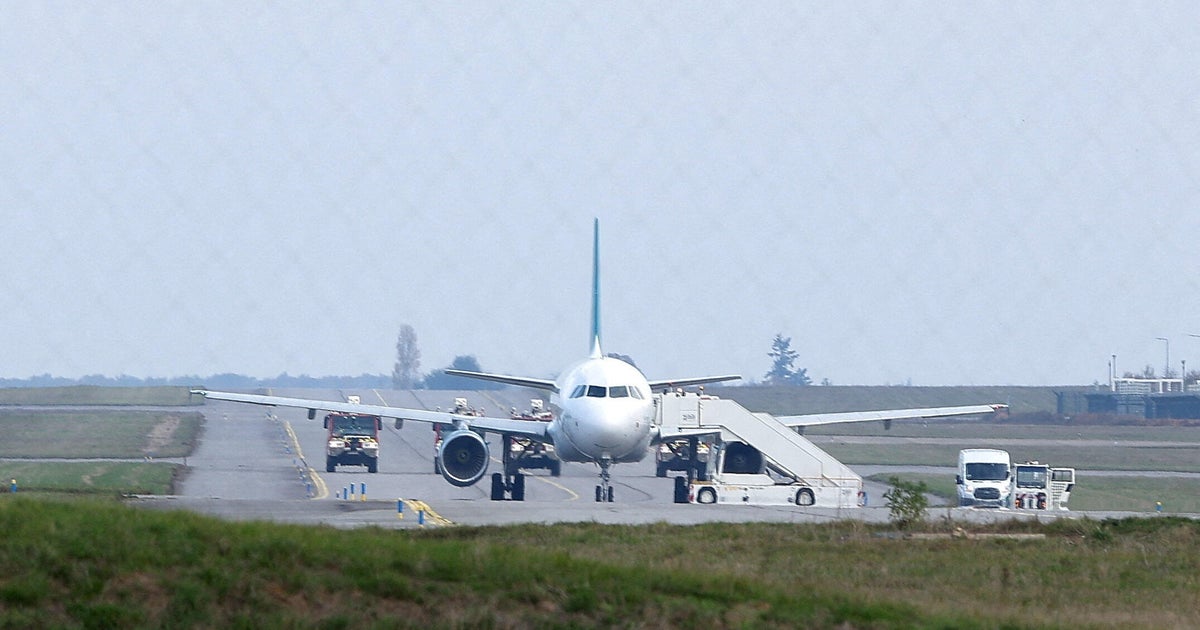
At least 18 commercial flights across Europe received bomb threats on Thursday, November 5, prompting emergency landings, aircraft diversions, and security inspections. Authorities reported that no explosives or suspicious items were found on any of the aircraft, and the incidents appear to be hoaxes. These events follow at least seven similar threats reported on Tuesday, November 3, bringing the total number of impacted journeys this week to at least 25.
The threats impacted flights operated by several airlines, including Aer Lingus, Finnair, Ryanair, Wizz Air, Aegean Airlines, and LOT Polish Airlines. An Aer Lingus flight traveling from Dublin to Rome was diverted to an air base in Evreux, France, where 151 passengers and six crew members were evacuated while military teams searched the plane. In Italy, a Finnair flight from Helsinki to Rome was escorted by fighter jets; while the Italian news agency ANSA reported a brief suspension of operations at Rome’s Leonardo Da Vinci Airport, the airport operator stated there was no impact on normal operations.
Other incidents involved three Ryanair flights bound for Sofia, Bulgaria, which made emergency landings in Sofia and Plovdiv. Officials in Prague reported threats against four flights headed to the Czech capital, all of which landed safely with no explosives found. In Spain, three flights were affected at Madrid’s Barajas airport, while two Milan-bound flights—one from Greece and one from Portugal—were inspected by technicians after landing safely despite receiving alerts.
The financial and operational scale is reflected in the mobilization of national military and police resources, including fighter jet escorts in Italy and bomb disposal units in multiple nations. Aviation security expert Paul Mason told the BBC that the frequency and credible manner of these threats suggest a "deliberate act" rather than coincidental calls. This week's events also coincide with other reported security concerns in Europe, including cyberattacks on grocery store refrigeration units that caused the loss of food supplies and a cyberattack on French blood banks on Wednesday, November 4.
The incidents occur as European security officials, including MI5 Director General Sir Ken McCallum, have raised concerns regarding "hybrid warfare" tactics. While no group has claimed responsibility for the flight threats as of November 5, McCallum stated in October that Russia and Iran have engaged in low-level sabotage to undermine European security. Both Moscow and Tehran have denied these allegations. Following the inspections on Thursday, airport operations in Sofia and Plovdiv returned to normal. Further investigations by national police agencies and intelligence services are expected to continue as they seek to identify the source of the messages.