The Plain Record

Neutral daily news — clear headlines, complete facts.

National

NASA Identifies 4.1-Billion-Year-Old Martian Meteorite Found in Sahara Desert

A 4.1-billion-year-old meteorite found in Mali has been identified by NASA as a rare fragment of the Martian crust.

Published November 15, 2026 at 3:05 PM EST

The short answer

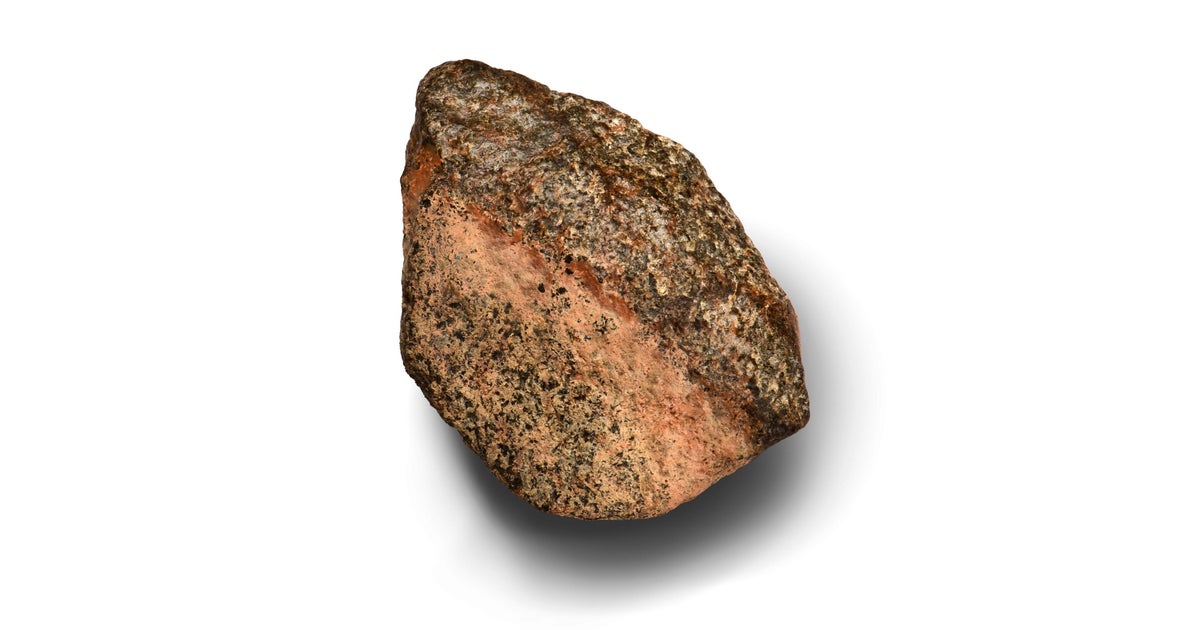
A 4.1-billion-year-old meteorite found in Mali has been identified by NASA as a rare fragment of the Martian crust. A NASA study has identified a rose-colored meteorite discovered in the Sahara Desert as a 4.1-billion-year-old fragment of Mars. The rock, which weighs nearly two pounds, was found in Mali in 2022 and named Teghaza 001 after the salt plain where it was located.

NASA Identifies 4.1-Billion-Year-Old Martian Meteorite Found in Sahara Desert

The Facts

Who
NASA scientists, including Yang Liu (Jet Propulsion Laboratory), Lee Saper (Ames Research Center), and Francis Tissot (Caltech).
What
Identification of a 4.1-billion-year-old Martian meteorite found in the Sahara Desert.
When
The meteorite was found in 2022; the identification study was reported following a June publication.
Where
Mali, Sahara Desert
Why
The meteorite provides a rare physical sample of the ancient Martian crust and evidence of a dynamic early water cycle on the planet.

A NASA study has identified a rose-colored meteorite discovered in the Sahara Desert as a 4.1-billion-year-old fragment of Mars. The rock, which weighs nearly two pounds, was found in Mali in 2022 and named Teghaza 001 after the salt plain where it was located.

Scientists confirmed the meteorite's origin by comparing its chemical and mineral composition to data collected by NASA's previous Martian missions. It is one of approximately 435 Martian meteorites identified on Earth and is ranked among the three oldest samples of the planet ever recovered.

Researchers used a specialized age-dating method to analyze mineral grains within a sample smaller than a fingernail. The analysis, led by Yang Liu of NASA’s Jet Propulsion Laboratory and Francis Tissot of Caltech, revealed that the rock consists of volcanic minerals, including zircon crystals. These minerals match surface samples observed in the Martian southern highlands by the Mars Reconnaissance Orbiter.

The study indicates a change in the understanding of the Martian environment, as the rock shows clear evidence of being altered by water 4.1 billion years ago. NASA reports this suggests the early Martian water cycle may have been more dynamic than earlier models predicted. A person following space science would notice this shift in how researchers describe the history of water on Mars, moving from theoretical models to evidence-based records of rock-water interactions and atmospheric changes during the period the planet was losing its water.

The identification sets a precedent for using high-precision dating on extremely small samples to identify the origins of planetary fragments. This process allows researchers to study the early topography of Mars without requiring a new landing mission to the southern highlands. What happens next involves further research on Teghaza 001, as lead author Yang Liu stated that scientists have only "scratched the surface" of the data contained within the meteorite. Specific dates for future publications or follow-up tests were not reported.

Timeline of what happened

Key dates and decisions, in the order they occurred.

  1. 2022

    Teghaza 001 meteorite discovered in Mali

  2. June 2026

    Study published regarding the meteorite's water content

Summaries are written by The Plain Record to state the facts of a story plainly and without political slant. Drafted with AI assistance and checked against the source record before publication. See how we report, or report a correction.

← Back to the front page

Questions readers ask

What happened: NASA Identifies 4.1-Billion-Year-Old Martian Meteorite Found in Sahara Desert?

A NASA study has identified a rose-colored meteorite discovered in the Sahara Desert as a 4.1-billion-year-old fragment of Mars. The rock, which weighs nearly two pounds, was found in Mali in 2022 and named Teghaza 001 after the salt plain where it was located.

Who is involved?

NASA scientists, including Yang Liu (Jet Propulsion Laboratory), Lee Saper (Ames Research Center), and Francis Tissot (Caltech).

When did this happen?

The meteorite was found in 2022; the identification study was reported following a June publication.

Where did this happen?

Mali, Sahara Desert

Why does this matter?

The meteorite provides a rare physical sample of the ancient Martian crust and evidence of a dynamic early water cycle on the planet.