The Plain Record

Neutral daily news — clear headlines, complete facts.

National

NASA Swift Observatory Reenters Atmosphere Over Indonesia After 22-Year Mission

NASA's 1.5-ton Swift Observatory reentered over Indonesia on November 4 following a failed $30 million rescue mission and 22 years in orbit.

Published November 4, 2026 at 5:36 PM EST

The short answer

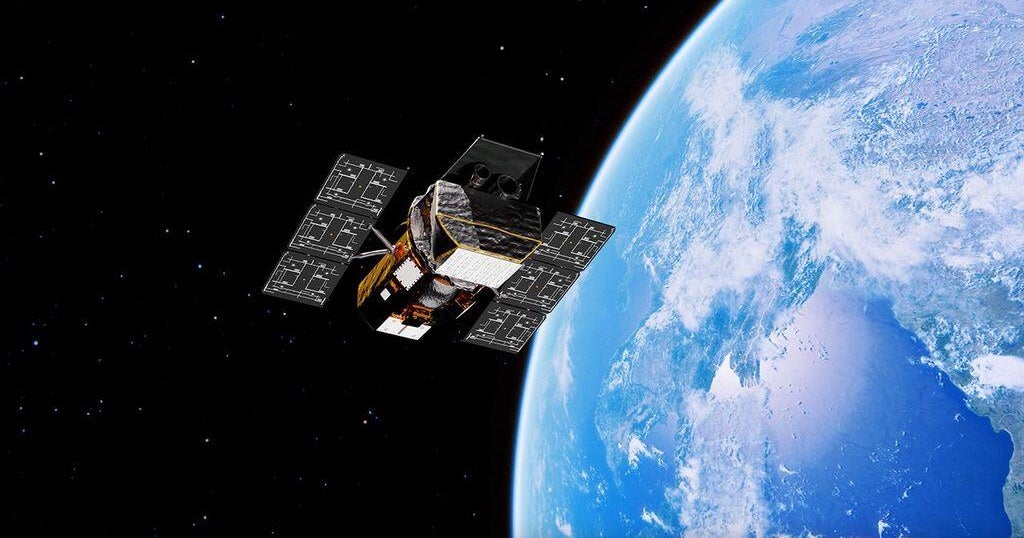
NASA's 1.5-ton Swift Observatory reentered over Indonesia on November 4 following a failed $30 million rescue mission and 22 years in orbit. The 3,200-pound Swift Observatory reentered Earth's atmosphere on November 4, 2026, ending a 22-year mission in space. NASA reported the telescope reentered at 7:39 a.m. ET over the North Sumatra region of Indonesia after rescue efforts failed earlier this year.

NASA Swift Observatory Reenters Atmosphere Over Indonesia After 22-Year Mission

The Facts

Who
NASA, U.S. Space Force, Katalyst Space, and astronomer John Nousek.
What
Reentry of the 3,200-pound Swift Observatory telescope following a failed rescue mission.
When
November 4, 2026 at 7:39 a.m. ET
Where
Over the North Sumatra region of Indonesia
Why
Solar activity caused atmospheric drag that pulled the telescope out of orbit; a $30 million robotic rescue attempt failed in July.

The 3,200-pound Swift Observatory reentered Earth's atmosphere on November 4, 2026, ending a 22-year mission in space. NASA reported the telescope reentered at 7:39 a.m. ET over the North Sumatra region of Indonesia after rescue efforts failed earlier this year.

Launched on November 20, 2004, the Neil Gehrels Swift Observatory was designed for a two-year mission to study gamma-ray bursts, supernovas, and black holes. However, increasing solar activity recently heated the upper atmosphere, creating drag that pulled the 1.5-ton instrument toward Earth. NASA decommissioned the observatory on October 20 after it dropped to an altitude of 171 miles and became unstable.

In July, NASA contracted Katalyst Space for a $30 million rescue mission involving a three-armed robot named Link. The robot was intended to push the telescope back into its proper orbit but failed to get within seven miles of the instrument. After Link fell back to Earth in September, NASA decided in August to allow the observatory to plunge back into the atmosphere. While much of the telescope was expected to burn up, NASA estimated that approximately 10 percent of its weight—roughly 320 pounds of components—could survive reentry.

The loss of the Swift Observatory changes the day-to-day operations of the global astronomical community. For 22 years, the telescope acted as a "first responder," issuing alerts to the Hubble and James Webb space telescopes to investigate cosmic events like X-ray flares and gamma-ray bursts. Without Swift’s rapid-response capabilities, researchers at institutions such as Pennsylvania State University and NASA will lose a source of data that triggered deeper investigations into 2,000 gamma-ray bursts and 1,400 exploding stars. Astronomers have noted that there is currently no immediate replacement for the specific monitoring Swift provided.

What happens next involves the monitoring of the North Sumatra region and surrounding areas for potential debris. NASA stated that components surviving reentry may be found across different hemispheres. As of November 4, scientists are continuing to evaluate how to replace the telescope's functions. Astronomer John Nousek stated that the control team has prepared for this outcome since the mission began, noting that objects in low-Earth orbit eventually succumb to atmospheric drag. No further rescue missions or corrective maneuvers are possible now that the telescope has reentered and its systems have been shut down.

Timeline of what happened

Key dates and decisions, in the order they occurred.

  1. November 20, 2004

    Swift Observatory launched into low-Earth orbit

  2. July 1, 2026

    Katalyst Space rescue mission attempted

  3. August 1, 2026

    NASA decides to allow observatory to reenter atmosphere

  4. September 1, 2026

    Rescue robot Link falls back to Earth

  5. October 20, 2026

    NASA shuts down telescope systems at 171 miles altitude

  6. November 4, 2026

    Observatory reenters atmosphere over North Sumatra

Summaries are written by The Plain Record to state the facts of a story plainly and without political slant. Drafted with AI assistance and checked against the source record before publication. See how we report, or report a correction.

← Back to the front page

Questions readers ask

What happened: NASA Swift Observatory Reenters Atmosphere Over Indonesia After 22-Year Mission?

Reentry of the 3,200-pound Swift Observatory telescope following a failed rescue mission.

Who is involved?

NASA, U.S. Space Force, Katalyst Space, and astronomer John Nousek.

When did this happen?

November 4, 2026 at 7:39 a.m. ET

Where did this happen?

Over the North Sumatra region of Indonesia

Why does this matter?

Solar activity caused atmospheric drag that pulled the telescope out of orbit; a $30 million robotic rescue attempt failed in July.