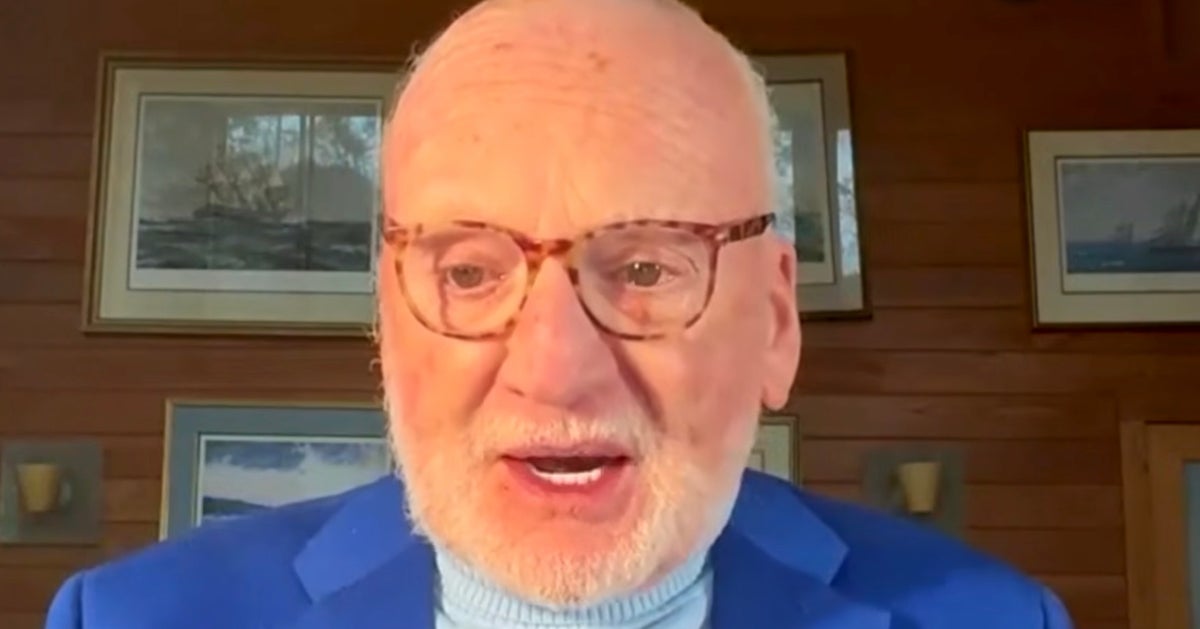
Former national security official Richard Clarke criticized the federal government’s response to a four-hour nationwide flight shutdown during a CNN interview on Saturday, November 14. Clarke stated that the explanation provided by Transportation Secretary Sean Duffy and Homeland Security Secretary Markwayne Mullin was incomplete following the Federal Aviation Administration (FAA) halting all U.S. airspace activity on Friday.
The flight stoppage occurred on Friday, November 13, and was attributed by Secretary Duffy to issues with older FAA routers. During a press conference that day, Secretary Mullin stated there was "zero evidence" that a cyberattack caused the outage, while also noting that officials were in the process of patching the system with new technology that was overwhelming older components.
Clarke, who served in the Reagan, Bush, and Obama administrations, argued that officials could not yet definitively rule out a cyberattack because a forensic root cause analysis had not been completed. He questioned why the system appeared to fail on a Friday afternoon when no unusual traffic was reported. Clarke characterized the briefing as poor crisis communication, stating that new systems should be tested in a "sandbox" rather than in real time.
The shutdown followed an announcement earlier in the week by Secretary Duffy regarding the expansion of SMART (Strategic Management of Airspace, Routes and Trajectories), an artificial intelligence-based platform designed to centralize data streams and improve nationwide efficiency. While Secretary Mullin mentioned that new technology patches were overwhelming the old system, Secretary Duffy stated there was "no possible way" that the SMART platform contributed to the flight shutdown.
For the FAA and the Department of Transportation, this event centers on the reliability of aging infrastructure and the implementation of the SMART AI-based platform. The conflict between Secretary Mullin’s statement about new technology overwhelming old systems and Secretary Duffy’s assertion that the new AI platform was not involved creates uncertainty regarding the nation's aviation technology. Clarke expressed concerns about a lack of forensic analysis, suggesting that the agency may not yet have a full understanding of the vulnerabilities within its routing hardware or its new software patches.
Next steps for the FAA involve continuing the rollout of SMART while managing the hardware limitations mentioned by the secretaries. Neither the Department of Transportation nor the Department of Homeland Security has announced a specific date for the completion of a final forensic report on the outage. Clarke indicated that a more complete explanation is necessary to maintain public trust in the aviation system.