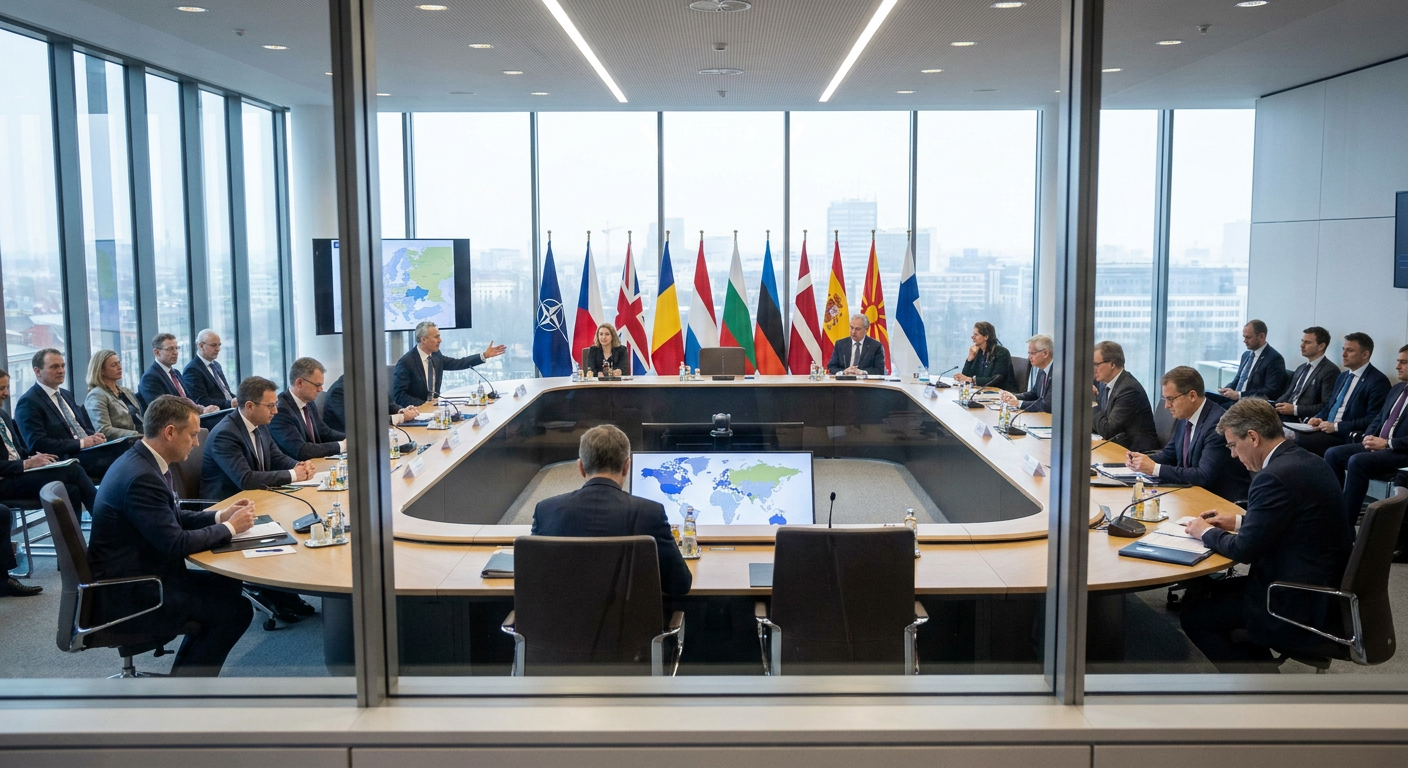
North Atlantic Treaty Organization (NATO) ambassadors scheduled a special session for Monday morning to address recent military activities in Northern and Eastern Europe involving Russia and Ukraine. The meeting follows a series of incidents including missile strikes in Poland, a drone attack on a Russian cargo ship in Finnish waters, and allegations of a Russian assassination plot in Denmark. NATO Secretary General Mark Rutte stated that the alliance would defend every inch of Polish territory, though he noted he could not guarantee further incursions would not occur.
The meeting comes amid several days of activity outside the primary conflict zone in Ukraine. On Friday, November 20, 2026, three Russian cruise missiles landed in Polish territory, approximately 30 to 60 miles from a military exercise involving nearly a dozen countries. The exercise was intended to train forces for a future peace-monitoring mission. During the event, air alerts were issued, and personnel were at one point instructed to take cover. Poland is a member of NATO, the intergovernmental military alliance between 32 member states.
On Saturday, November 21, 2026, a Russian cargo ship named the Sparta II was struck by a drone in the Gulf of Finland, causing a fire. While Ukraine has not claimed responsibility, the attack is presumed to have originated from there. Finnish and Estonian teams assisted Russian ships in extinguishing the blaze to prevent an environmental hazard. The Finnish Border Guard stated that allowing the vessel to sink would have risked a major environmental risk for Finland and Estonia. On Sunday, November 22, 2026, Russia took control of the ship and towed it out of Finnish waters. The Sparta II is currently under U.S. and U.K. sanctions, and its owner is under European Union sanctions.
For citizens in these regions, the war now manifests as concrete disruptions, such as air raid alerts in Poland and potential environmental threats from damaged vessels in the Baltic Sea. The Finnish Border Guard noted that if the sanctioned Russian ship had sunk, the resulting pollution would have directly impacted the environments of both Finland and Estonia. Furthermore, the alleged assassination plot in Denmark indicates that security services are monitoring for operations that could affect domestic safety.
The knock-on effects of these events include a heightened state of readiness for the collective defense of NATO territory and the potential for increased costs imposed on Russia by the alliance. The incident involving the Sparta II also highlighted the legal complexities of enforcing sanctions; despite its military cargo, Finnish authorities allowed the ship to return to Russian custody to avoid an ecological disaster. What happens next is the NATO ambassadorial meeting on Monday, November 23, 2026, where members will discuss additional measures to protect Polish territory and respond to the spilling of the conflict onto European soil.