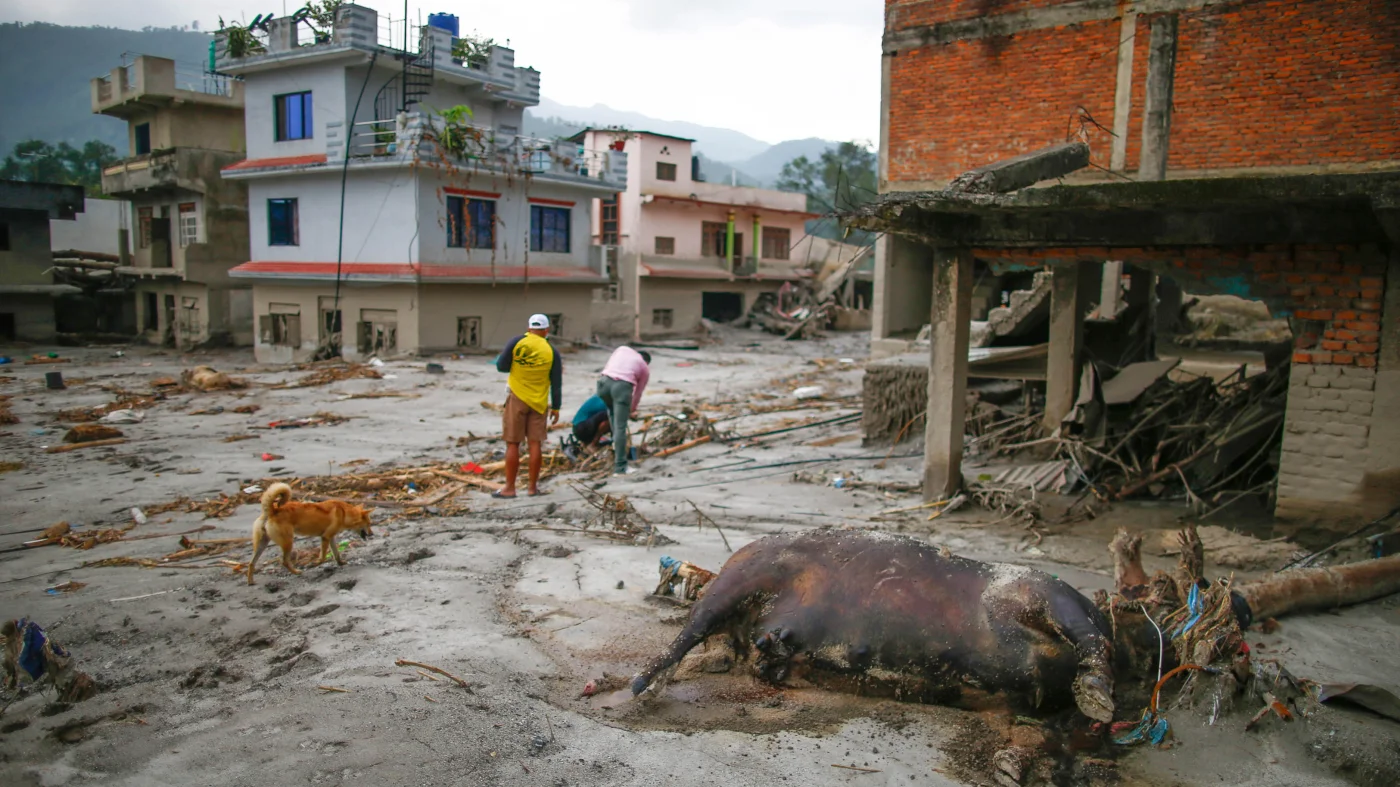
Emergency response efforts in Nepal have transitioned toward long-term reconstruction following flash floods and mudslides triggered by a glacial collapse and debris flow along the Trishuli River. The disaster resulted in at least 1,500 deaths and left more than 5,000 people missing, according to reported figures. Aid organizations, including UNICEF and the nonprofit Helen Keller International, are now shifting their focus toward mental health support, malnutrition screening, and infrastructure repair as winter approaches.
The flooding and mudslides destroyed approximately 10,000 toilets, 64 water systems, 23 schools, and seven health facilities. More than 100 bridges were lost, severing transport links to northern mountain regions and complicating the delivery of food and medical supplies. In Naukunda Gaunpalika, preliminary data indicates that moderate acute malnutrition rose from 0.8% in June to 8.7% in October, a change attributed by Pooja Pandey Rana of Helen Keller International to the loss of local farms and reliance on packaged foods.
Funding for recovery remains a primary challenge for the rebuilding effort. While the United Nations Climate Fund approved $20 million and other donors contributed over $100 million, preliminary estimates suggest the total cost of rebuilding could reach $5 billion. Shyam Pathak, a chief of health at UNICEF, noted that international attention has decreased even as thousands of survivors continue to live in temporary shelters or tents.
The scale of the financial impact is approximately $5 billion for a country with limited domestic resources, meaning a funding gap of nearly $4.9 billion currently remains based on reported donor contributions. Residents in affected areas like Nuwakot and Uttargaya face daily physical hazards from more than 100 destroyed bridges, with survivors reporting that makeshift replacements are unstable and dangerous for the elderly. As winter arrives, those in tents face increased risks from damp bedding, poor ventilation, and exposure to harsh temperatures, which aid groups say will likely lead to further respiratory and health complications.
The knock-on effects of the disaster include a breakdown in education and healthcare access following the destruction of dozens of schools and clinics. Because mountain roads remain severed, the delivery of cash and supplies to the upper north regions is restricted, creating a precedent where geographic isolation dictates the speed of recovery. What happens next depends on the development of formal plans for permanent housing and water system repairs; however, no specific dates or deadlines for the completion of these permanent structures have been reported. Aid groups are currently focused on "winterizing" temporary shelters and providing mental health counseling for survivors and displaced workers.