The Plain Record

Neutral daily news — clear headlines, complete facts.

World

New Zealand Election Ends Without Clear Majority as Vote Count Continues

New Zealand’s general election resulted in a deadlock, leaving Prime Minister Christopher Luxon and opponent Chris Hipkins to negotiate with minor parties.

Background: Budget reconciliation, explained

Published November 8, 2026 at 2:51 PM EST

The short answer

New Zealand’s general election resulted in a deadlock, leaving Prime Minister Christopher Luxon and opponent Chris Hipkins to negotiate with minor parties. New Zealand’s general election on Saturday, Nov. 7, 2026, resulted in no clear winner, leaving both major political blocs without a decisive majority.

New Zealand Election Ends Without Clear Majority as Vote Count Continues

The Facts

Who
Prime Minister Christopher Luxon (National Party), Chris Hipkins (Labour Party), and Qiulae Wong (Opportunity Party).
What
General election resulting in a hung parliament and ongoing coalition negotiations.
When
Saturday, Nov. 7, 2026, with final results expected Nov. 27, 2026.
Where
New Zealand
Why
Neither the left nor right bloc secured a clear majority, requiring three weeks of special vote counting and coalition talks to determine the next government.

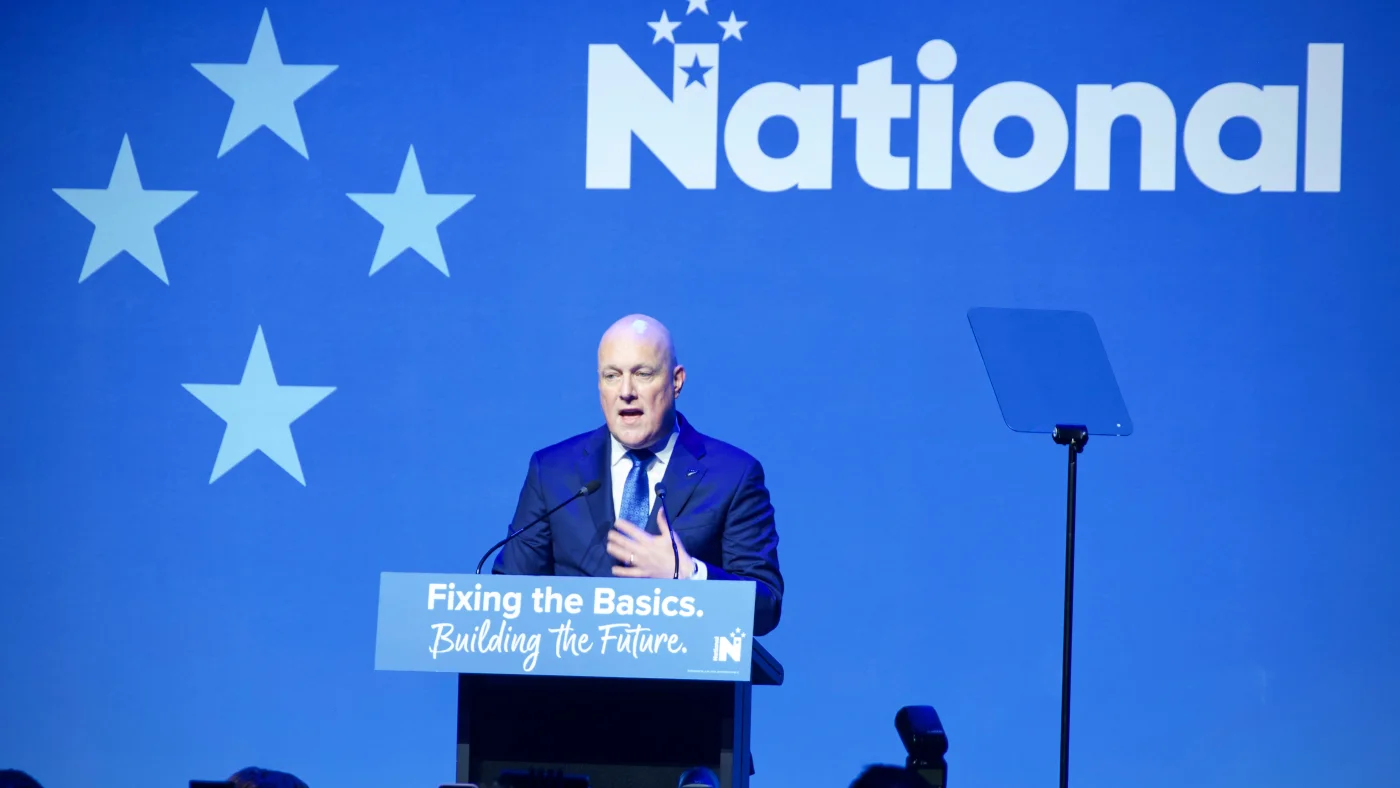
New Zealand’s general election on Saturday, Nov. 7, 2026, resulted in no clear winner, leaving both major political blocs without a decisive majority. Prime Minister Christopher Luxon of the center-right National Party and Chris Hipkins of the center-left Labour Party now face weeks of negotiations with minor parties to form a government. As of Sunday, Luxon’s National Party bloc appeared to hold a one-seat lead toward a governing majority, but he declined to claim victory, citing the need for final tallies.

The election results reflected a shift away from the two dominant parties toward minor parties. Voters also propelled a new group, the Opportunity Party, into Parliament for the first time. Led by political newcomer Qiulae Wong, the party won seven seats, potentially giving it the power to act as a tiebreaker in coalition talks. Wong has stated she is willing to work with either major bloc to form a government.

Election officials are currently counting approximately 400,000 "special votes," which include ballots from New Zealanders living abroad. This process is expected to take three weeks, with final results not due until Nov. 27. Historically, these votes have favored left-wing parties. Current counts show the conservative bloc with 67 seats—just one over the 66 required for a majority in the 131-seat Parliament—while the left-wing bloc holds 57 seats.

For the 2.8 million voters who participated, the immediate impact is a government in transition. Several high-ranking National Party officials, including the ministers of finance and defense, the speaker of parliament, and the attorney general, are set to exit politics based on current results.

The outcome of the negotiations will determine the influence of minor parties on national policy. The libertarian ACT party, with 13 seats, and the populist New Zealand First party, with 12, would likely demand policy concessions in exchange for supporting a National-led government. Conversely, the Green Party and Te Pāti Māori would hold leverage over a Labour-led government. The final seat count on Nov. 27 will dictate which side has the upper hand in these talks, or if Qiulae Wong’s Opportunity Party will become a deciding factor.

Luxon, a former business executive, has urged the public to "calm down" and take a break from politics while the special votes are tallied. If he fails to secure a stable coalition with ACT and New Zealand First, he may be forced to reconsider his pre-election refusal to negotiate with Wong. Hipkins remains hopeful that special votes will shift the balance in favor of the left, though he would still likely require Wong's seven seats to reach a majority.

Timeline of what happened

Key dates and decisions, in the order they occurred.

  1. October 30, 2026

    Opportunity Party leader Qiulae Wong poses for portrait outside Parliament

  2. November 7, 2026

    New Zealand general election held

  3. November 8, 2026

    Luxon and Hipkins address supporters as vote counting continues

  4. November 27, 2026

    Final election tallies scheduled for release

Summaries are written by The Plain Record to state the facts of a story plainly and without political slant. Drafted with AI assistance and checked against the source record before publication. See how we report, or report a correction.

← Back to the front page

Questions readers ask

What happened: New Zealand Election Ends Without Clear Majority as Vote Count Continues?

New Zealand’s general election on Saturday, Nov. 7, 2026, resulted in no clear winner, leaving both major political blocs without a decisive majority. Prime Minister Christopher Luxon of the center-right National Party and Chris Hipkins of the center-left Labour Party now face weeks of negotiations with minor parties to form a government.

Who is involved?

Prime Minister Christopher Luxon (National Party), Chris Hipkins (Labour Party), and Qiulae Wong (Opportunity Party).

When did this happen?

Saturday, Nov. 7, 2026, with final results expected Nov. 27, 2026.

Where did this happen?

New Zealand

Why does this matter?

Neither the left nor right bloc secured a clear majority, requiring three weeks of special vote counting and coalition talks to determine the next government.