Jensen Huang, the chief executive of Nvidia, is currently under investigation by the company's board following reports that he may have been the target of a foreign intelligence effort. In early November 2026, Huang admitted to an extramarital affair. News reports have further alleged that the woman involved in the affair is suspected of being a Chinese spy, leading to a review of potential cybersecurity implications for the chip-maker company.
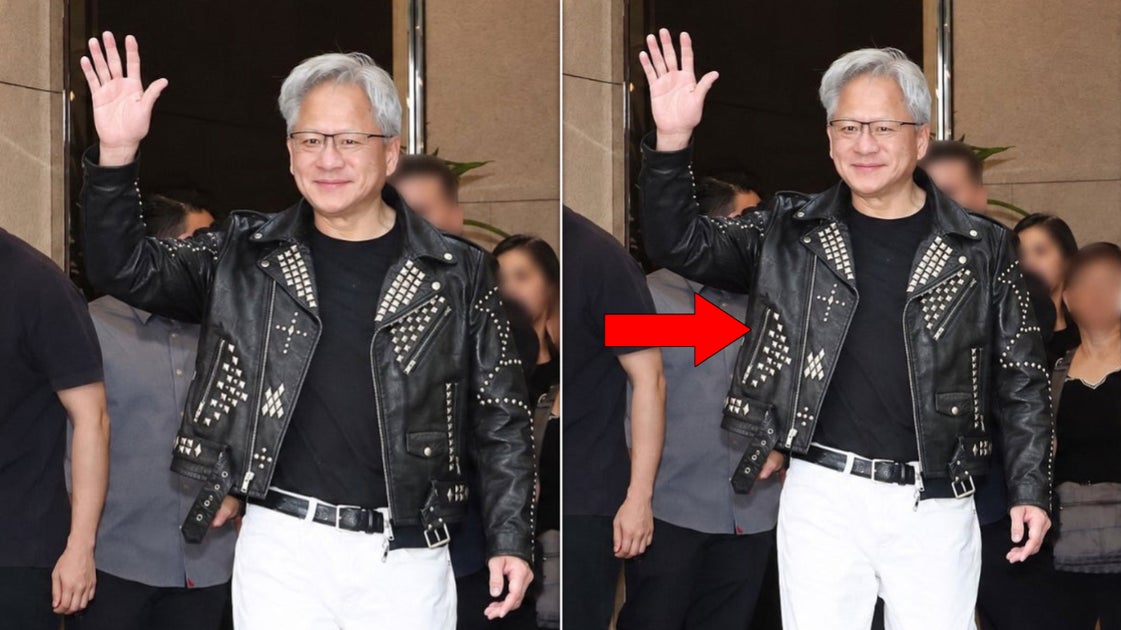
Amid these corporate and personal developments, an image of Huang wearing a heavily studded leather jacket featuring a cross circulated on social media. The image, which some users characterized as a "bad boy arc" or a "midlife crisis," was later identified as a product of artificial intelligence. The manipulated image appears to be based on authentic Getty Images photos taken of Huang in Seoul during June 2026, where he was wearing a standard slim-fitting jacket.
Hany Farid, a computer science professor at Dartmouth College, confirmed to HuffPost that the viral image contains an invisible watermark. Using the SynthID verification service, Farid determined that the media was created or edited with OpenAI tools. Farid noted that while Huang is known for wearing black leather jackets—owning between 30 and 40 of them—this specific version was not authentic.
For the public, the day-to-day change is the increasing necessity to verify visual information using digital tools. Individuals can now use services like SynthID to check for watermarks from developers such as Google, Nvidia, OpenAI, and Kakao, though the absence of a watermark does not guarantee an image is real. This shift requires a change in how people consume news, as even images that appear to align with known facts—such as Huang’s preference for leather jackets—can be altered to support false stories.
The knock-on effects include a potential erosion of trust in digital content. Farid stated that the proliferation of such images may lead people to become suspicious of all content, including authentic content. Steven Sloman, a cognitive psychologist at Brown University, said it is important that people automatically question the authenticity of viral images to dilute the effect of misinformation. The Nvidia board investigation remains ongoing, and no specific date for its conclusion or the release of findings has been reported.