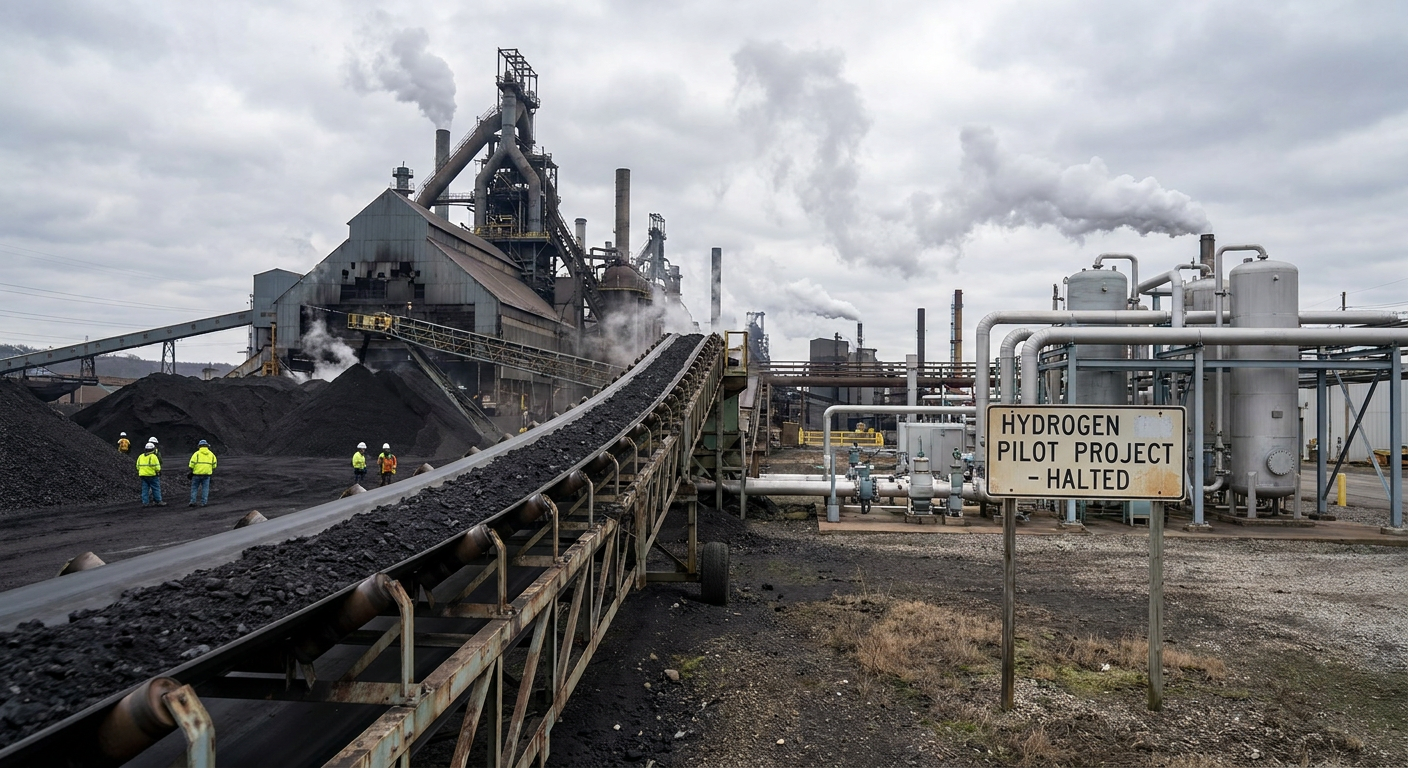
The steel mill in Middletown, Ohio, has canceled plans to transition away from coal-based manufacturing following a shift in federal energy policy under the Trump administration. The facility, known as Middletown Works, had previously intended to replace its use of coke—a refined form of coal—with a process utilizing natural gas or hydrogen. This transition was designed to reduce greenhouse gas emissions and local soot pollution.
Under the Biden administration, the federal government had awarded the mill’s owner, Cleveland-Cliffs, $500 million to support the hydrogen transition. At the time, Cleveland-Cliffs CEO Lourenco Goncalves told investors that hydrogen would be a "game changer" for the decarbonization of the steel industry. However, following the inauguration of President Trump, who campaigned on a platform of boosting fossil fuels, the company informed investors that the hydrogen project would not proceed.
In August, Vice President JD Vance visited the Middletown plant to announce a new $1 billion investment in the facility. Instead of the hydrogen conversion, the administration stated it would support the company in reinvesting in coal-based steelmaking processes. Representatives for Cleveland-Cliffs and the Department of Energy did not respond to requests for comment regarding the change in strategy.
The scale of the federal involvement has shifted from a $500 million grant for hydrogen technology to an administration-backed $1 billion corporate reinvestment in coal-based manufacturing. According to the Environmental Protection Agency (EPA), the soot particles released by coal-based steelmaking are linked to increased rates of heart and lung issues, including asthma. The environmental impact is noted by experts like Chris Pistorius of Carnegie Mellon University, who stated the cancellation removes a "big demonstration" project that would have tested the viability of hydrogen for the U.S. steel industry.
The day-to-day change for the region is the maintenance of the industrial status quo rather than the transition to a cleaner-burning fuel source. Residents will continue to experience the air quality levels associated with coke-refined coal production. The next steps for the project involve the implementation of the $1 billion investment announced by Vice President Vance; however, specific dates for construction or the formal return of the previous $500 million federal grant were not reported.