Iran’s Revolutionary Guard Corps (IRGC) is attacking oil tankers in the Strait of Hormuz, with the group stating it hits several ships per day. These actions continue despite efforts by the United States military to guide vessels through the waterway. The United Nations has tracked approximately 150 attacks on ships since the start of the regional war, which has led to environmental impacts in Gulf waters.
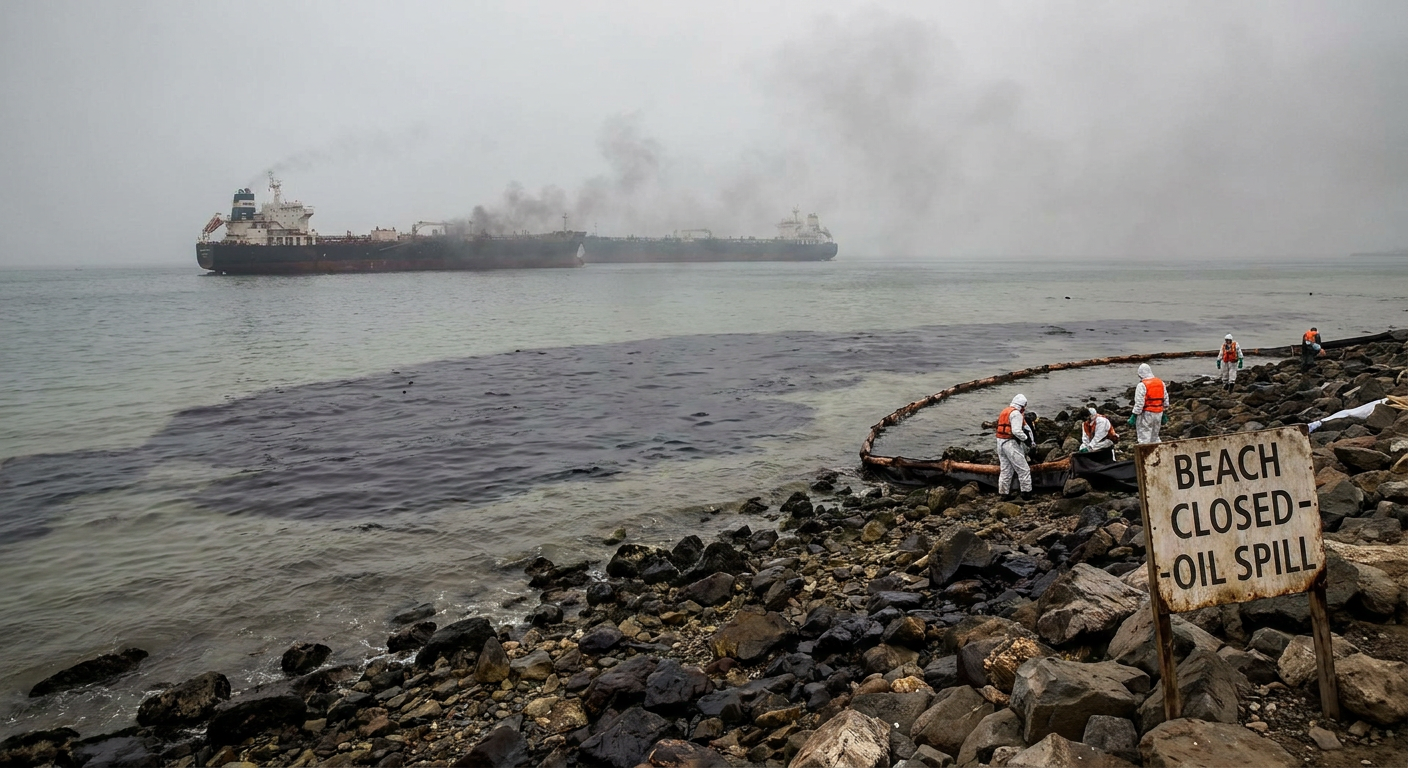
Greenpeace Middle East and North Africa reported that satellite monitoring has identified more than 600 possible oil slicks across the region, covering an estimated 8,000 square miles. The organization stated that the repeated frequency of these spills in a concentrated area is compounding the ecological damage. Following an October 2 attack on a ship carrying 2 million barrels of crude oil, oil began washing ashore in the United Arab Emirates (UAE) approximately two weeks later.
The resulting pollution has led to the closure of several beach stretches in the UAE, including the entire coast of the emirate of Umm Al Quwain. Cleanup crews in hazard suits have been deployed to remove oil and petrol using generators and hoses. British endurance swimmer Lewis Pugh, who swam in the Strait this month to highlight environmental issues, reported hearing explosions that rocked the sea and seeing a tanker hit roughly 4 kilometers away.
The scale of the crisis involves 8,000 square miles of affected water. For residents of Umm Al Quwain, the spills have resulted in the loss of public beach access and the presence of oil odors and "dark brown hues" in the sand. The recovery of these ecosystems remains uncertain, with Greenpeace campaigner Inesaf Benzaki stating that recovery will require significant time and long-term monitoring. While the U.S. military continues to provide guidance for commercial ships, the IRGC has not indicated a cessation of its strikes. Cleanup operations were ongoing as of late November.