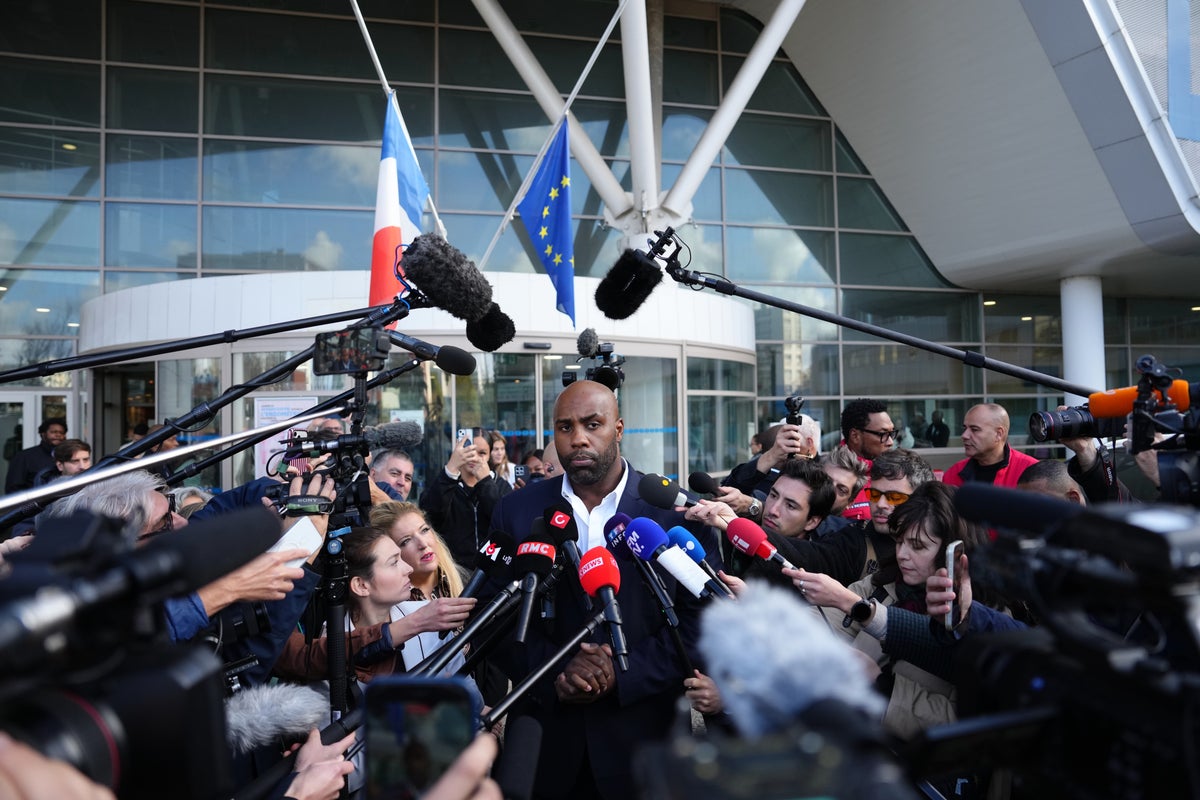
Olympic judo champion Teddy Riner officially announced his candidacy for the French presidency this week, seeking to become the first non-career politician to hold the office since World War II. Riner, who has won five Olympic gold medals, launched his campaign on Monday, November 9, with a video and an interview with the newspaper Le Parisien.
France has a history of athletes entering politics, including judo champion David Douillet and fencer Jean-François Lamour, but both served as sports ministers or members of parliament rather than the head of state. To qualify for the first round of voting in April, Riner must navigate a legal requirement established in 1981 that requires candidates to secure 500 sponsorships from elected officials. This threshold previously stopped the 1981 bid of comedian Coluche and is intended to limit the field to candidates with institutional backing.
Riner made his first campaign appearance on Friday, November 13, at a hospital in northern Paris, where he was met by significant media attention. During the visit, Riner told reporters he is still developing his specific campaign platform and did not answer detailed questions. Marine Le Pen, a candidate for the National Rally party and a perceived frontrunner to succeed President Emmanuel Macron, stated on Friday that she could not evaluate Riner's candidacy until he releases his policy proposals.
The 37-year-old candidate has described his political orientation as neither left nor right, telling Le Parisien that France needs "common sense" rather than "professional" politicians. While Riner’s campaign video highlighted issues such as social division and economic uncertainty, analysts noted that he has not yet provided a blueprint for addressing them. Political scientists from Angers University and Ipsos suggested that while Riner's status as a Black candidate from Guadeloupe may attract voters focused on discrimination, his lack of government experience could be a disadvantage in a race dominated by concerns over public debt and international security.
The scale of the challenge for Riner is defined by the 500-sponsorship rule. He must convince 500 of France’s roughly 42,000 elected officials—ranging from mayors to members of parliament—to sign his nomination papers by the spring deadline. For the average French citizen, a successful Riner bid would mean a ballot choice in April that lacks a traditional party platform, potentially shifting the focus of the campaign from policy-heavy debates to one based on "common sense" and personal charisma.
The knock-on effects of a Riner candidacy could influence how major parties approach the overseas territories and voters of color. If Riner gains traction, it may set a new precedent for other non-politicians to contest high office, challenging the "complex hurdles to entry" described by political analysts. What happens next depends on Riner's ability to release a formal platform; the first round of voting is scheduled for April, with the winner succeeding President Emmanuel Macron in May.