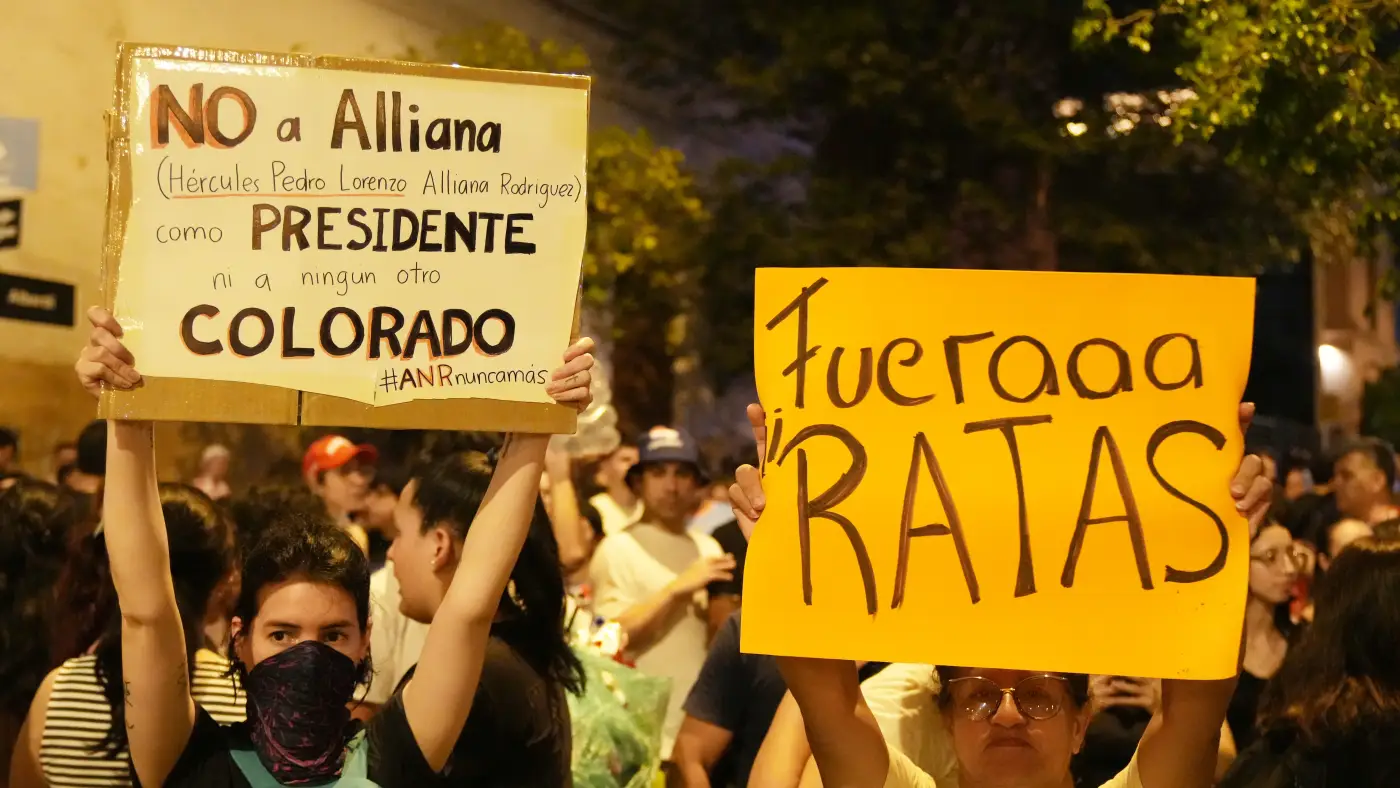
The Paraguayan Senate impeached and removed President Santiago Peña on Friday, Nov. 6, 2026, following the collapse of Ueno Bank and allegations of financial misconduct. The removal occurred one day after Peña signed his resignation letter amid a solvency crisis that blocked millions of customers from accessing their accounts. Vice President Pedro Alliana was sworn in as his successor to serve the remainder of the term ending in August 2028.
Ueno Bank, which began operating in November 2023, faced a liquidity crisis that led to a Central Bank takeover. The institution reported it had 2.9 million customers, representing roughly 60% of Paraguay’s adult population. Prosecutors allege that Peña, who previously held shares in the bank's holding company, used his office to influence state agencies to maintain deposits at the bank.
Following his removal, prosecutors charged Peña with breach of trust and administration for personal gain. A judge ordered him held in pretrial detention at a military facility; Peña has pleaded not guilty. Additionally, Central Bank head Carlos Carvallo and eight bank executives, including CEO Miguel Vásquez, were arrested on charges including breach of trust and producing false public documents.
The political shift followed a public withdrawal of support from former President Horacio Cartes, the leader of the Honor Colorado faction of the ruling party. Although Cartes had originally handpicked Peña for the presidency, his legislative allies began seeking information on Ueno Bank's transactions in September. After the collapse, Cartes called for an investigation, stating there should be "no impunity for anyone."
The crisis also involves the management of $355 million in public funds from the Social Security Institute (IPS), which represented 9% of that institution's portfolio. The investigation focuses on whether these public funds were directed to the bank due to political influence. Economists like Manuel Ferreira have noted that the bank’s assets included $146 million in loans to three companies linked to the bank's owners, raising questions about the stability of the nation’s financial regulatory framework and the safety of public pensions.
For the broader Paraguayan public, the event has led to protests in Asunción and a transition in national leadership. Business owners have reported that the instability may decrease confidence among foreign investors. The legal proceedings against the former president, the Central Bank head, and bank executives will continue as the new administration under President Alliana takes office, with the next presidential election scheduled for 2028.