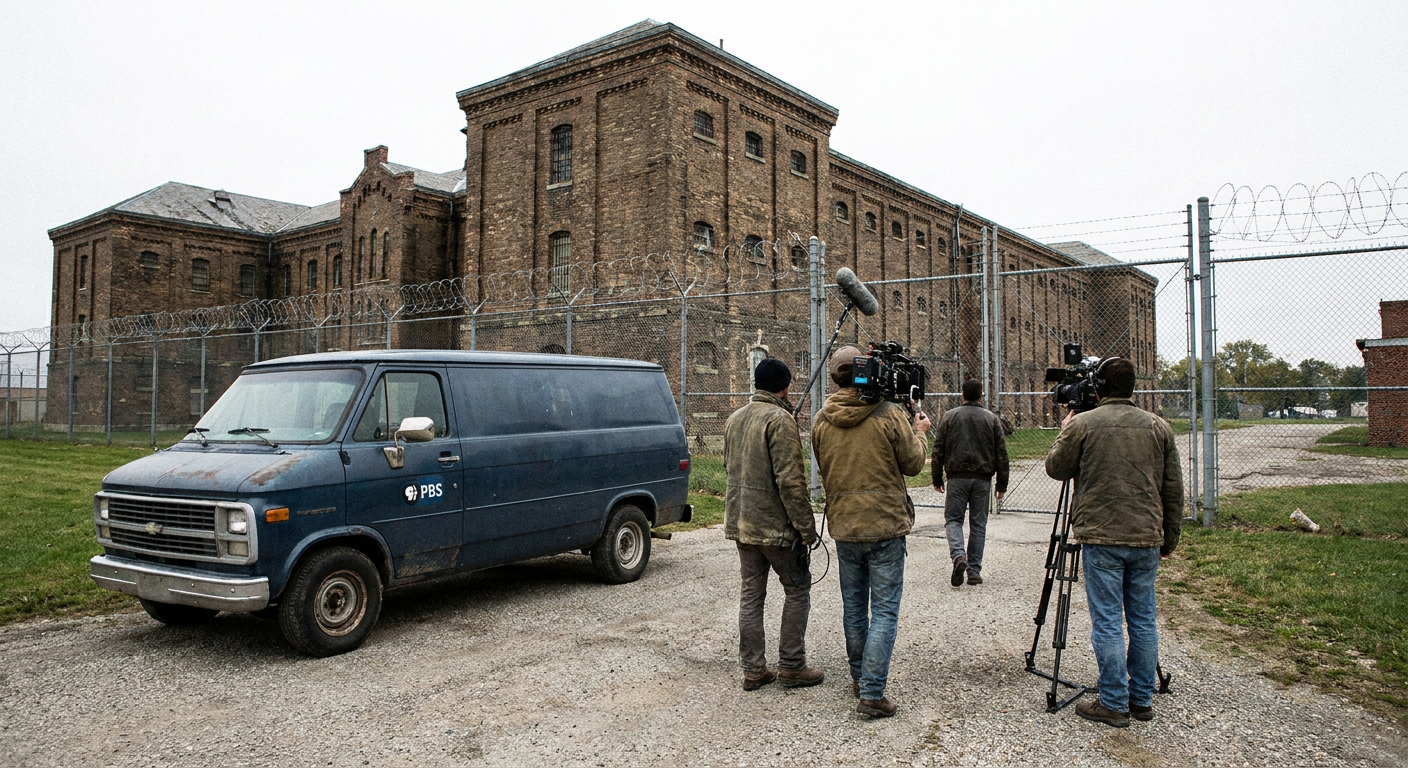
Director Lynn Novick released a four-part PBS documentary series, "Crime and Punishment in America," which examines the history and evolution of the United States prison system. The series, which begins airing on PBS on November 16, 2026, traces the development of American incarceration from colonial times to the present day. According to the documentary, the U.S. currently holds nearly 2 million people behind bars, a rate higher than other industrialized nations.
The documentary explores how colonial America relied on public physical punishments, such as the 1773 hanging of Levi Ames in Boston, which was attended by approximately 8,000 people. Novick noted that executions were common for a range of crimes beyond violence, including burglary and adultery, intended to shame the offender and deter others. However, the series reports that the spectacle of public punishment led some Founding Fathers to seek alternatives, resulting in the development of the penitentiary system in the early 19th century.
Early prison models varied, with Philadelphia’s Eastern State Penitentiary, opened in 1829, utilizing total isolation and solitary confinement. Another model, implemented at New York’s Auburn and Sing Sing prisons, used silent congregate labor during the day to fund operations and instill work habits. Novick noted that these institutions were often managed through corporal punishment; Sing Sing head keeper Elam Lynds stated he believed it impossible to govern a prison without a whip. The series details how private contractors used inmate labor for manufacturing while guards enforced production quotas through physical discipline, such as the use of a perforated wooden or leather "paddle."
The series also addresses the role of corruption in the development of American law enforcement. The documentary outlines the origins of urban police departments in the mid-19th century, which the series describes as beginning within political patronage systems characterized by corruption and the protection of illegal gambling and brothels.
For correctional officers, represented in the film by former officer Stephen Walker, the history of "custody and control" underscores the psychological pressure and dehumanization that can occur within the workplace. Walker noted that the environment extracts from a worker's humanity and leads to a "jaded" perspective. This suggests that the legacy of the 19th-century "silent system" and corporal punishment continues to influence the day-to-day interactions between staff and the incarcerated, potentially impacting workplace safety and mental health for thousands of state and federal employees.
The documentary’s focus on the history of the law provides a factual basis for understanding current legal rights. As the series continues to air through November 19, 2026, it sets a precedent for using historical archives to evaluate contemporary criminal justice policies. Viewers will observe how past reforms, such as the transition from public hangings to private confinement, created new challenges regarding transparency and government accountability that persist in modern discussions about prison oversight.