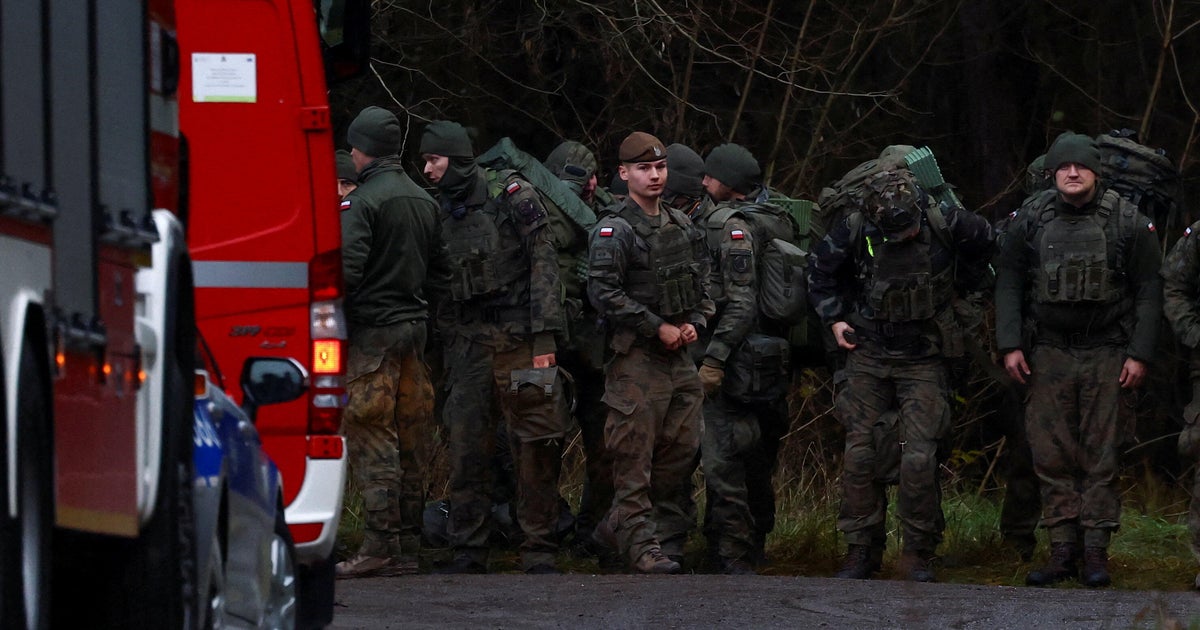
Poland and NATO officials reported that three Russian weapons, identified as two missiles and one drone, entered Polish airspace on Friday, Nov. 20, 2026. The incident occurred during a large Russian aerial assault on Ukraine, which Ukrainian officials said killed at least eight people and wounded dozens across multiple regions.
Polish Prime Minister Donald Tusk described the event as an "intentional provocation," noting that the weapons landed 30 to 60 miles inside Polish territory. The violation coincided with the "Koalicja 26.2" military exercises in Poland, involving thousands of troops from 11 European countries known as the Coalition of the Willing. Polish Defense Minister Władysław Kosiniak-Kamysz said it was difficult to regard the timing and location of the incident as a coincidence.
NATO Secretary General Mark Rutte confirmed he spoke with Tusk regarding the "grave violations" and stated the alliance stands in solidarity with Poland. In response to the incursion, NATO and Allied aircraft, including Polish F-16s and Swedish JAS 39 Gripens, were scrambled, and ground-based air defenses were alerted. No injuries were reported on Polish soil, though the strikes in Ukraine damaged infrastructure, residential buildings, and a hospital.
Russian President Vladimir Putin had warned of retaliatory actions following a Ukrainian strike earlier in the week that damaged a bridge connecting Russia to Crimea. On Thursday, Nov. 19, Putin met with U.S. President Donald Trump and Chinese President Xi Jinping in Shenzhen, China. While Trump expressed optimism about a diplomatic end to the conflict, Putin ruled out direct talks with Kyiv following the meeting, citing the bridge attack.
For citizens in the region, the military posture includes the activation of Patriot anti-missile systems and the scrambling of fighter jets in southeast Poland. In Ukraine, the scale of the concurrent attack—involving more than 400 drones and 110 missiles—resulted in reductions in nuclear power generation and damage to water supply facilities in Kyiv. Ukrainian President Volodymyr Zelenskyy stated that the lack of interceptors prevented the stopping of 27 ballistic missiles.
The incident affects how NATO monitors its eastern flank. The effects include renewed pressure on the U.S. Pentagon to release air defense supplies. U.S. Air Force Gen. Alexus Grynkewich remains in contact with Polish defense leaders as the alliance evaluates the situation.