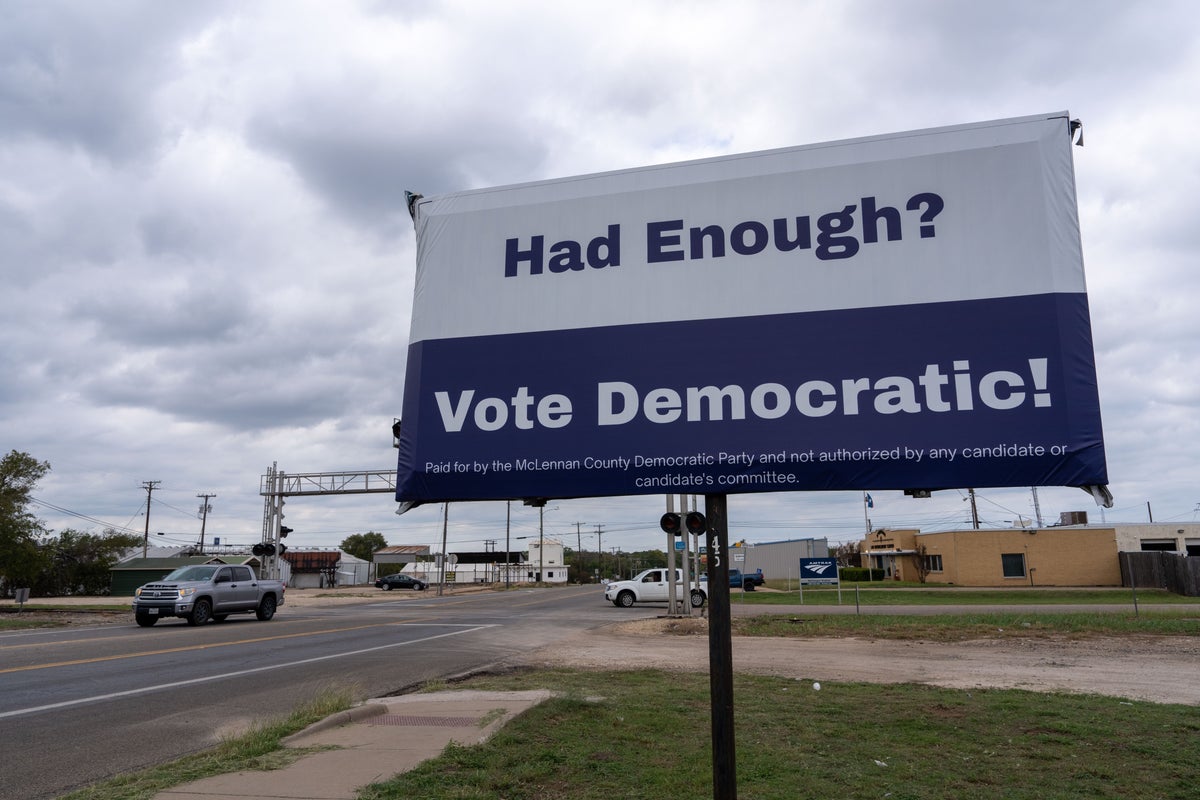
A new Politico poll released on Wednesday, November 18, 2026, indicates that 52% of Americans believe the Democratic Party will win the 2028 presidential election. By contrast, 28% of respondents said they expect a Republican victory. The survey follows the 2026 midterm elections earlier this month, in which the Democratic Party gained control of both the House of Representatives and the Senate.
The current political landscape follows the 2024 presidential election, where Donald Trump defeated then-Vice President Kamala Harris. Harris had become the nominee after President Joe Biden withdrew from the race following a debate performance against Trump. Since the 2024 election, the Trump administration has faced low approval ratings amid a war in Iran, inflation, and public reaction to its immigration policies.
According to the Politico poll, confidence in a 2028 victory is divided along previous voting lines. Among those who voted for Harris in 2024, 87% expect a Democratic win in 2028. Among those who voted for Trump in 2024, 60% believe the Republican nominee will win. Representative-elect Adam Hamawy (D-NJ) told Politico that the midterm results demonstrated the "power of our movement" which could carry over into the next presidential cycle.
In terms of potential candidates, a separate Reuters/Ipsos poll measured public favorability toward various political figures. Among Democrats, Kamala Harris led with 45% of Americans viewing her as an "excellent or good" candidate for 2028. She was followed by former Transportation Secretary Pete Buttigieg at 42%, California Governor Gavin Newsom at 40%, and both Representative Alexandria Ocasio-Cortez (D-NY) and Senator Jon Ossoff (D-GA) at 38%.
For the Republican side, the Reuters/Ipsos poll showed Vice President JD Vance leading with 62% of Americans describing him as an "excellent or good" candidate. Secretary of State Marco Rubio followed with 58%, outgoing Florida Governor Ron DeSantis with 52%, and Senator Ted Cruz (R-TX) with 35%. While several names have been discussed, no formal declarations of candidacy for 2028 were reported.
The scale of this shift is reflected in the midterm results, which saw Democrats win both chambers of Congress and several governorships. For individual households, the impact of this change in legislative control may be felt through new or stalled legislation regarding immigration and tax policy. The 52% of Americans anticipating a Democratic presidency in 2028 follows the current administration's policies on immigration and the economy.
The polling numbers and election results will likely influence party strategy and fundraising for the 2028 cycle. Potential candidates like Harris, Vance, and Newsom will now use these favorability ratings to gauge donor support and campaign viability. The next major milestone will be the convening of the new Congress in early 2027, which will test the Democratic majority's ability to advance legislation. Formal primary campaigning for the 2028 election is expected to begin following the midterm certifications.