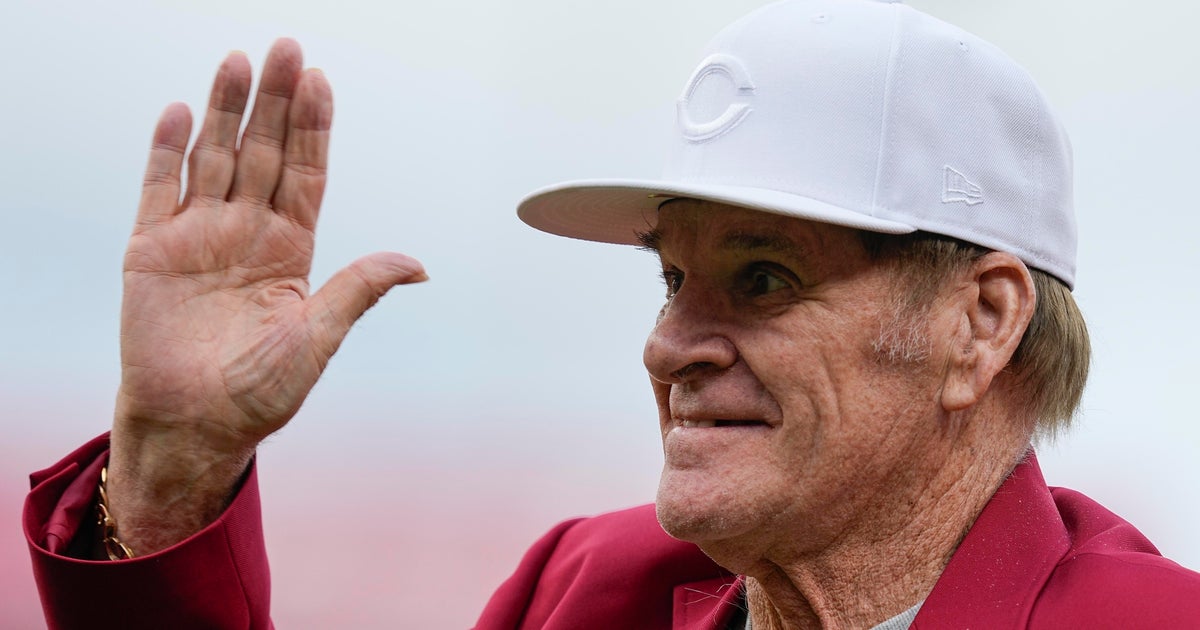
President Donald Trump announced on a Thursday that he has granted a pardon to the late Pete Rose, the all-time hits leader for Major League Baseball (MLB). In a post on Truth Social, the president described the action as a "Complete and Total Pardon," stating that Rose was "treated terribly" by the league regarding his exclusion from the Baseball Hall of Fame. Rose, who died in 2024, had been banned from the sport for life due to gambling.
The pardon follows Rose’s 1990 guilty plea for filing false income tax returns, an offense for which he served five months in prison and was released in 1991. A White House official confirmed that the pardon pertains to these tax charges, as Rose was never criminally charged for gambling. While the president has previously suggested that Rose’s ban from baseball was politically motivated, Rose accepted a lifetime ban from MLB in 1989 after revelations that he bet on games, including those involving the Cincinnati Reds, a team he played for and managed.
Rose finished his career with a record 4,256 hits and three World Series titles, but his ban prevented him from being inducted into the Hall of Fame while alive. He petitioned for reinstatement four times between 1997 and 2022; Commissioners Bud Selig and Rob Manfred either did not respond to or rejected these requests. However, Rose was posthumously reinstated by the league last year, a decision that followed a meeting between Commissioner Manfred and President Trump. Under current Hall of Fame rules, Rose is eligible for induction as early as 2028.
The scale of this action is limited to the specific tax charges involving Rose, though the president has linked it to the broader context of Rose's baseball ban. The move highlights a shift in the official government stance toward Rose’s past conduct, particularly as President Trump noted that sports betting is now widely legal in the United States. For the public and baseball fans, the concrete change is not in Rose's financial status or daily life, as he is deceased, but in the official removal of his federal criminal record as the Hall of Fame considers his induction.
Knock-on effects may influence the ongoing discussion within the Baseball Hall of Fame regarding the eligibility of players with gambling or disciplinary records. By issuing a pardon, the president has formally challenged the historical treatment of Rose, though the Hall of Fame remains a private institution with its own rules. The next significant milestone for this matter is 2028, which is the earliest year Rose could be inducted into the Hall of Fame under the league's current eligibility guidelines. No further legal proceedings or court dates related to the tax charges are expected following this executive action.