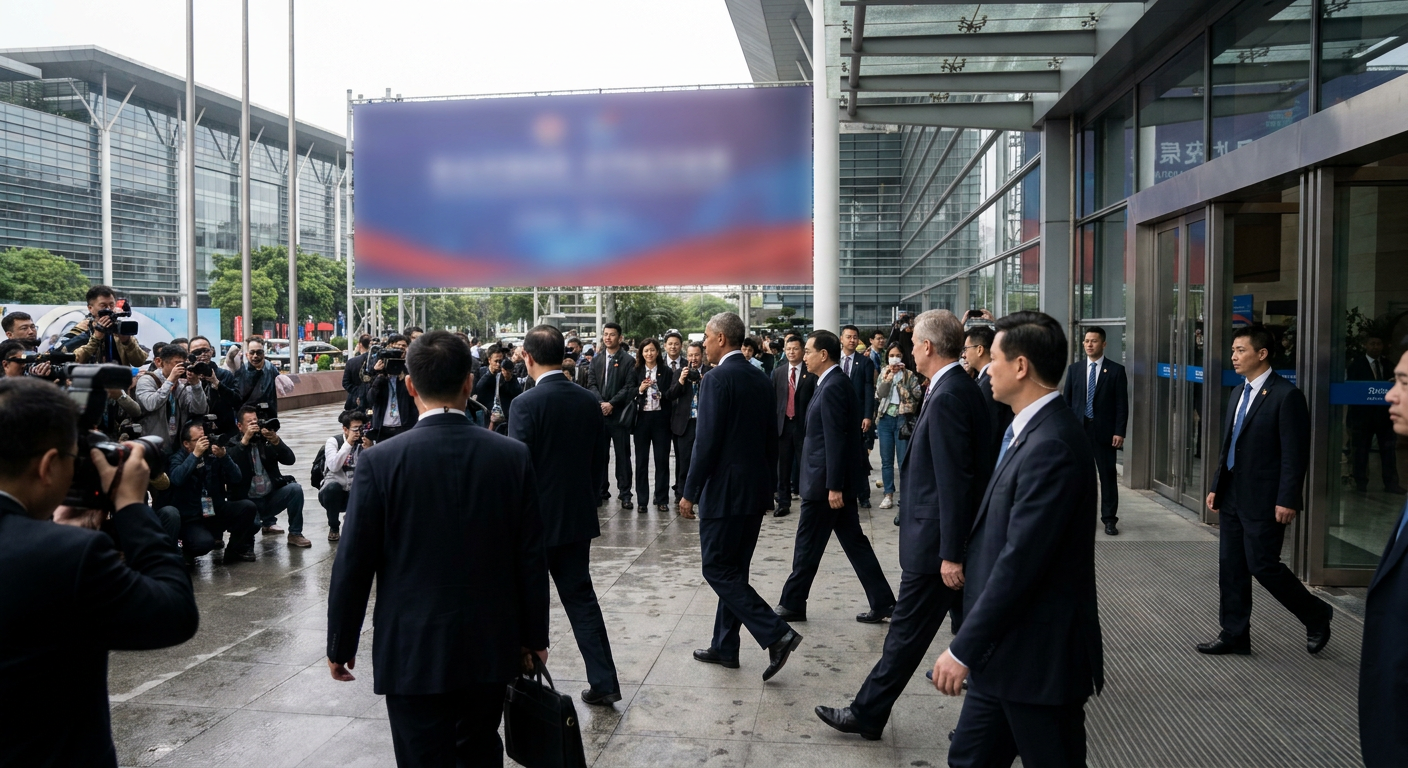
President Donald Trump is scheduled to participate in a trilateral meeting with Chinese President Xi Jinping and Russian President Vladimir Putin in Shenzhen, China. This event marks the first time these three leaders have met together. The summit's agenda includes the ongoing conflict in Ukraine and the non-proliferation of nuclear weapons, though the specific timing of the meeting was not reported.
Nicholas Burns, who served as the U.S. ambassador to China under the Biden administration and ambassador to NATO under President George W. Bush, described the meeting's exclusive nature as a concern for U.S. allies. Burns noted that while the fate of Ukraine is a primary topic, Ukrainian President Volodymyr Zelenskyy was not invited to attend. He also highlighted the absence of Japan, a key U.S. ally in Asia that has recently reported military maneuvers and economic boycotts from Russia and China.
The summit occurs amid heightened trade and security tensions. Two days prior to the report, the U.S. Justice and Commerce Departments announced they would cut off access to Chinese shell companies in Southeast Asia to prevent the illicit acquisition of advanced American semiconductors used for artificial intelligence. In response, a spokesperson for the Chinese foreign ministry stated that China may implement countermeasures. Burns suggested these developments could lead to a mini trade war between the two nations.
The scale of the nuclear issues discussed involves the rapid expansion of China's nuclear arsenal. According to Burns, China and Russia are projected to outnumber the United States in strategic nuclear weapons by the 2030s, a development that would be a first since the beginning of the nuclear age. The specific number of warheads or the exact dollar amounts associated with this buildup were not reported, but the shift in nuclear parity would change the long-term strategic balance for the U.S. military and its global defense commitments.
For the average citizen, the immediate effects may be felt through changes in trade policy and technology markets. The recent U.S. restrictions on AI chip exports to Chinese shell companies aim to protect national security, but the threatened Chinese countermeasures could lead to a trade war. This could potentially influence the price and availability of electronics or semiconductors in the coming months. What happens next depends on the outcome of the Shenzhen talks and whether China chooses to engage in nuclear transparency, a topic President Trump intends to raise despite reported Chinese reluctance.