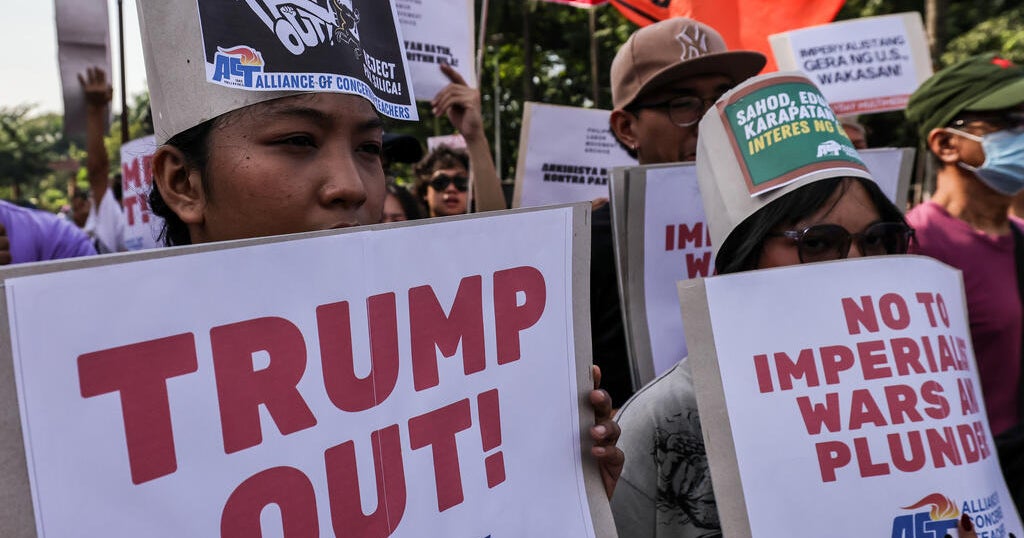
Demonstrations occurred in Manila and other parts of the Philippines in response to a planned visit by President Donald Trump and a U.S.-led initiative to build a technology manufacturing center north of Manila. Protesters in the capital city on Monday displayed signs calling for the president to leave and expressing opposition to "Pax Silica," a State Department program designed to secure high-tech supply chains independent of China.
The proposed project is part of an international agreement announced by the U.S. State Department in December 2025. The initiative seeks to establish a more than 4,000-acre hub for artificial intelligence (AI) and manufacturing. The Philippines joined the program in April, which resulted in the U.S. announcing the planned facility. Over 25 countries, including the United Kingdom, Israel, Japan, and India, have joined the initiative.
Opponents of the project, including local teachers and advocates, stated that the industrial hub would displace farming communities and the Indigenous Aeta tribe. Critics also raised concerns regarding the impact on the national water supply and characterized the project as U.S. imperialism. Philippine President Ferdinand Marcos Jr. has expressed support for the hub, stating in October that it represents a significant opportunity for the country to engage in advanced research and manufacturing.
The initiative represents a broader shift in how the U.S. and its partners manage the hardware necessary for artificial intelligence. By moving manufacturing to the Philippines, the U.S. aims to prevent Chinese access to advanced chips and secure supply chains that are currently under scrutiny following investigations into chip smuggling. For Filipino citizens, the government claims this could result in new technical job opportunities, but critics argue the benefits may not reach those in traditional sectors like agriculture, transportation, or small-scale retail.
The Pax Silica participants signed a declaration on Sunday establishing a shared understanding of sensitive technologies and critical infrastructure. The immediate next steps involve President Trump’s scheduled meeting with President Marcos Jr. on Wednesday during the ASEAN (Association of Southeast Asian Nations) summit in Manila. While no major announcements regarding Pax Silica are expected during this visit, the president is scheduled to travel to China following his stop in the Philippines.