The Plain Record

Neutral daily news — clear headlines, complete facts.

Business

Regional manufacturing history maintains different butter stick shapes in U.S. markets

Butter sticks in the U.S. maintain two distinct regional shapes due to different packaging machinery adopted by East and West Coast producers in the 20th century.

Background: The Electoral College, explained: how the United States actually elects a president

Published November 14, 2026 at 7:55 AM EST

The short answer

Butter sticks in the U.S. maintain two distinct regional shapes due to different packaging machinery adopted by East and West Coast producers in the 20th century.

Regional manufacturing history maintains different butter stick shapes in U.S. markets

The Facts

Who
Dairy manufacturers, Elgin Butter Co., Swift & Co., and John Bruhn (UC Davis)
What
Regional differences in butter stick shapes in the U.S.
When
Ongoing, with historical origins dating back to 1907 and the 1960s
Where
United States (East and West Coasts)
Why
Differences in historical packaging machinery led to the "Elgin" stick in the East and the "stubby" stick in the West.

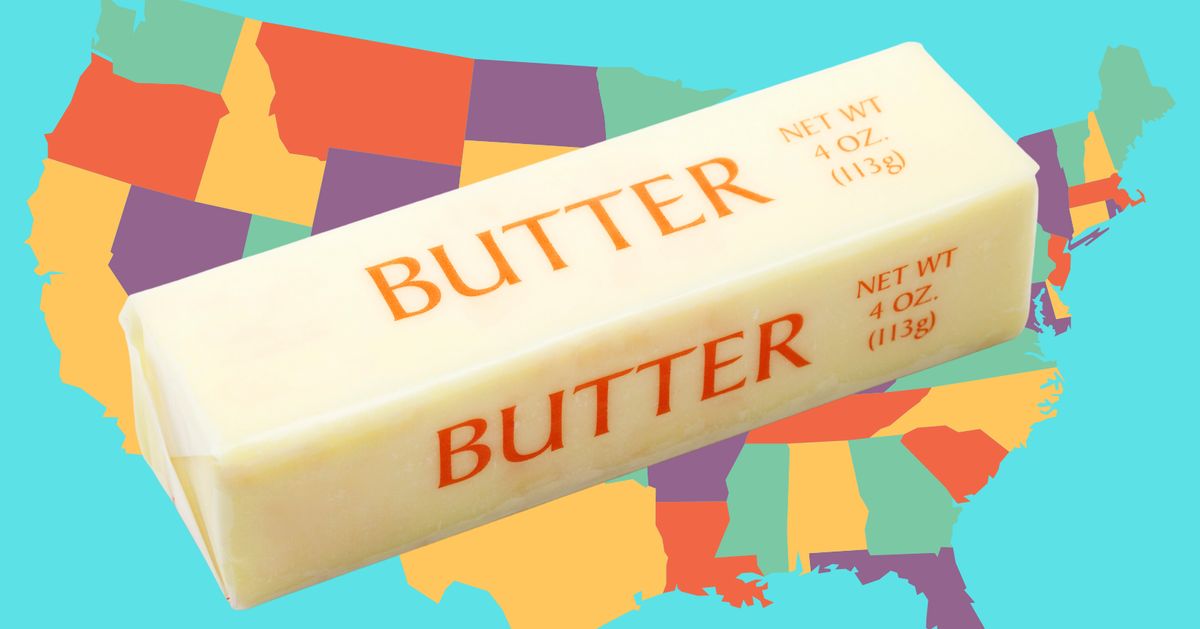
Butter producers in the United States distribute sticks in different shapes depending on the region, a difference rooted in 20th-century manufacturing history. While customers on the East Coast typically purchase long, narrow sticks, those on the West Coast find shorter, wider sticks often referred to as "stubbies."

Historically, butter was sold in one-pound blocks. In 1907, a New Orleans chef requested that his supplier, Swift & Co., provide the product in quarter-pound portions. This sparked the adoption of the "Elgin stick," named after the Elgin Butter Co. in Elgin, Illinois. The company manufactured the Elgin Butter Cutter, which standardized the long and skinny dimensions common in the eastern half of the country.

According to John Bruhn, former director of the Dairy Research and Information Center at the University of California, Davis, the West Coast transitioned to a different shape during a production expansion in the 1960s. Western dairy producers purchased newer packaging equipment that produced the stubbier shape rather than using the older Elgin-style machinery.

For the average consumer, this difference is most noticeable in the kitchen. A person moving from one coast to the other would find that their existing butter dishes or specialized storage containers may not fit the local product. However, the concrete impact on cooking and finances is minimal; regardless of the shape, each stick contains exactly 8 tablespoons of butter. This ensures that a person's recipes, grocery bills, and caloric intake remain the same per stick regardless of regional shape.

The knock-on effects are primarily confined to the kitchenware market, where designers must account for both the "Elgin" and "West Coast" standards. This has led to the development of "smarter" butter dishes with larger tolerances or magnetic lids designed to house both shapes. What happens next depends on the continued use of legacy machinery by dairy processors; as long as the 1960s-era western equipment and the older eastern presses remain in operation, the two distinct shapes are expected to persist in American grocery stores.

Timeline of what happened

Key dates and decisions, in the order they occurred.

  1. 1907

    Chef requests quarter-pound sticks from Swift & Co.

  2. 2014

    "Marketplace" reports on dairy history of butter shapes

  3. February 2021

    Social media video explains regional butter differences

  4. January 2022

    Product advertisement for multi-size butter dish trends on social media

  5. 1960s

    West Coast producers purchase new packaging equipment

Summaries are written by The Plain Record to state the facts of a story plainly and without political slant. Drafted with AI assistance and checked against the source record before publication. See how we report, or report a correction.

← Back to the front page

Questions readers ask

What happened: Regional manufacturing history maintains different butter stick shapes in U.S. markets?

Butter producers in the United States distribute sticks in different shapes depending on the region, a difference rooted in 20th-century manufacturing history. While customers on the East Coast typically purchase long, narrow sticks, those on the West Coast find shorter, wider sticks often referred to as "stubbies." Historically, butter was sold in one-pound blocks.

Who is involved?

Dairy manufacturers, Elgin Butter Co., Swift & Co., and John Bruhn (UC Davis)

When did this happen?

Ongoing, with historical origins dating back to 1907 and the 1960s

Where did this happen?

United States (East and West Coasts)

Why does this matter?

Differences in historical packaging machinery led to the "Elgin" stick in the East and the "stubby" stick in the West.