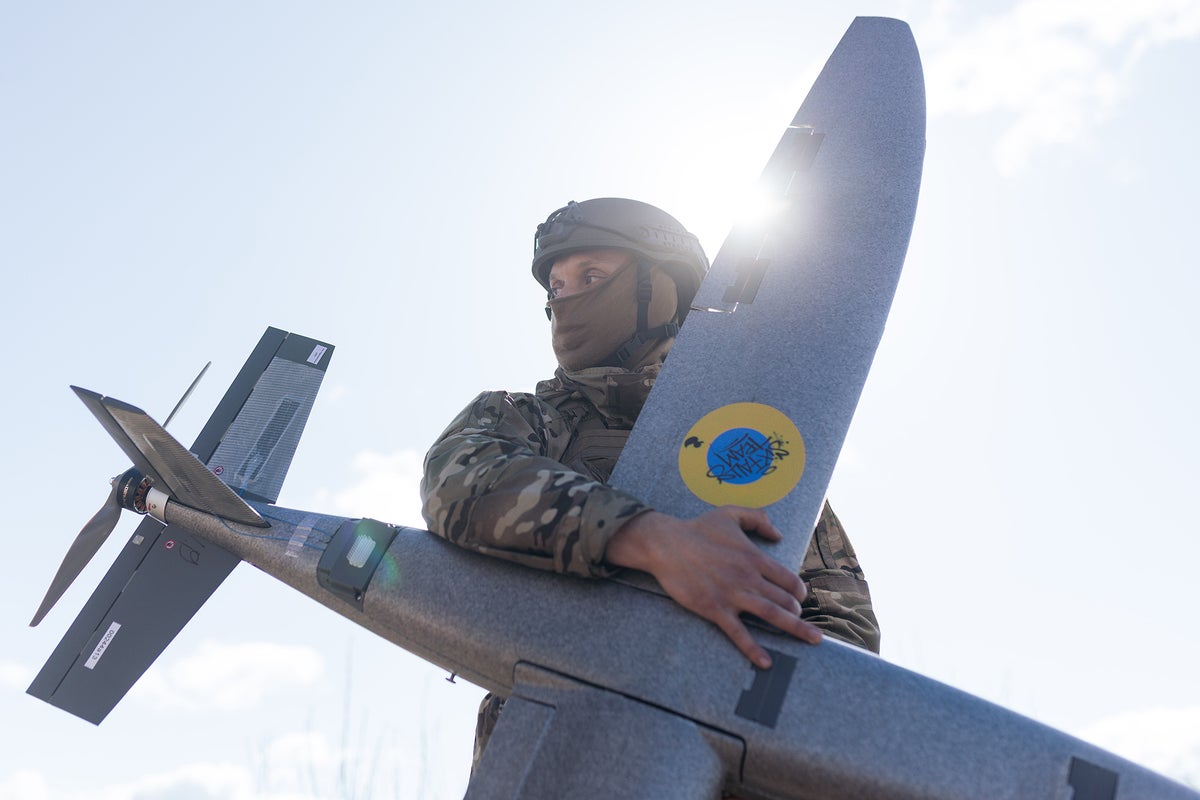
A new report from a military think tank states that the British Army must retrain approximately 45% of its infantry personnel as drone operators to adapt to modern warfare. The Royal United Services Institute (RUSI) published the findings on Friday, Nov. 20, 2026, drawing on data from the conflict between Ukraine and Russia. According to the analysis, a standard British Light Infantry Battalion of 561 personnel would require nearly half its members to manage uncrewed aerial vehicle (UAV) operations to match Ukrainian levels of use.
The RUSI report indicates that the British military currently lacks the resources to meet this demand. Military insiders reported that existing specialist drone units are small and under-resourced, with dozens of personnel sharing only a few drones for training. The think tank argued that without reorganization, traditional military formations risk being overwhelmed by drone-integrated tactics developed in Ukraine, where frontline soldiers can influence the design and delivery of combat systems in days rather than years.
The proposed integration would see drone specialists serving alongside traditional weapons specialists, such as those using mortars, machine guns, and anti-tank missiles. The report describes combined tactics where mortars are used to force enemy troops to lie flat to avoid shrapnel, making them vulnerable to First Person View (FPV) drones. Conversely, troops fleeing drone strikes into treelines can be targeted by pre-sighted mortar fire. The study found that front lines are now at least 10km deep, with troops forced to disperse into tiny groups and remain underground to avoid persistent aerial observation.
The proposed shift would alter the daily duties and training requirements for British soldiers. Specifically, infantry personnel who previously focused on traditional marksmanship or heavy weaponry would spend a portion of their service operating UAVs or managing uncrewed ground vehicles (UGVs). For a battalion of approximately 600 people, this means hundreds of individuals would transition into roles resembling "sniper" drone teams or aerial bomber units. Medics would also see changes, as the report suggests they must learn to evacuate wounded personnel using uncrewed platforms.
The scale of equipment loss identified in the report highlights a financial and logistical challenge for the Ministry of Defence. A single battalion could expect to lose between 20 and 60 multicopters per week. Furthermore, the report notes that 50% of uncrewed platforms supporting offensive actions are typically lost during operations. For logistical resupply, the report cites a Ukrainian brigade that conducted 824 missions in one month using UGVs to carry loads of 100 to 150 kg, suggesting that British logistics chains would need to maintain a flow of replacement units to remain operational.
These changes would likely impact how the British Army recruits and budgets, shifting focus toward high-volume, disposable technology. The report suggests that persistent observation from the air has made traditional concealment nearly impossible, meaning soldiers would notice a change in how they move and hide during field exercises and deployments. While the RUSI report outlines these requirements, the British government has not announced a formal timeline or budget for such a retraining program.