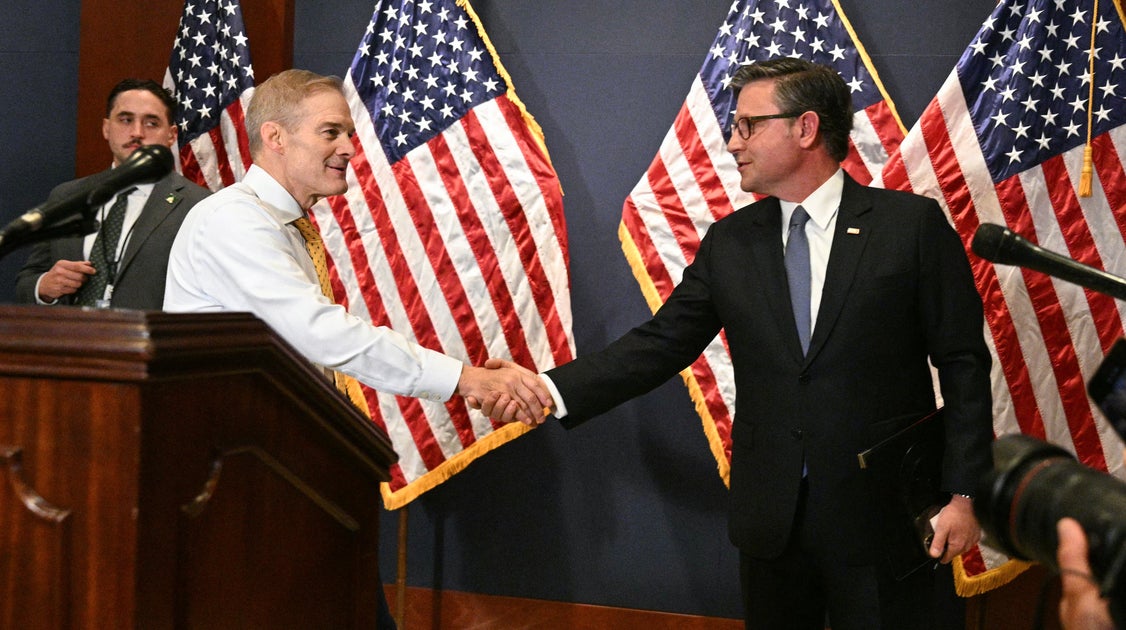
One week after the 2026 midterm elections, Republican leaders have selected prominent allies of President Donald Trump for high-ranking positions. The moves follow an election cycle described by the source as the party’s largest electoral defeat in 50 years, resulting in a shift toward Democratic candidates across various demographic groups and states.
President Trump appointed Stephen Miller as his new White House chief of staff. Miller previously directed the administration’s immigration enforcement policies and will now serve as the primary liaison between the White House and a Democratic-controlled Congress. In the House of Representatives, Republicans selected Rep. Jim Jordan (R-OH) to serve as minority leader starting in January 2027.
Rep. Jordan, who formerly chaired the House Judiciary Committee, led efforts to impeach former President Joe Biden and has criticized investigations into President Trump’s actions regarding the 2020 election. During leadership elections on Tuesday, November 10, House Republicans also reelected Rep. Tom Emmer (R-MN) as Republican whip. Emmer stated that Democrats would regret running for office starting January 3, 2027.
Other leadership changes included the election of Sen. Bernie Moreno (R-OH) to lead the National Republican Senatorial Committee. Republican lawmakers offered differing interpretations of the midterm results. Rep. Kat Cammack (R-FL) attributed the losses to voter concerns over "results" regarding high gas prices and the healthcare system rather than political ideology. Conversely, Rep. Eric Burlison (R-MO) described Rep. Jordan as a "principled" leader capable of communicating a vision to retake the House majority.
The scale of the shift is defined by the 2026 midterm results, which the source reports as the GOP's worst performance in five decades. While specific seat counts were not provided, the outcome resulted in Republicans losing their House majority, which they must now attempt to reclaim in 2028 under the leadership of Rep. Jordan and Sen. Moreno. For the average citizen, this leadership direction suggests that the Republican policy agenda on issues like immigration and executive power will remain consistent with the first two years of the Trump administration.
The day-to-day impact for Americans may be felt through the use of executive orders, as the president utilizes Miller’s policy guidance. There is a high probability of legal and oversight battles between the Republican minority and Democratic committee chairs. The next significant dates are January 3, 2027, when the new Congress is sworn in and Rep. Jordan officially assumes the minority leader role, and the start of the 2028 election cycle.