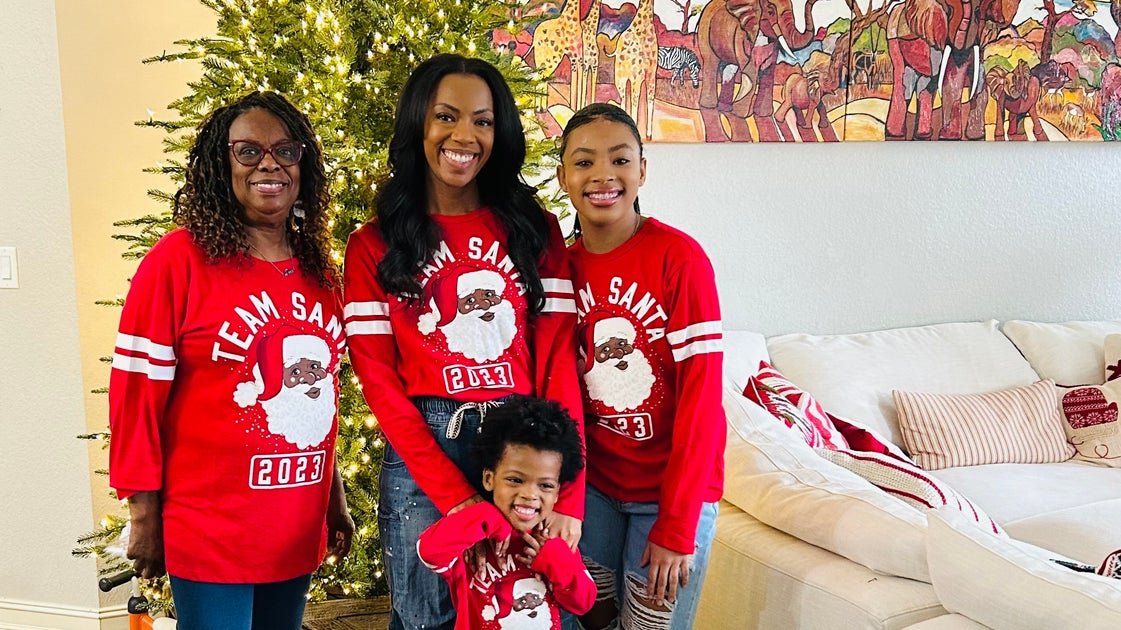
Major retailers have reduced the availability of pajamas featuring a Black Santa Claus during the 2026 holiday season, according to pharmacist and author Karla Fallin Lee. Lee reported that while she was previously able to find these items at seven major retailers—including Target, Carter’s, The Children’s Place, Gap, Old Navy, Walmart, and Pottery Barn—she found them at only two of those retailers this year. One of those retailers was nearly sold out at the time of her attempted purchase.
The shift follows a period starting in late 2024 when Lee says several large retailers began rolling back diversity commitments established in previous years. Lee noted that instead of standalone Black Santa products, many stores have introduced "multicultural" designs. These items either feature a lineup of Santas with various skin tones on a single print or depict a single figure with an ambiguous racial identity.
Lee characterized the change as a shift from equity to equality, stating that a single multicultural image does not serve all children in the same way. She argued that while multicultural prints provide white children with exposure to different races, they do not provide Black children with the specific representation of seeing themselves as the "whole picture." Lee stated that the removal of these specific items forces Black parents to seek out smaller, Black-owned brands.
The scale of this shift involves at least seven major national retailers that previously carried these items but, according to Lee, have now significantly reduced or altered their stock. For a household, this change means that products previously available at a local department store or through standard retail apps now require specialized sourcing. Parents who miss early ordering windows at smaller retailers may find themselves unable to purchase the items at all due to limited production runs compared to big-box stores.
The knock-on effects include a potential increase in revenue for Black-owned makers who maintain these product lines, though the higher costs may limit access for lower-income families. Lee suggests that corporations may be treating specialized representation as a "seasonal experiment" rather than a permanent inventory staple. No specific dates for future inventory restocks or official statements from the named retailers were reported.