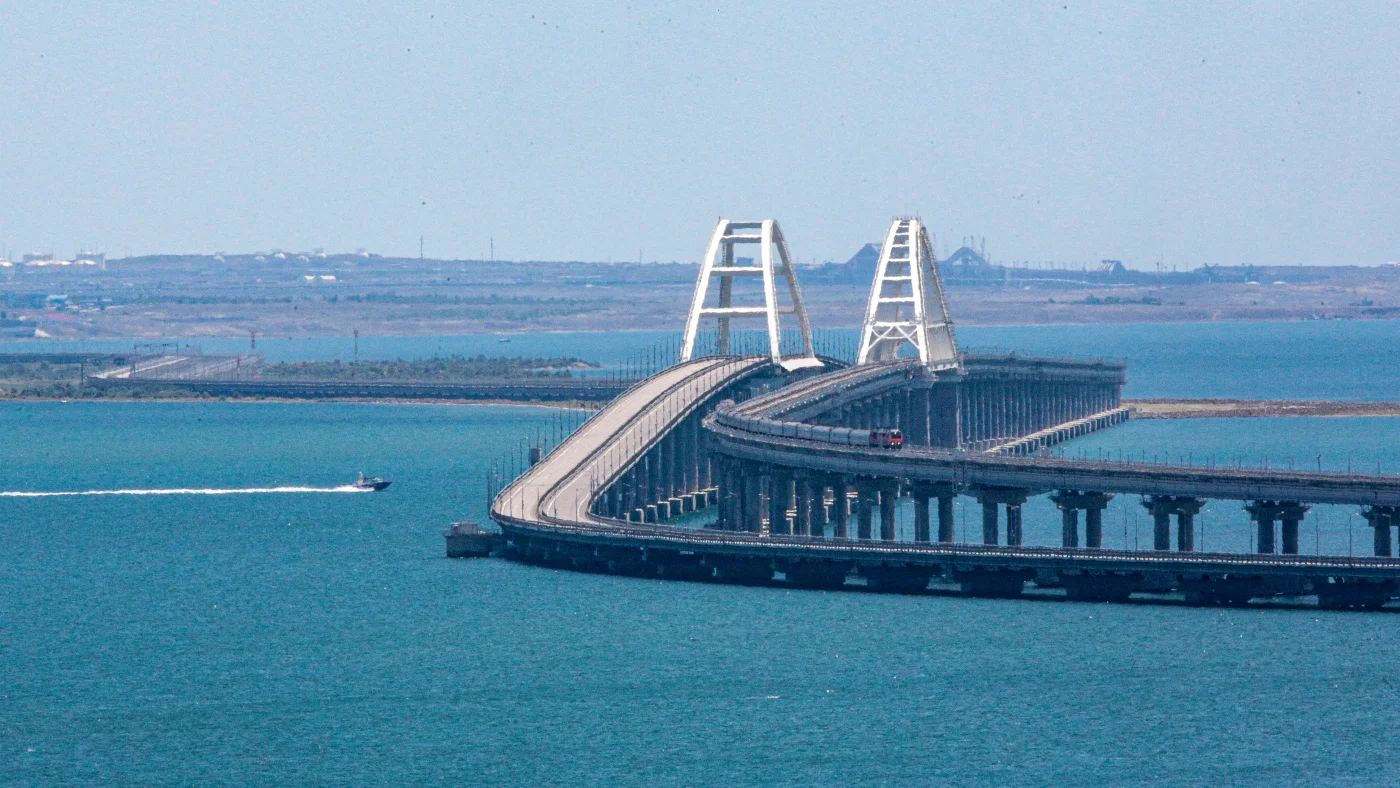
The Russian Defense Ministry reported on Tuesday that its air defenses intercepted more than 1,400 Ukrainian drones during a second consecutive night of aerial activity. Simultaneously, Ukrainian forces conducted a second day of strikes against the Kerch Bridge, a rail and road connection between the Russian mainland and the Crimean Peninsula.
The increase in aerial engagements occurred as both nations await a date for U.S.-mediated talks intended to end the conflict, which began with Russia's invasion of Ukraine on February 24, 2022. On Monday, Russia reported downing 1,336 drones, which was described as the highest number of interceptions reported by Moscow during the war. The following day, officials stated that 1,441 additional drones were downed.
In Ukraine, Russian forces launched ballistic missiles and drones at Kyiv, where officials reported that two of the city's main bridges were struck. At least two people were killed in the capital during the attack. While Ukrainian forces continued to target the Kerch Bridge, the Russian-installed governor of Crimea, Sergei Aksyonov, stated that traffic across the span had been halted and advised travelers to avoid the area.
Regarding the status of the Kerch Bridge, Ukrainian officials stated that damage from the Monday attack was insignificant. However, unconfirmed media reports suggested that the Tuesday strike severely damaged one of the bridge's two arches. The Associated Press reported it could not immediately verify claims that a span of the bridge had collapsed, and Aksyonov did not confirm specific damage in his public statements.
The scale of the drone activity—totaling more than 2,700 reported interceptions over 48 hours—marks an increase in the volume of aerial equipment used in the conflict. For the Russian military and defense systems, this volume represents a peak in reported activity since February 2022. For Ukrainian civilians, the strikes on capital city infrastructure like bridges create safety risks and impact accessibility of services in Kyiv.
The targeting of the Kerch Bridge, used to move military and civilian supplies following Russia's 2014 annexation of Crimea, continues efforts to sever Russian supply lines. The effects include potential strain on Russian military logistics and pressure on regional transport networks. The next steps in the conflict depend on the scheduling of U.S.-mediated peace talks, though no specific dates for these negotiations have been established. Traffic on the Kerch Bridge remains halted according to regional officials.