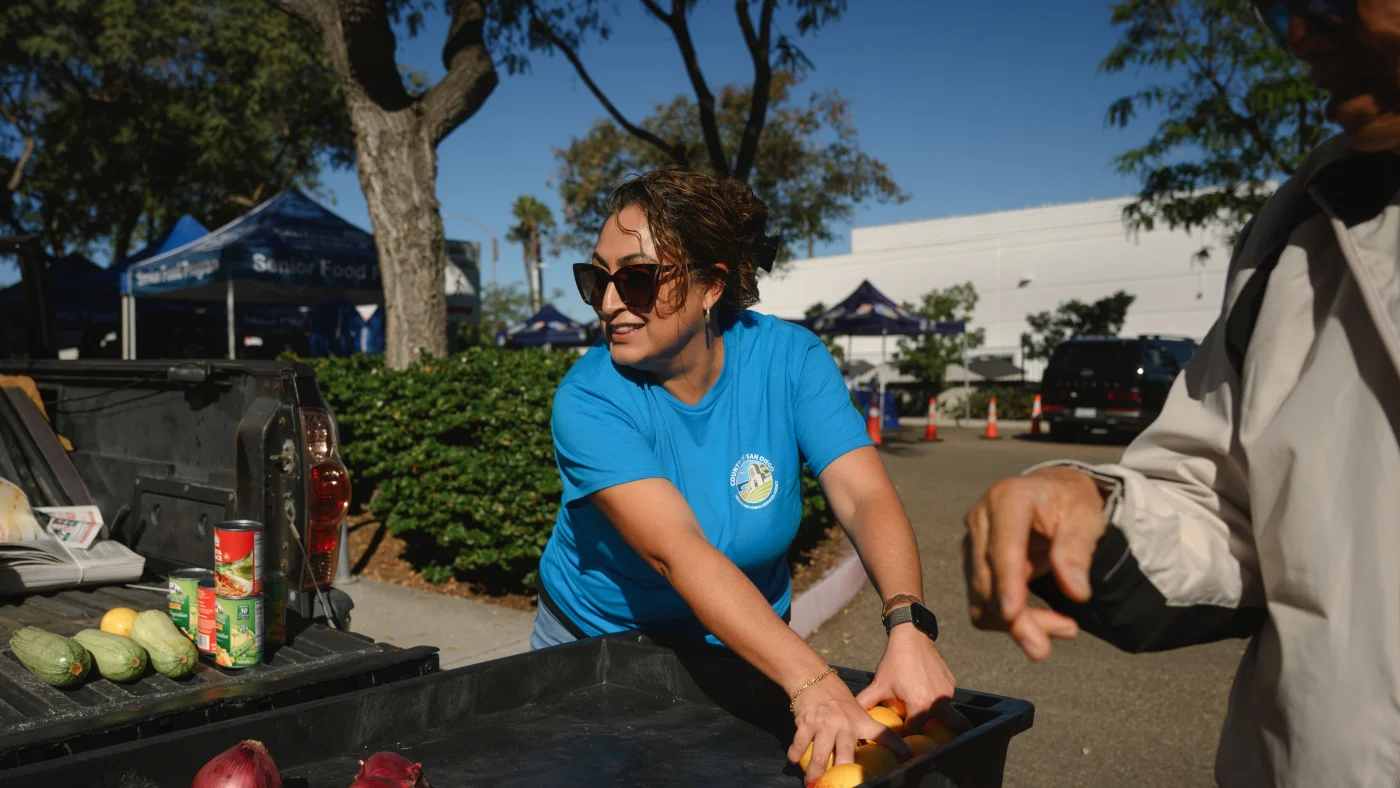
The San Diego County Health and Human Services Agency has begun using its social service offices as food distribution sites to assist residents who have lost federal food benefits. This local initiative follows the passage of the One Big Beautiful Bill in July 2025, a federal tax and spending law that reduced funding for the Supplemental Nutrition Assistance Program (SNAP), tightened eligibility requirements, and restricted aid for most refugees and asylum seekers. According to county data, San Diego's SNAP participation dropped by 36,000 people between July 2025 and September 2026.
The federal policy changes introduced new work requirements for specific groups, including veterans, former foster youth, homeless individuals, and able-bodied adults aged 55 to 64. U.S. Agriculture Secretary Brooke Rollins stated in a New York Times op-ed that the changes are intended to encourage self-sufficiency rather than "dependency." However, Nina Olivas, who oversees San Diego’s customer service call center, reported that the new rules have resulted in a significantly higher administrative workload, with the county processing 830,000 more mailed documents between January and October 2026 compared to the previous year.
To address the decline in federal support, the San Diego County Board of Supervisors allocated $15.8 million in the summer of 2026 to offset funding losses and hired 122 additional social service workers. Other states and cities have implemented local measures, such as Illinois providing a one-time $400 payment to former SNAP recipients and Maine creating a state-funded program for noncitizens. In contrast, Texas reported an application backlog of 175,000 cases in September 2026, while Arizona experienced a sharp decline, which officials attributed to staffing shortages and increased application scrutiny to avoid federal penalties.
The administrative shift has created a change in how residents interact with the government. Applicants now face a higher burden of proof to quantify their working hours, leading to a surge in paperwork. In Louisiana, state data showed that 154,000 people lost enrollment by September 2026, with 75% of those removals caused by procedural issues like missing forms rather than a lack of financial need. This creates a secondary effect where social service workers, originally hired to process applications, are also helping staff food distribution events to prevent local hunger.
The long-term impact involves a shifting of the financial and logistical burden of food security from the federal government to states and municipalities. Local governments must now decide whether to let rolls continue to shrink or tap into local revenue to provide stopgap funding. San Diego’s food distribution events, which provided 70,000 pounds of food to 5,200 people in August and September 2026, represent a new model of localized response for food insecurity. The next steps for the program involve ongoing monitoring of state backlogs and potential federal penalties for payment errors as agencies implement the new eligibility rules.