The Plain Record

Neutral daily news — clear headlines, complete facts.

National

Scientists Identify Prehistoric 66-Pound Rodent Species in Thailand

Researchers identified a 66-pound prehistoric rodent species, Yakamys sirindhornae, using fossilized teeth found in a Thai coal mine.

Published November 5, 2026 at 7:35 AM EST

The short answer

Researchers identified a 66-pound prehistoric rodent species, Yakamys sirindhornae, using fossilized teeth found in a Thai coal mine. Scientists identified a previously unknown species of giant rodent that lived in present-day southern Thailand approximately 33 to 35 million years ago.

Scientists Identify Prehistoric 66-Pound Rodent Species in Thailand

The Facts

Who
Pannipa Tian and researchers from Thailand, France, and Canada
What
Identification of a new prehistoric giant rodent species, Yakamys sirindhornae.
When
Results published in Scientific Reports on a Wednesday; fossils originally found in 2004.
Where
Krabi province, Thailand
Why
To document the evolution of early rodents and their migration patterns from Southeast Asia.

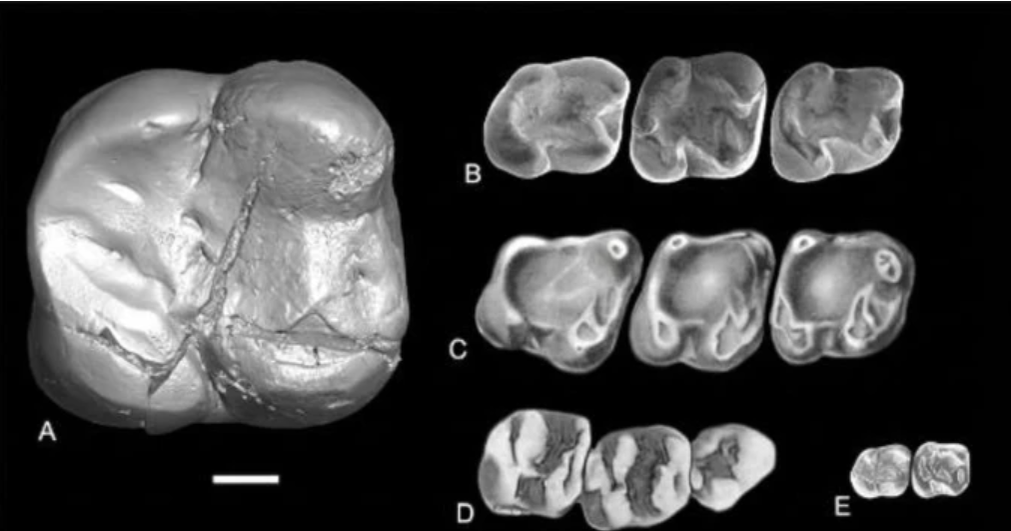
Scientists identified a previously unknown species of giant rodent that lived in present-day southern Thailand approximately 33 to 35 million years ago. The discovery, based on two fossilized teeth, reveals a creature estimated to weigh around 30 kilograms (66 pounds), making it one of the largest known rodents from the Paleogene period.

The fossils, consisting of a molar and an incisor, were originally discovered in 2004 at a coal mine in the Krabi province of southern Thailand. Pannipa Tian, a geologist with Thailand’s Department of Mineral Resources, reported that she initially misidentified the incisor due to its large size before her supervisor identified it as a rodent tooth. While the Krabi basin has yielded fossils of primates and carnivores in the past, researchers lacked the technology and evidence to identify this specific species at the time of the find.

After two decades, a joint team of researchers from Thailand, France, and Canada analyzed the teeth to confirm the new species. They named the animal Yakamys sirindhornae in honor of Thailand’s Princess Sirindhorn. According to the research team, the rodent belonged to the extinct Ischyromyidae family, which was one of the first major groups of rodents, rather than the lineage of the modern capybara.

For the general public, the discovery clarifies the prehistoric biodiversity of Thailand. The scale of the animal—roughly half the weight of a modern capybara—highlights a period of mammalian growth millions of years ago. However, because only two teeth were recovered, scientists noted that specific details about the animal's physical appearance, diet, or social behavior cannot yet be determined.

The research establishes Yakamys sirindhornae alongside other large prehistoric rodents found in South America, such as the 1-ton species reported in Uruguay in 2008 and the 1,545-pound creature identified in 2003. What happens next involves ongoing analysis of the Krabi basin deposits. The findings were published in the journal Scientific Reports on a Wednesday, providing a peer-reviewed foundation for future paleontological expeditions in Thailand. Further discoveries would be required to determine the full skeletal structure of the species.

Timeline of what happened

Key dates and decisions, in the order they occurred.

  1. 2004

    Molar and incisor fossils discovered at a coal mine in Krabi province

  2. January 1, 2020

    Discovery of a prehistoric human-sized rat in the Amazon announced

Summaries are written by The Plain Record to state the facts of a story plainly and without political slant. Drafted with AI assistance and checked against the source record before publication. See how we report, or report a correction.

← Back to the front page

Questions readers ask

What happened: Scientists Identify Prehistoric 66-Pound Rodent Species in Thailand?

Scientists identified a previously unknown species of giant rodent that lived in present-day southern Thailand approximately 33 to 35 million years ago. The discovery, based on two fossilized teeth, reveals a creature estimated to weigh around 30 kilograms (66 pounds), making it one of the largest known rodents from the Paleogene period.

Who is involved?

Pannipa Tian and researchers from Thailand, France, and Canada

When did this happen?

Results published in Scientific Reports on a Wednesday; fossils originally found in 2004.

Where did this happen?

Krabi province, Thailand

Why does this matter?

To document the evolution of early rodents and their migration patterns from Southeast Asia.