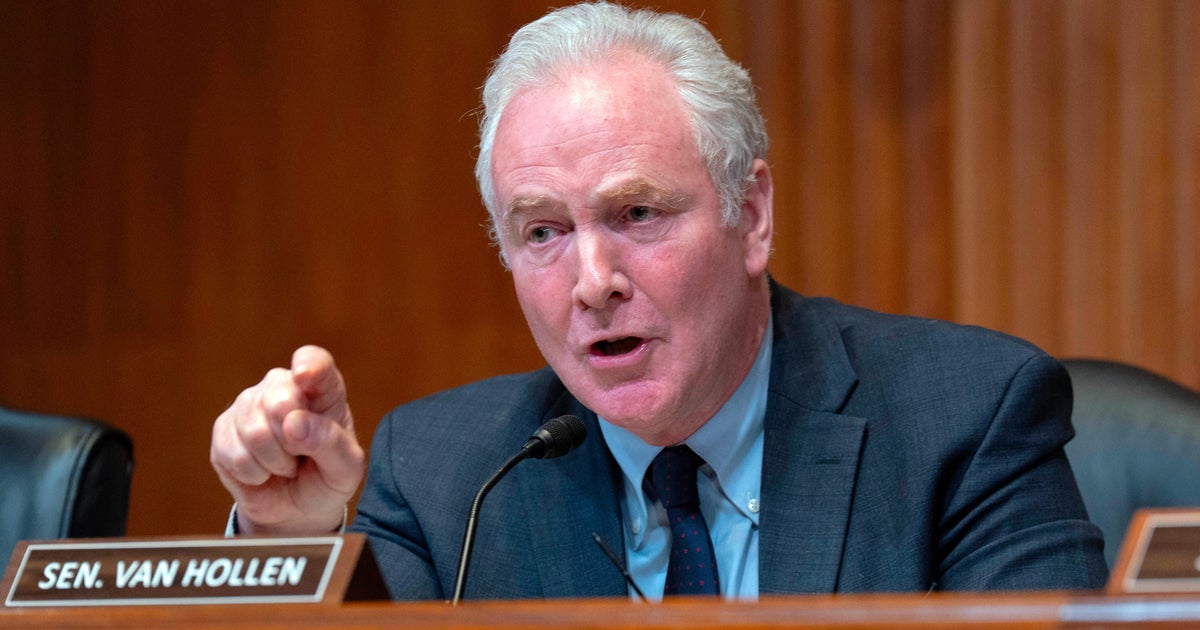
Sen. Chris Van Hollen (D-MD) announced on Thursday that he will challenge Sen. Chuck Schumer (D-NY) for the position of Senate majority leader. The announcement follows midterm elections in which Democrats secured a majority in the chamber.
The challenge comes after Van Hollen stated earlier in the week that he was in "listening mode" regarding a potential run. Van Hollen has served in the Senate since 2017 and has recently drawn attention for his stances on foreign policy, including his support for restricting weapons shipments to Israel and his criticism of the Biden administration's handling of the war in Gaza.
In a statement on X, Van Hollen said the move was prompted by a need for "new leadership" to address an economy he characterized as "rigged against working people." Schumer responded by stating he has the necessary votes to remain the Democratic leader. He credited the party's success in reaching at least 55 seats to the caucus's collective work and his own leadership.
Other members of the Democratic caucus have expressed differing views on the leadership transition. Sen. Kirsten Gillibrand (D-NY) defended Schumer, citing his "strategic leadership" during the campaign cycle. Conversely, Sen. Bernie Sanders (I-VT) and Sen.-elect Adam Hamilton (D-KS) have called for change. Sanders stated he would not support Schumer's reelection as leader, while Sen. Elissa Slotkin (D-MI) said she is "a no" until presented with a "definitively different" concrete plan for the caucus.
The challenge highlights internal divisions within the Democratic caucus between those who favor the current leadership and those seeking a different approach. The majority leader oversees a body that confirms federal judges and cabinet members. A change in leadership could lead to different priorities for these confirmations and the legislative focus on issues like the economy and foreign aid.
Specifically, the debate involves lawmakers from diverse constituencies, including Maryland, New York, Michigan, Vermont, and Kansas. The outcome will dictate how the Senate majority interacts with the executive branch and the House of Representatives. While the exact date for the vote has not been set, Democrats are expected to hold these leadership elections early next month.
What happens next: Senate Democrats are scheduled to hold their internal leadership elections early next month. Between now and that vote, candidates will likely continue to lobby their colleagues for support. The winner will be tasked with leading the new Democratic majority when the next Congress convenes.