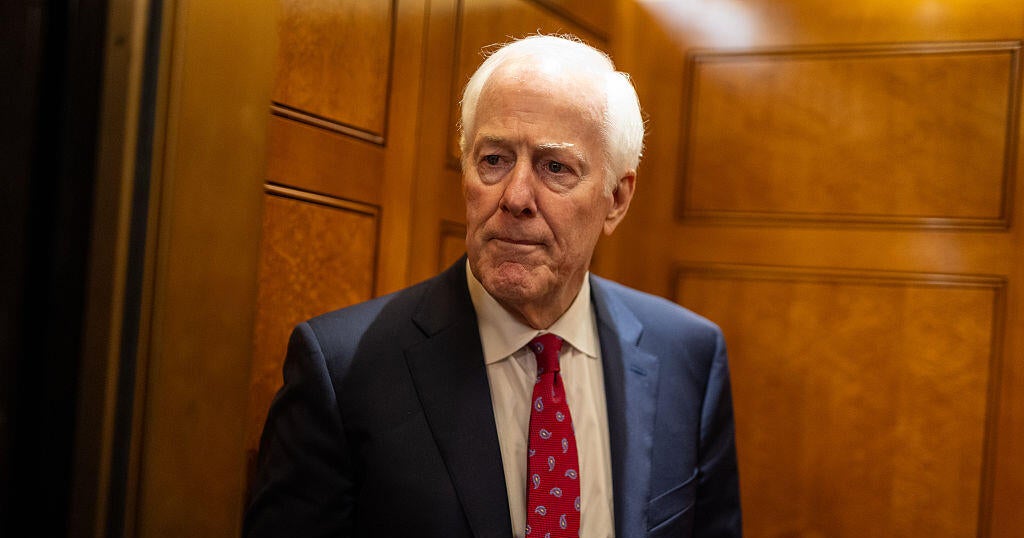
Sen. John Cornyn (R-TX) announced on Wednesday, November 18, 2026, that he is blocking President Trump’s nomination of T. Elliot Gaiser to a federal district court seat in Dallas. Cornyn declined to return a "blue slip" for Gaiser, a procedural tradition that allows home-state senators to effectively veto judicial nominees for their districts, stating that the candidate is not a Texan and lacks trial experience.
The nomination comes during a lame-duck session following the November 3 midterm elections, in which Democrats won enough seats to take control of the Senate in January. The Senate Judiciary Committee, currently chaired by Sen. Chuck Grassley (R-IA), is attempting to confirm the president’s remaining judicial picks before the change in leadership. Gaiser, who currently leads the Justice Department’s Office of Legal Counsel, was formally nominated on Monday, November 16.
Cornyn stated he was not consulted by the White House on the choice and had proposed an alternative candidate, Fort Worth lawyer Steve Fahey. While Sen. Ted Cruz (R-TX) supported Gaiser as the only candidate who could be confirmed before the year-end deadline, Cornyn criticized the White House for attempting to "jam the Senate" without proper due diligence for a lifetime appointment. Gaiser was not included in a Wednesday hearing for seven other judicial candidates.
The Justice Department defended Gaiser in a statement, calling him a "principled defender of the Constitution" and describing Cornyn’s move as "political obstruction." Gaiser has previously faced criticism for legal opinions he authored, including an April finding that the Presidential Records Act is unconstitutional and an August opinion stating that the president’s outside advisers are protected from congressional investigations by executive privilege.
The use of the "blue slip" tradition by a senior Republican senator against a president of his own party reinforces a Senate norm that has faced pressure. While President Trump has urged Judiciary Chair Chuck Grassley to eliminate the policy to speed up confirmations, Grassley has maintained it for district court seats. This decision sets a precedent for the remaining weeks of the term, signaling that home-state senators may continue to demand vetting and consultation despite the administration's goal of filling all vacancies by the end of 2026.
Beyond the immediate court vacancy, the dispute highlights a split between Texas's two senators. Sen. Ted Cruz argued that failing to confirm Gaiser would effectively hand the seat to Democrats to keep "vacant in perpetuity." However, Sen. Cornyn noted that Gaiser did not go through Texas’s traditional bipartisan evaluation panel. With the new Congress set to convene in January, the White House has not yet indicated if it will withdraw Gaiser or consider Cornyn’s suggested alternative, Steve Fahey, before the legislative session concludes.